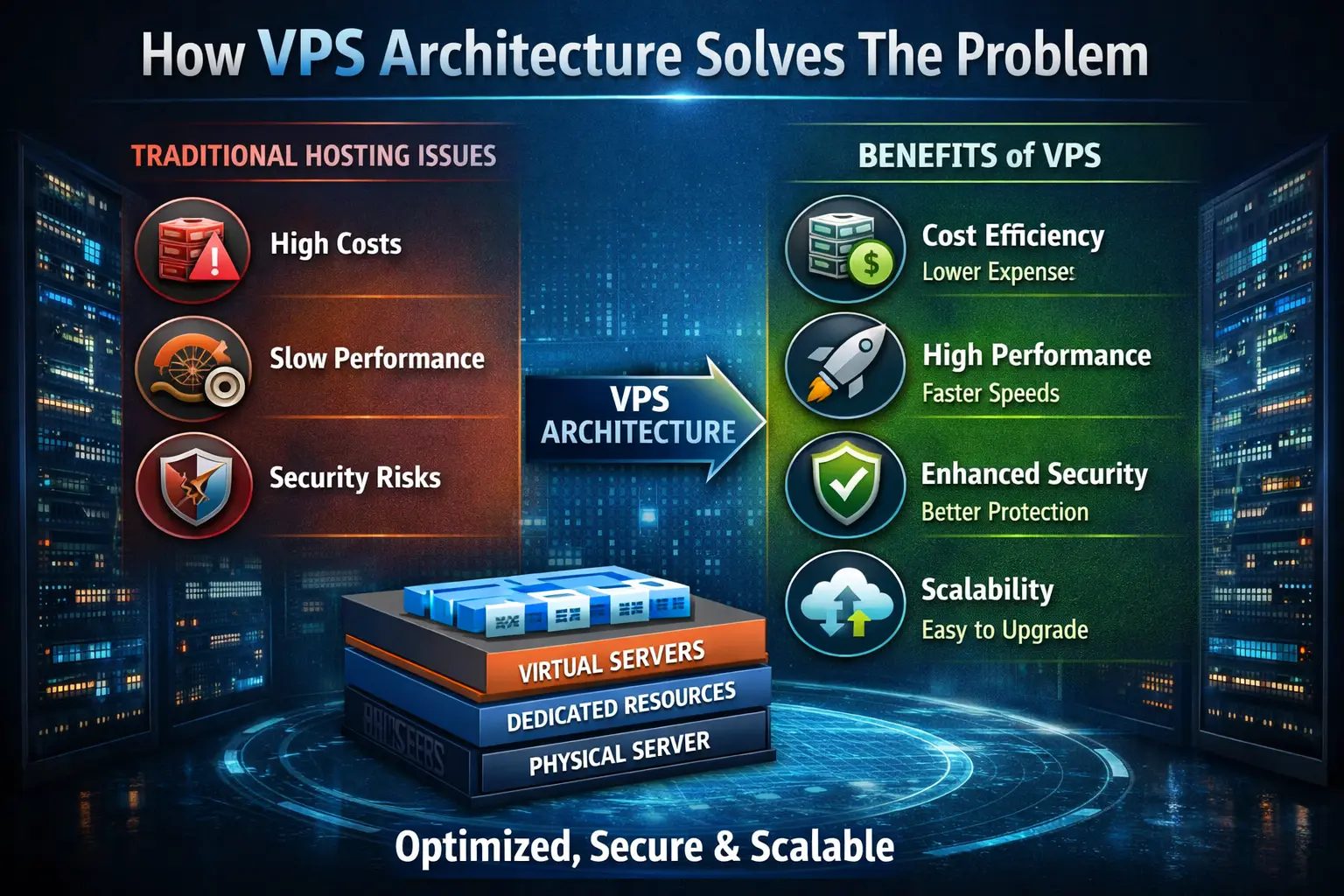
Virtual private servers approach this differently. They tackle contention head-on through dedicated resource allocation. Instead of letting resources slosh around freely between all sites like shared hosting does, VPS technology carves a physical server into isolated virtual machines. Each one operates independently. Each gets its own slice of CPU cores, RAM, and storage that nobody else can touch.
VPS technology carves a physical server into isolated virtual machines, each operating independently with its own slice of CPU cores, RAM, and storage. When you implement hosting VPS for your website infrastructure, you get guaranteed resources that remain accessible no matter what’s happening on other virtual machines sharing that same physical box. This isolation completely stops the "noisy neighbor" problem and ensures stable speed even during your own traffic spikes.
The virtual layer maintains strict boundaries between environments. A security breach in one virtual machine? Can’t jump to others. Configuration mistakes? They stay put. This design delivers the reliability and control of a dedicated server while keeping the efficiency of shared infrastructure. It’s particularly valuable for businesses that have outgrown shared hosting but aren’t quite ready to tackle full dedicated server management.
Consistent Performance You Can Measure
VPS isolation translates into real performance improvements you can track. Your database queries execute within predictable times because your CPU cycles stay available. Memory-heavy operations complete reliably since your RAM serves only your apps. Storage operations maintain a steady speed instead of competing with dozens of other sites for access.
This consistency becomes critical for apps requiring real-time processing. Marketing automation platforms need it. Customer systems demand it. E-commerce checkouts can’t function without it. When response times remain steady, you can accurately gauge your app’s true performance and identify real optimization opportunities without interference from other factors.
More Control Over Your Environment
VPS environments hand you root access. Shared hosting blocks this almost always. What does this mean in practice? You can install whatever custom software your project needs. You can modify server settings to match your specific workload.
Optimize everything for peak performance. This flexibility proves essential as apps become more sophisticated. Need that specific PHP version your app requires? Done. Want to set up aggressive caching rules? Go ahead. Require particular database tweaks? They’re yours to implement.
Security falls under your control, too. Custom firewall rules? Check. Specialized security software? Installed. Access controls that match your exact needs? Configured. This granular control helps meet compliance standards and protect customer data far more effectively than shared hosting’s one-size-fits-all approach allows.
Easy Scaling Without Moving
Businesses outgrow their hosting eventually. VPS platforms typically offer straightforward resource upgrades without forcing migration to new servers. Need more RAM to increase traffic? Additional CPU cores to process more concurrent requests? These upgrades are usually completed with minimal downtime, allowing your infrastructure to expand alongside business growth.
This scalability sidesteps the massive disruption of migrating to completely new hosting environments. You avoid transferring files, reconfiguring DNS records, and testing functionality on unfamiliar infrastructure. Your site maintains its configuration while gaining beefier resources.
Final Thoughts
Shifting from shared hosting to VPS represents a meaningful upgrade. If your site experiences inconsistent performance, handles sensitive transactions, or you’re planning significant growth, this transition addresses real limitations that shared environments cannot overcome.
The dedicated resources, enhanced control, and reliable performance build a foundation supporting your objectives instead of fighting against them. Resource contention doesn’t need to define your hosting experience when better alternatives exist.
Leave a Reply