Security testing helps identify weaknesses in software before attackers can exploit them. It protects sensitive data, ensures system stability, and controls user access.
With web, mobile, and API-based applications growing rapidly, security threats are increasing. Security testing helps teams detect risks early, prevent breaches, and meet compliance standards.
In this guide, you will learn what security testing is, its importance, and some examples of how security testing tools like Synk, Keploy, and owasp can be used to help you create safe and secure APIs.
What Is Security Testing ?
Security testing is the process of checking how well an application protects itself from cyber threats. It focuses on identifying security gaps and vulnerabilities that attackers may exploit.
It ensures data safety, system reliability, and proper access control. Without security testing, applications are vulnerable to attacks like SQL injection, XSS, and unauthorized access.
Security testing is a crucial component of developing reliable software in today’s IT environment.
Core Principles of Security Testing
Security testing revolves around assessing how systems uphold security goals:
-
Confidentiality: Ensuring only authorized users or systems can access sensitive data.
-
Integrity: Protecting data from unauthorized modification.
-
Availability: Ensuring services remain reachable even under attack.
-
Authentication & Authorization: Validating identities and granting correct permissions.
-
Non-repudiation: Enabling traceability and accountability of actions.
These principles guide how tests are designed and what risks they aim to mitigate. Security testing should validate not just expected behaviour but also how the system responds to invalid or malicious inputs.
Common Security Testing Techniques
Security testing is not monolithic. It includes multiple approaches depending on the context and layer being tested.
Vulnerability Scanning
Automated scanners identify known weak points in code, configurations, or infrastructure. Scanners help with breadth but may produce false positives that require review.
Open-source tools:
-
OpenVAS
-
Nmap (with vulnerability scripts)
-
Nikto
-
Wapiti
-
Keploy (for traffic-based vulnerability discovery)
Penetration Testing
Penetration testing uses simulated attack scenarios to identify potential vulnerabilities and how deep an attacker could go if they were to gain access to the application and then the overall outcome of a successful attack.
Open-source tools:
-
Metasploit Framework
-
OWASP ZAP
-
sqlmap
-
BeEF
-
Keploy (for replay-based attack simulation and API penetration testing)
Static Application Security Testing (SAST)
Static Application Security Testing (SAST) . SAST tests source (or binary) code without executing the application code to identify coding errors and/or flaws prior to software launch.
Open-source tools:
-
Semgrep
-
SonarQube Community Edition
-
Bandit (for Python)
-
Brakeman (for Ruby)
-
PMD
Dynamic Application Security Testing (DAST)
Dynamic Application Security Testing (DAST) performs security tests while the application is running. DAST is an ideal solution for identifying run time vulnerabilities because they are able to identify application flaws through sending data tailored to get the application to react.
Open-source tools:
-
OWASP ZAP
-
Wapiti
-
Arachni
-
Nikto
-
Skipfish
Interactive Application Security Testing (IAST)
Interactive Application Security Testing (IAST) combines the best of SAST and DAST, integrates monitoring of the application during execution, and yields detailed vulnerability information for future testing or use.
Open-source tools:
-
OpenRASP
-
Hdiv IAST (Community Edition)
-
Glowroot (with security plugins)
-
Contrast Community (limited open components)
API Security Testing
APIs are the central point of attack for most modern applications, and application security testing of APIs validates both the effectiveness of authentication mechanisms, business logic protections, rate limits, input validations, and response handling mechanisms to ensure they cannot be exploited.
Open-source tools:
-
OWASP ZAP API Scanner
-
RESTler
-
Postman (open collections + Newman)
-
Schemathesis
-
Keploy (real-traffic-based API security testing)
Fuzz Testing
Fuzz testing is a technique that generates random or malformed request payloads for a system, which may result in triggering some form of unexpected behaviour from the system being tested, usually to expose issues such as buffer overflows or improper parsing of request data.
Open-source tools:
-
AFL++ (American Fuzzy Lop)
-
LibFuzzer
-
Peach Fuzzer Community Edition
-
Boofuzz
-
Keploy (API fuzzing through traffic mutation and replay)
Security Auditing and Compliance Checks
Auditing of systems, against security policies, and regulatory requirements to ensure the security controls implemented by the system are functioning as expected and have been documented.
Open-source tools:
-
OpenSCAP
-
Lynis
-
CIS-CAT Lite
-
Auditd
-
Scout Suite
Each of these enhanced approaches helps teams choose the appropriate open-source tool at their respective testing layers and utilize Keploy for realistic, traffic-driven security validation during penetration testing, vulnerability scans, API Security tests and fuzz testing.
Security Testing Tools and Platforms
Security testing is strengthened by tools that automate vulnerability detection, code analysis, and attack simulation across applications and APIs.
|
Testing Area |
Open-Source Tools |
Proprietary Tools |
Keploy |
|
Web & API Testing |
OWASP ZAP, Wapiti |
Burp Suite Pro, Acunetix |
Traffic-based API security testing |
|
SAST |
Semgrep, SonarQube Community |
Checkmarx, Veracode |
Secure API regression testing |
|
DAST |
OWASP ZAP, Nikto |
AppScan, Netsparker |
Replay-based anomaly detection |
|
Vulnerability Scanning |
OpenVAS, Nmap |
Nessus, Qualys |
Real-traffic risk validation |
|
Penetration Testing |
Metasploit, sqlmap |
Core Impact |
Attack simulation via replay |
These tools help teams identify security gaps at different layers. By combining open-source tools, enterprise platforms, and Keploy’s traffic-based testing, organizations can maintain strong and continuous security coverage.
Integrating Security Testing Into API and Integration Workflows
APIs power modern applications — from web UIs to mobile clients and microservices. Securing APIs requires a layered approach:
-
Conduct schema and contract validation to ensure API inputs and outputs match expectations.
-
Automate API security tests early in development to reduce costly fixes later.
-
Integrate security scanning alongside functional tests in CI/CD.
Recording real API traffic allows teams to observe how applications behave under actual usage conditions and analyze inbound requests, outbound responses, and data flows. By replaying this traffic with controlled variations, teams can test how systems handle abnormal, malformed, or malicious inputs and evaluate the effectiveness of security controls.
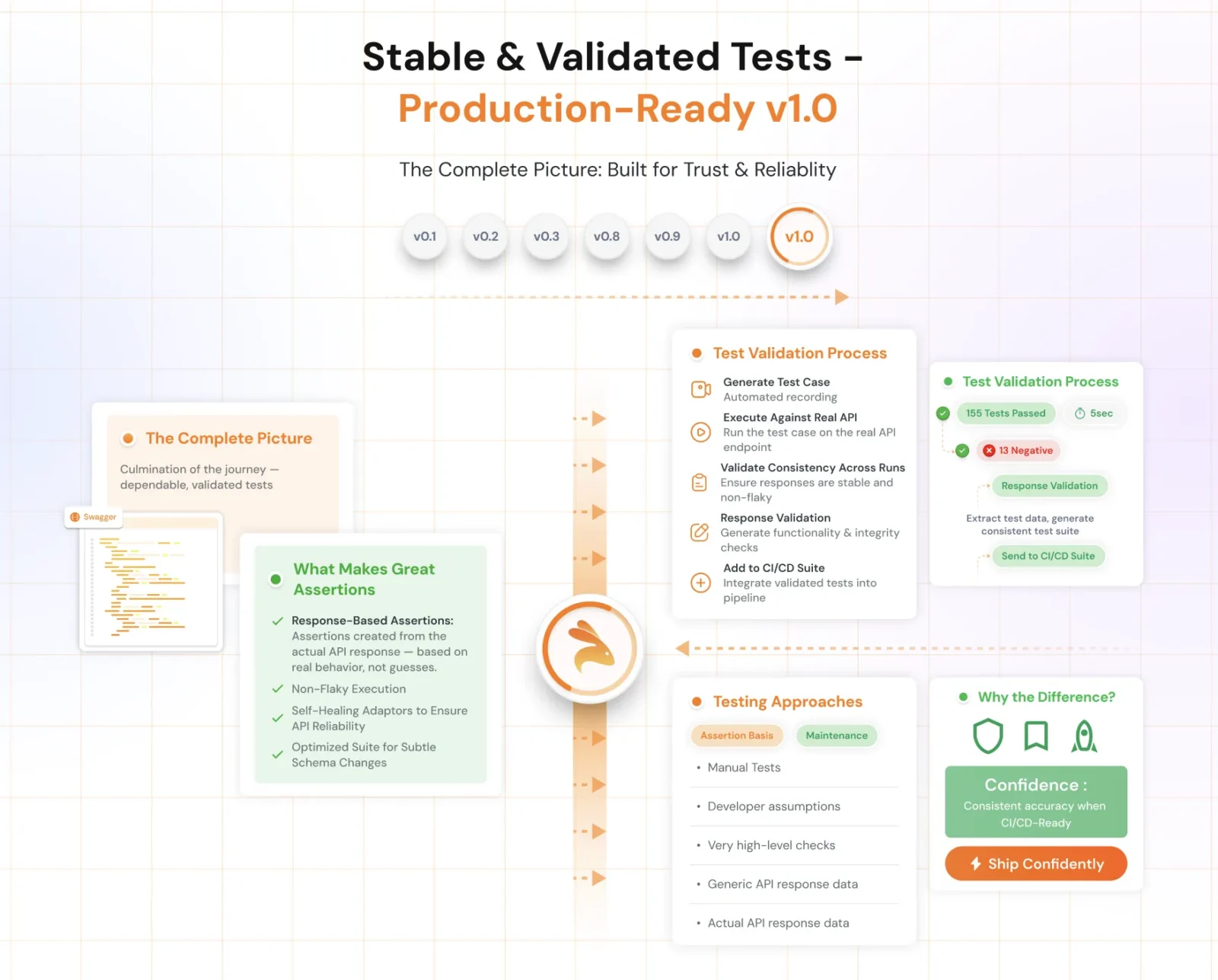
Platforms like Keploy apply this approach by converting captured API interactions into repeatable test cases with mocks, enabling more realistic validation of both functional behavior and security mechanisms than manually created test scripts. Keploy’s traffic capture model also helps detect unintended side effects and ensures that integrated systems, such as databases and external dependencies, behave securely under replayed API flows.
Testing security metrics and KPIs
The outcomes of security testing can be measured to help a team manage risk and measure their improvements.
-
Vulnerabilities detected per release shows testing effectiveness.
Industry average: 10–30 issues per major release in mid-sized applications, with mature teams reducing this to 5–10. -
Severity distribution indicates risk prioritization.
Industry average:-
Critical/High: 15–25%
-
Medium: 40–50%
-
Low: 25–35%
-
-
Time to remediate tracks responsiveness.
Industry average:-
Critical issues: 24–72 hours
-
High severity: 3–7 days
-
Medium/Low: 2–4 weeks
-
-
Regression frequency helps assess test coverage over time.
Industry average: 5–15% of releases show recurring vulnerabilities in teams with moderate automation, while mature teams keep this below 5%.
A security program uses these metrics to improve focus on testing as part of their engineering process.
Challenges in Security Testing
Security testing faces several persistent challenges that can affect accuracy, coverage, and efficiency.
False Positives from Automated Scans
Automated tools often report vulnerabilities that are not exploitable, creating noise that security teams must manually review.
Examples:
-
A scanner flags encrypted database connections as insecure due to outdated detection rules.
-
Static analysis tools report hardcoded credentials in test files that are never used in production.
Evolving Threats and Attack Techniques
Cyber threats continuously change, requiring teams to update tools, rules, and testing strategies.
Examples:
-
New API abuse techniques bypass traditional authentication checks using token replay attacks.
-
Zero-day vulnerabilities in popular frameworks emerge before scanners can detect them.
Risks from Third-Party Dependencies
Modern applications rely heavily on external libraries and services, which may contain hidden vulnerabilities.
Examples:
-
A commonly used open-source package is discovered to have a critical remote code execution flaw.
-
An external payment gateway updates its API security model, breaking existing validation rules.
Resource Constraints and Testing Limitations
Limited time, budget, and skilled personnel can restrict the depth and frequency of security testing.
Examples:
-
Small teams prioritize feature delivery over in-depth penetration testing.
-
Organizations delay security audits due to high costs and lack of specialized expertise.
Here is the revised version with typical industry benchmark ranges added (approximate averages based on common AppSec and DevSecOps reports):
Real-World Examples of Security Testing Impact
Consider API endpoints exposed to public clients. Without rigorous security testing, misconfigurations in authentication or rate limiting can lead to credential stuffing or denial-of-service conditions. By replaying real traffic and testing variations, teams uncover logic flaws that might not trigger in typical functional tests.
Detailed case studies – such as detecting insecure default configurations or broken access controls, demonstrate the value of layered security testing before release.
Conclusion
Security testing is a mission-critical discipline that ensures systems are resilient against attacks, compliant with regulations, and trustworthy to end users.
Modern applications, especially those rich in APIs and integrations, demand security testing at scale. Incorporating automated and realistic test generation, along with tools such as Burp Suite, Keploy, Metasploit, Nessus, OpenVAS, OWASP ZAP, Qualys, Semgrep, SonarQube, and Trivy, shifts security earlier into development and strengthens protection across the software delivery lifecycle.
By combining foundational techniques with effective tools and metrics, engineering teams can build secure, reliable, and high-confidence applications.
Frequently Asked Questions (FAQs)
What does security testing mean?
Security testing is the process of determining vulnerabilities in an application or API to minimize the chance of a data breach, an attacker with unauthorized access to that application or API, or the compromise of the system as a whole.
Why are APIs susceptible to security testing?
API’s expose core business functionality along with data. Security testing will protect those APIs against attacks such as broken authentication, rate-limit abuse, and injection flaws.
What types of security testing can you perform?
There are five primary categories of security testing: SAST (static application testing), DAST (dynamic application testing), penetration testing, vulnerability scanning, and API security testing.
What security testing tools are used?
The typical tools used for security testing include: OWASP ZAP, Metasploit, OpenVAS, Semgrep, and Keploy to achieve both automated as well as realistic security testing results.
When should security tests be conducted?
Security tests should be performed at the beginning of the development life cycle and throughout the CI/CD pipeline to identify and fix risks before deploying to production.

Leave a Reply