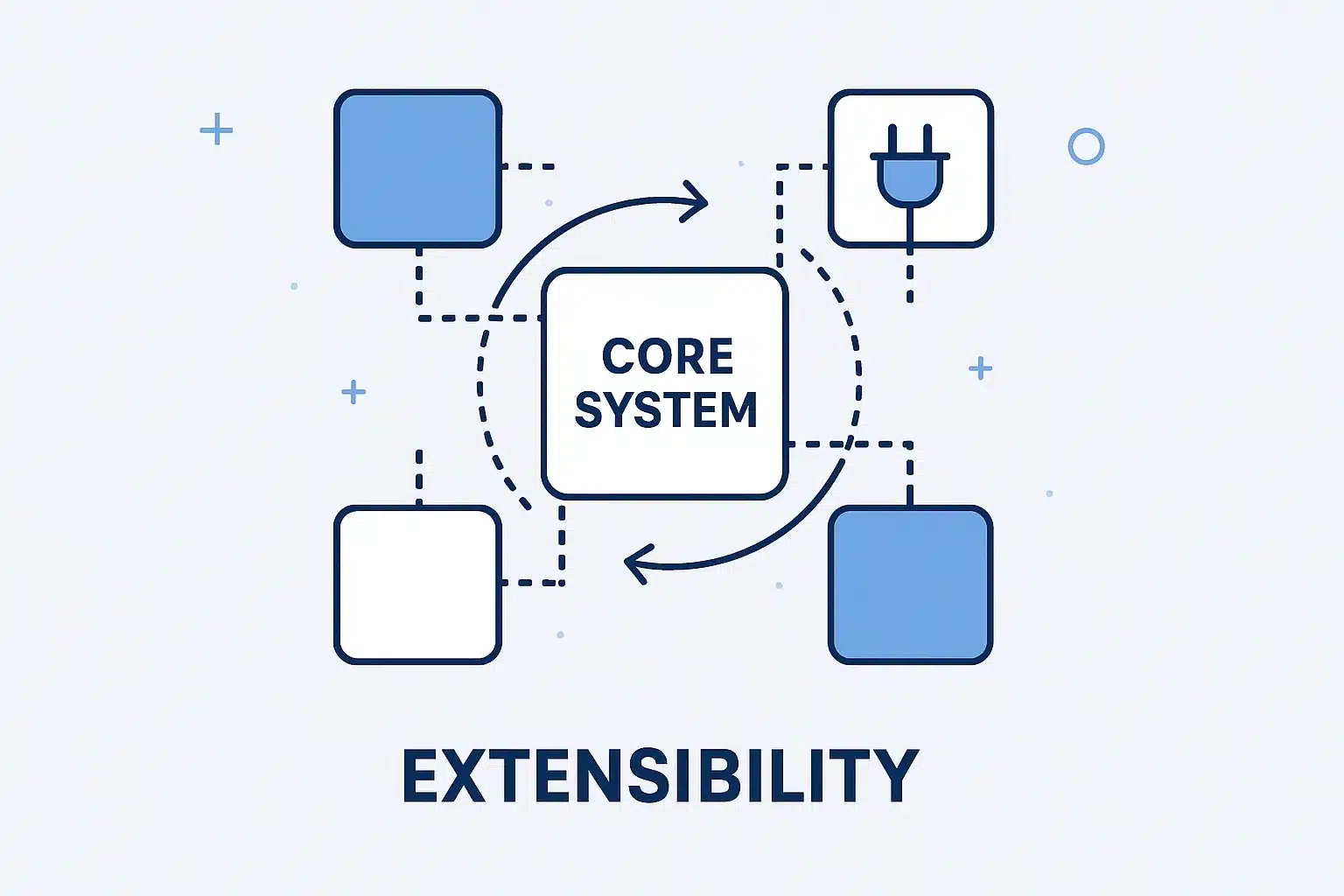
Extensibility is conceptually found in the areas of technology (such as Software Development) and System Design. The term extensibility may seem abstract to someone with no previous background in the field; in particular, when you hear phrases like: “Extensible Software”, “Extensible Architecture”, “Extensible API” or “Extensible Testing Tools”, it could be difficult to understand exactly how these would apply in day-to-day experiences.
Extensibility is generally defined as the capability of a system to grow with the addition of new functionality without compromising or changing the current core. Growing needs will require extension for current systems to continue meeting user expectations and requirements. With the rapid rate of change in today’s digital environment where requirements for software and systems are constantly changing and evolving, extensibility is required and must now be achieved.
This article will provide an explanation of extensibility, how it works, why it is important, and the potential applications for extensibility within the software, system, and real-life product spaces (For example: new products will be developed as new capabilities are added to current products) written in simple terms.
What Does Extensible Mean?
An extensible system is defined as having the ability to support the addition of new functionality without making major changes to the underlying architecture.
Extensibility allows you to build on top of something now and not have to completely redesign and redevelop it again in the future.
On a technical level, extensibility refers to a software structure that has the capacity to allow for new behaviors to be added via the use of extensions, plugins, modules or application programming interfaces (APIs) without having to make substantial changes to the existing source code.
To put it another way, think of it this way: extensibility provides a way to create something today with the certainty that you will be able to grow it into something larger tomorrow.
Why the Term “Extensible” Is Important Today
Modern software rarely stays the same for long. User expectations evolve, integrations increase, regulations change, and new technologies appear. When systems are not extensible, every change becomes expensive and risky.
Organizations are increasingly able to be agile; the stability of their systems allows increased agility. This applies to all aspects of how businesses operate, but it is most essential for SaaS applications and enterprise applications that cater to very different markets with very different requirements.
Extensible vs Scalable vs Flexible
Although the terms are frequently interchanged, they are distinct concepts.
Extendibility provides additional features and functions. Scalability provides greater capacity to support a greater number of users, as well as an increase in the amount of data received or generated.
Flexibility alters the behavior of existing features and functions.
An application can be scalable but not flexible (or vice versa), extensible but not scalable (or vice versa) or flexible and not extensible (or vice versa). Today’s best application development practices strive to incorporate all three features, but extendibility specifically targets increasing functionalities as companies grow.
What Is an Extensible System?
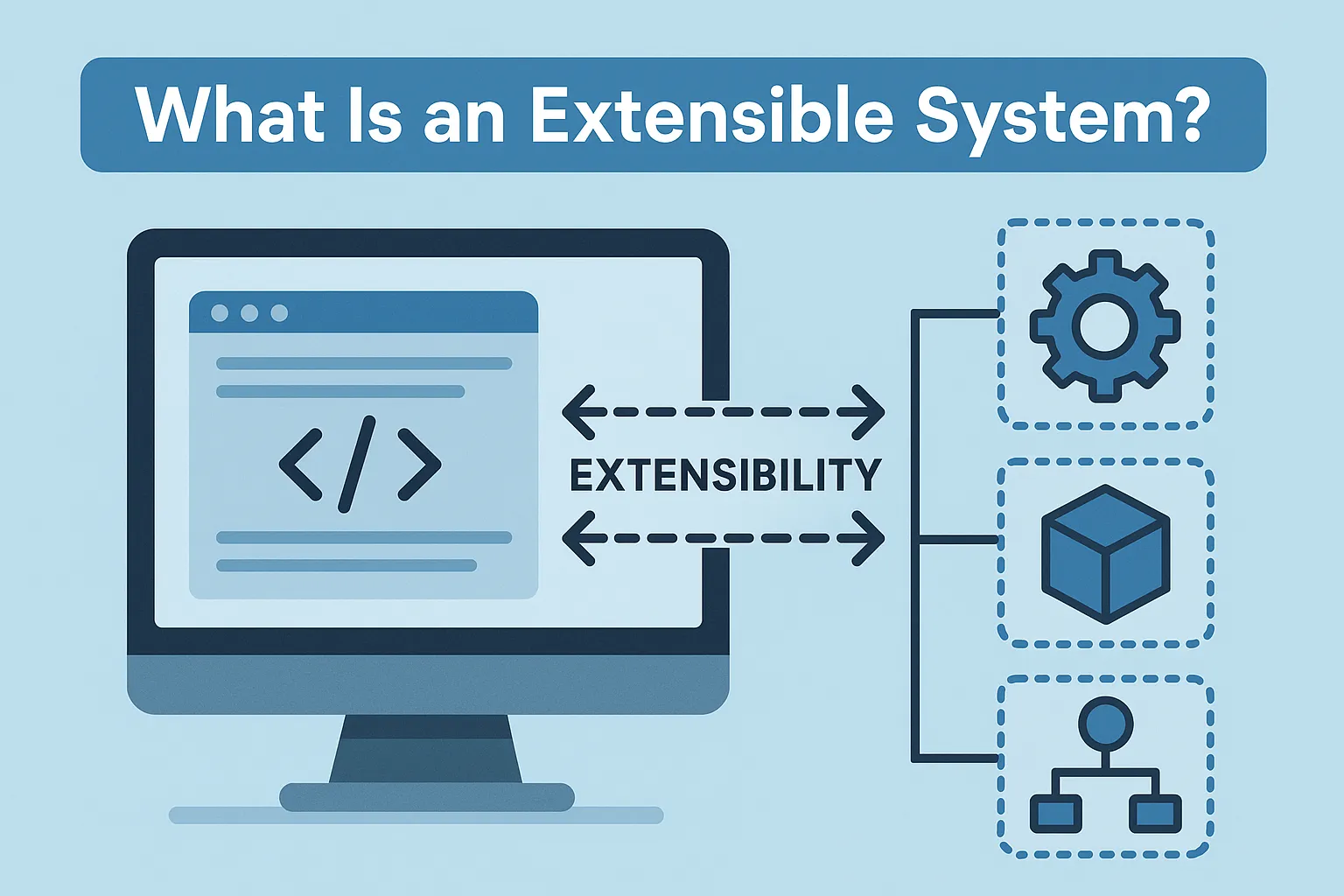
An extensible system is constructed in a way to permit someone to add additional functionality to their use without changing the fundamental workings of the system.
The main aspects of an extensible system are modularity, the support for plugins and extensions, distinct interfaces, and as few as possible linkages between various components of the system.
To put this into perspective, consider a smartphone. You may add an app to your phone, and this app does not alter the hardware or operating system of the smartphone in any way. The fundamental structure of the phone remains unaltered; however, the smartphone has additional capabilities that increase your ability to use it.
Examples of Extensible Systems
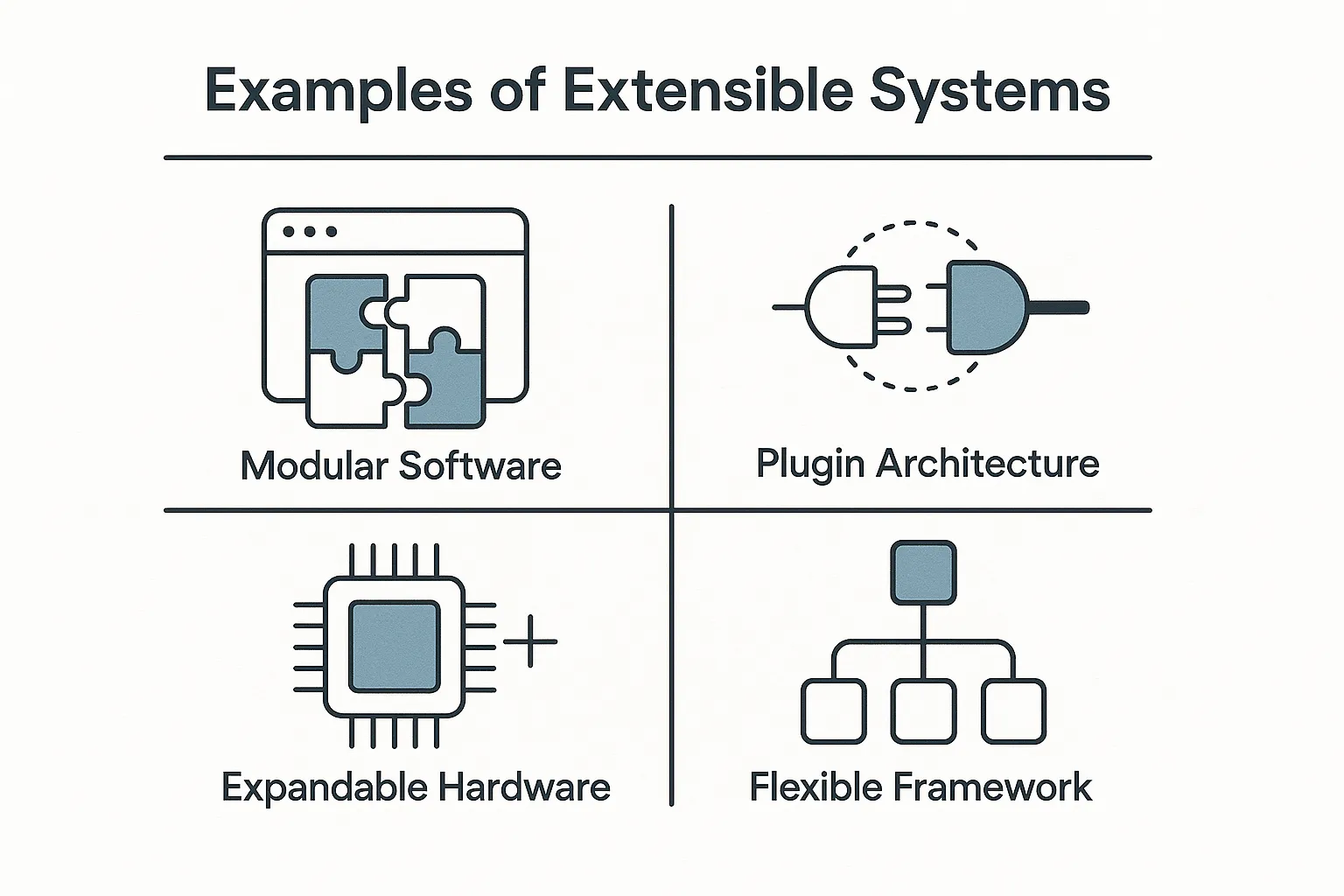
Extensibility is important for the competitive viability of numerous modern products.
Software applications often include support for plug-ins or extensions that extend their capabilities. APIs enable third parties to connect their products/systems to the application, enhancing its capabilities through integration with external systems or other applications. Frameworks provide developers with the ability to create and integrate their modules into the framework when they are ready to use them. Platforms allow third-party developers to build their solutions on an established core.
DCN recognizes the long-term advantages of using extensibility as a means of reducing the cost of having to rewrite extensive code as well as allowing for more gradual evolution of software.
Why Is Extensibility Important in Software Development?
A product’s longevity and success are primarily impacted by the ability to extend.
Extensibility ensures that a system will be able to adapt to future changes in business requirements. As the business changes, additional functionality can easily be added.
Extensibility will also reduce development costs, since there will be no need to re-write the core functionality if you want to add new functionality, but can simply add the new functionality above the core functionality.
The speed with which product innovation can occur will also be increased significantly by Extensibility because, rather than modifying central code, teams can now work on their respective extensions independently.
Extensibility will provide better user experiences, since it will give users the option of enabling only those features that are necessary for their individual needs.
How Extensibility Works in Software
Extensibility does not happen without proactive thought and careful planning through good architectural decisions.
Examples of ways to create extensibility are: plugins and extension systems providing fundamentally independent function delivery; modules that can be added or removed as needed; APIs and webhooks to provide integration with other systems; event hooks that call upon custom processing logic; and microservices offering flexible development of additional functionality or replacement of existing systems.
Each model offers a mechanism to retain the core definition of the system while enabling external growth.
Extensible Architecture Explained
A long-term extensible architecture puts adaptability first. The architecture clearly separates the primary functional aspects of the architecture from the optional or added value functionality and has defined boundaries between all of the components.
The core architecture is a reliable, tested component of the system, with extensions that are developed under rules designed to prevent disruption of the architecture. This architecture reduces technical debt and enhances maintenance.
Advantages of Extensible Design
Extensible design has many advantages such as easy feature addition, ease of maintenance due to the core logic being untouchable, support for the growth of third-party ecosystems, and the ability to provide an edge over competitors as the product evolves at a faster rate.
Extensibility enables a product to change quicker than a non-extensible solution.
Disadvantages of Extensible Design
Conversely, extensibility is not without certain difficulties due to added architectural complexity and increased need for wise planning in terms of developing the right extensions. When extensions are poorly designed, they can create problems such as decreased performance of the core product. The amount of third-party code that exists can create an enlarged attack surface making security more complicated.
The process of managing extensions adds another layer of operational overhead to the operations of an organization. Therefore, extensibility should always be governed appropriately.
Extensible in Different Contexts
Extensible software supports plugins and add-ons.
Extensible architecture supports modular system growth.
Extensible APIs allow integrations and automation.
Extensible testing tools adapt to new workflows and technologies.
In every context, extensibility helps systems remain useful and relevant for longer periods.
Real-World Use Cases of Extensible Systems
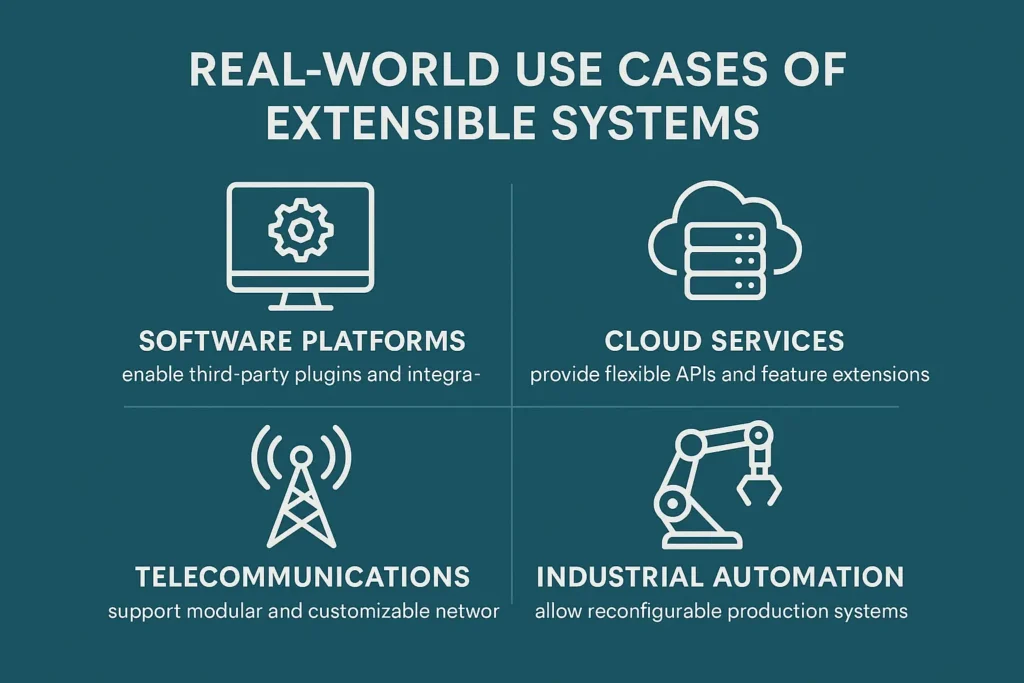
All industries utilize extensibility in some way or another. For example, Software as a Service (SaaS) uses integrations and add-ons; Content Management Systems (CMS) rely on themes and plugins; and Automation /Testing tools adapt to new software/frameworks. Likewise, Enterprise Systems connect with many other vendors and service providers.
Extensibility allows for the assumptions that such systems will not need to be completely rewritten every time they make an update/change.
Best Practices for Building Extensible Systems
An extensible system is built with the ability to extend functionality without compromising performance. The design of an extensible system should be based on a strong architectural foundation that will allow creation of modular components that define clear interfaces and APIs, document extension points and support backwards compatibility.
All system functionality should be protected by strong security measures so that third-party developers can safely create new features within an extensible system. Planning extensibility from the beginning allows you to maximize your system’s potential for future innovation.
Conclusion
An extensible system supports innovation through reduced costs and continued success over time. While creating an extensible system requires careful architecture design, it will also provide companies with a means to remain competitive in a rapidly changing marketplace.
FAQs About Extensible
1. Is the term "extensibility" synonymous with the term "customization"?
No, Customization alters your current features; Extensibility introduces new features.
Can you have issues managing an extensible application? Yes, When an extensible application does not follow a defined structure it can be prone to increased complexity and ultimately lead to maintenance challenges.
2. Is extensibility a core requirement of every product?
No. Extensibility generally only benefits thorough long-term products; Small/simple applications do not typically experience the same level of benefit.
3. How do you evaluate extensibility?
Evaluating extensibility includes evaluating plugin support, API availability, modular design, and overall ease of integrating.
4. Does extensibility change the amount of risk associated with an application?
Yes, Extending an application’s ability creates a new attack surface for that application; Each extension must be thoroughly reviewed before being added.
5. Can you take an existing application and make it extensible?
Yes, You can make a legacy application extensible by creating APIs, wrappers, adapters, or through gradual refactoring.

Leave a Reply