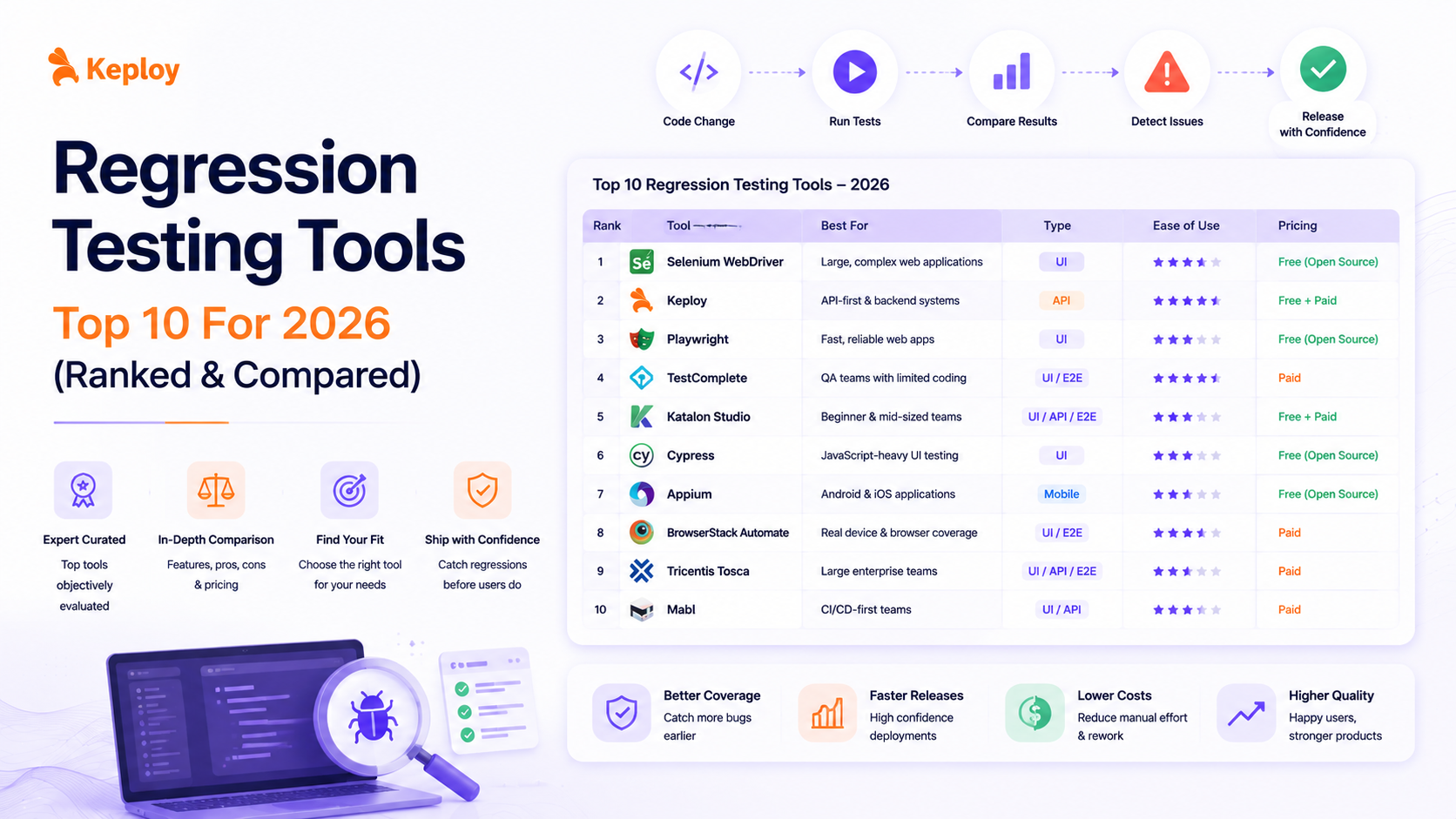
Regression testing tools are the safety net your software can’t afford to skip. As teams deliver features more quickly than ever before, it is critical to ensure that previously developed features continue to function correctly. That’s where regression testing tools come in. These tools automate repetitive tests, catch bugs introduced by code changes, and integrate directly into CI/CD pipelines to guard stability without slowing innovation.
Let’s walk through the 11 most effective regression testing tools in 2026 that empower teams to ship with confidence and maintain quality at scale.
What Are Regression Testing Tools?
Regression testing tools are software solutions designed to automate the process of verifying that new code changes do not break existing functionality. These tools execute previously created test cases, compare results across versions, and help teams quickly detect issues introduced during development.
Modern regression testing tools go beyond simple automation. They integrate with CI/CD pipelines, support parallel execution for faster feedback, and in many cases use AI to automatically generate and maintain test cases.
By reducing manual effort and improving test reliability, regression testing plays a critical role in maintaining software quality in fast-paced development environments.
Regression testing tools sit within the broader ecosystem of automated software testing tools, which also covers UI, API, mobile, and performance testing across the full application stack.
Key Features of Modern Regression Testing Tools
Modern regression testing tools are designed to support fast, reliable, and scalable testing workflows. Before exploring the top tools, it’s important to understand the core features that define an effective regression testing solution:
- Automated test execution across environments
- Seamless integration with CI/CD pipelines
- Parallel test execution for faster feedback
- AI-driven test generation and maintenance
- Cross-browser and cross-platform support
- Detailed reporting and debugging insights
Top 11 Regression Testing Tools of 2026: Rankings & Analysis
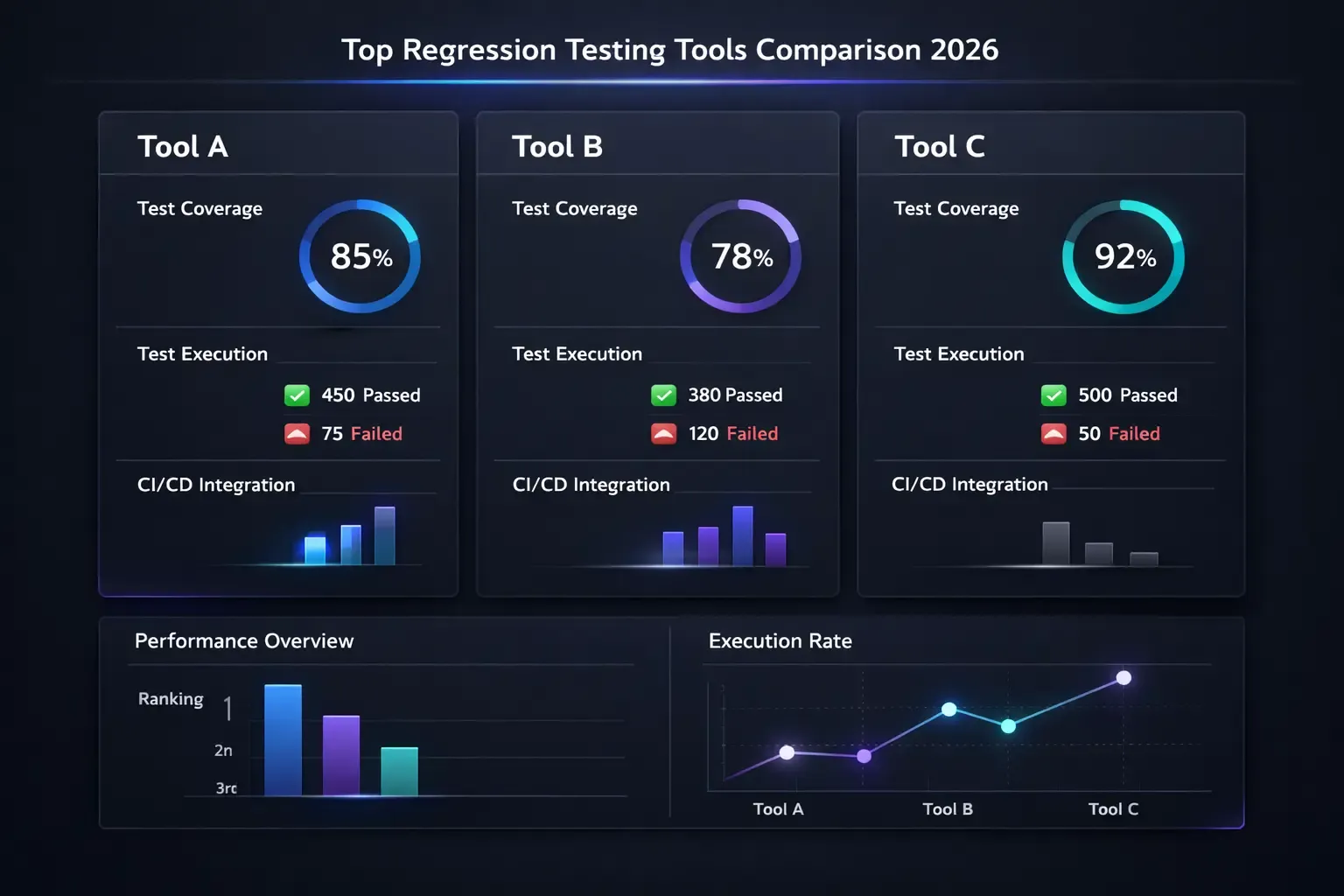
The following table compares the top regression testing tools based on their use case, AI capabilities, ease of adoption, and supported automation types to help you quickly evaluate the right tool for your needs.
| Tool Name | Primary Use Case | Self-Healing | Parallel Execution | CI/CD Integration | Pricing Model |
|---|---|---|---|---|---|
| Selenium WebDriver | UI regression testing | No | Via Selenium Grid | Yes | Free open source |
| Keploy | API and backend regression | Auto re-capture from traffic | Yes | Yes | Free + Paid |
| Playwright | Modern web regression | No | Yes, built-in | Yes | Free open source |
| TestComplete | Codeless regression automation | Yes, AI object recognition | Yes | Yes | Paid |
| Katalon Studio | Unified testing platform | Partial | Yes | Yes | Free + Paid |
| Cypress | Frontend regression testing | No | Via paid Cypress Cloud | Yes | Free open source + Paid cloud |
| Appium | Mobile regression testing | No | Via Selenium Grid | Yes | Free open source |
| BrowserStack Automate | Cross-browser regression | No (framework-dependent) | Yes | Yes | Paid |
| Tricentis Tosca | Enterprise regression | Partial, model-based | Yes | Yes | Paid |
| Mabl | AI-native regression | Yes, full AI self-healing | Yes | Yes | Paid |
| Applitools | Visual regression | Yes, AI visual comparison | Yes | Yes | Paid |
Keploy fits API-first and backend teams best
It generates your regression suite directly from real API traffic. No manual scripting involved.
How We Ranked These Regression Testing Tools
The criteria for the ranking of the following tools are based on real-world usage factors including:
-
Ease of Use and Learning Curve
-
Test execution speed and reliability
-
CI/CD Integration
-
Automation Intelligence and Maintenance Overhead
-
Integration ecosystem and community support (JIRA, Jenkins, Git, etc.)
Below is a more detailed comparison of the top regression testing tools in 2026, covering multiple layers of testing, including UI, API, and mobile applications.
1. Selenium WebDriver
Selenium remains a gold standard for regression testing, offering unmatched flexibility for advanced testers.
-
Strengths:
-
Extensive browser support ensures compatibility across platforms.
-
Offers flexibility for complex and custom testing needs.
-
-
Limitations:
-
Requires programming knowledge, which can pose a challenge for non-technical users.
-
Lacks built-in reporting features, requiring third-party integrations.
-
-
Best for: Teams with strong programming skills needing maximum flexibility and cross-browser coverage.
2. Keploy (AI-Driven Testing Solution)
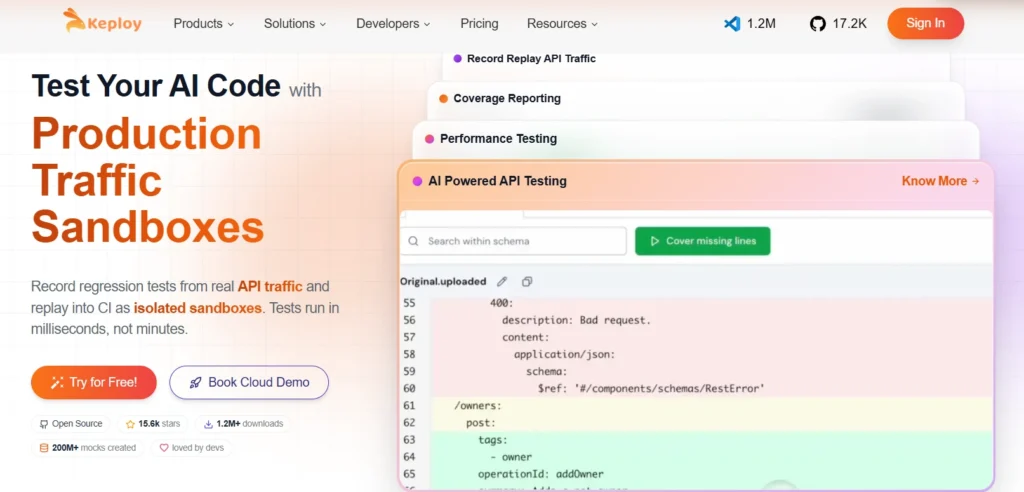
Keploy is an open-source, AI-powered platform built specifically for API and backend regression testing. It captures real API traffic using eBPF-based tracing and automatically converts those interactions into deterministic test cases, complete with mocks for all external dependencies including databases and third-party services. When new changes are deployed, Keploy replays the recorded interactions and flags any breaking differences in API behavior.
-
Strengths:
-
Automatically generates test cases from live traffic, removing the need for manual scripting.
-
Auto-generates mocks for databases and external services so tests run in isolation
-
Detects and filters flaky or redundant tests automatically, keeping suites clean at scale.
-
Native CI/CD integration with GitHub Actions, Jenkins, GitLab CI, and CircleCI.
-
Supports Go, Java, Python, and JavaScript/TypeScript applications
-
-
Limitations:
- Focused on API and backend testing, not a UI or mobile testing tool.
- Initial eBPF setup has a learning curve for teams new to the approach
-
Best for: Backend and API-first teams that need high regression coverage without writing or maintaining manual test scripts.
3. Playwright
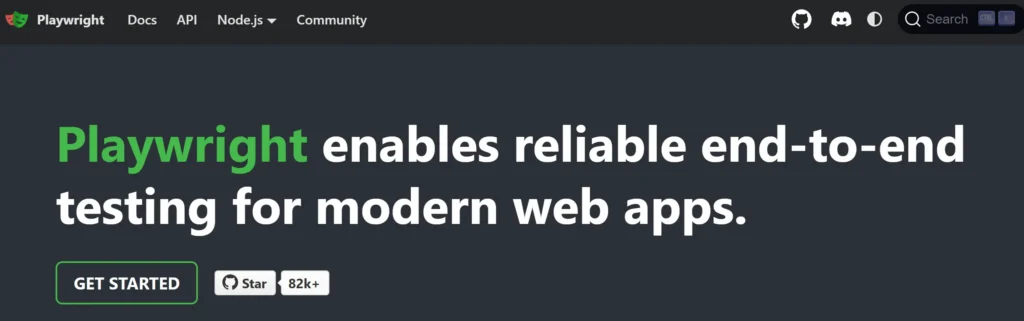
Playwright, a modern testing framework, excels in testing complex web applications.
-
Strengths:
-
Cross-browser testing works seamlessly out of the box.
-
Supports parallel execution, speeding up test cycles.
-
-
Limitations:
- Slightly steeper learning curve for beginners compared to more beginner-friendly tools.
-
Best for: Modern web apps needing fast, reliable cross-browser regression with parallel execution.
4. TestComplete
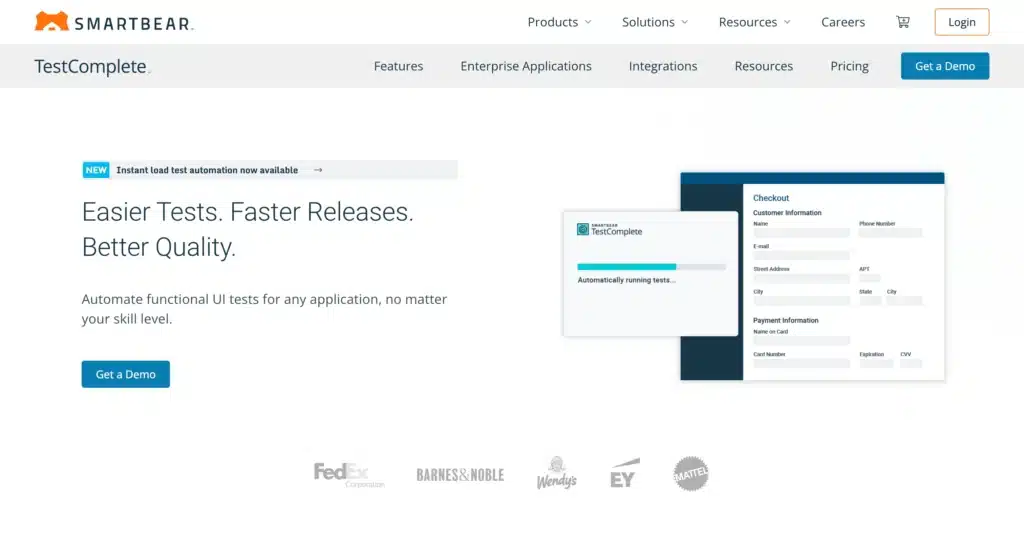
TestComplete stands out for its codeless automation capabilities and AI-powered object recognition.
-
Strengths:
-
Perfect for teams with non-technical testers.
-
AI-driven object recognition simplifies creating robust tests.
-
-
Limitations:
- High licensing costs may deter smaller teams or startups.
-
Best for: QA teams with limited coding experience needing codeless, AI-assisted automation.
5. Katalon Studio
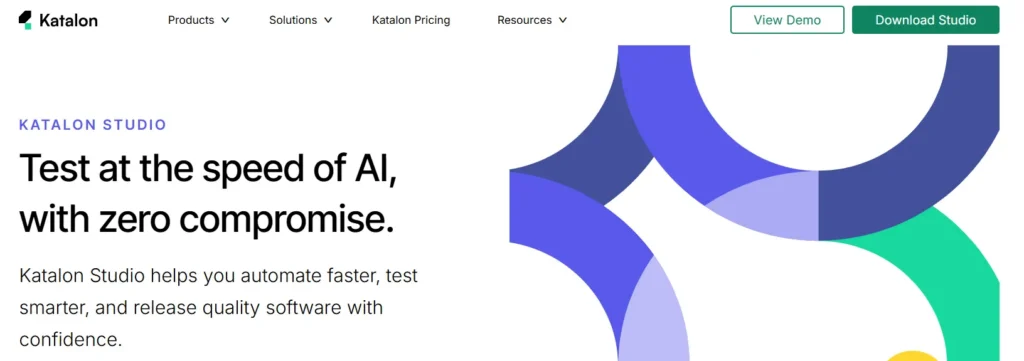
Katalon Studio is gaining traction for its beginner-friendly interface and robust feature set.
-
Strengths:
-
Combines manual and automated regression testing in one tool.
-
Offers built-in reporting and integrations with popular CI/CD pipelines.
-
-
Limitations:
- Limited flexibility for advanced customizations in complex scenarios.
-
Best for: Beginner to mid-sized teams wanting a single platform covering UI, API, and mobile testing.
6. Cypress
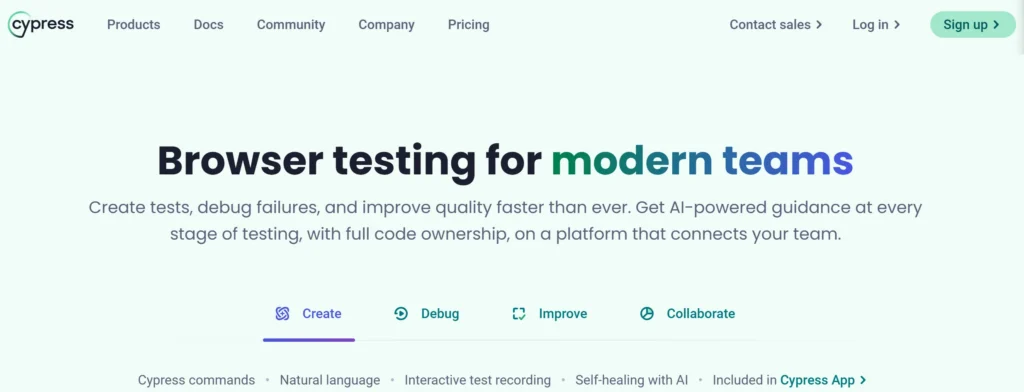
Cypress remains relevant for frontend regression testing, particularly in JavaScript-based applications.
-
Strengths:
-
Easy to set up and use, making it developer-friendly.
-
Great for testing JavaScript-heavy front-end apps.
-
-
Limitations:
-
No Safari support – Cypress does not include WebKit. Teams needing cross-browser coverage including Safari should consider Playwright instead.
-
Struggles with testing complex or large-scale applications.
-
-
Best for: JavaScript-heavy frontend apps where fast, developer-friendly testing matters most.
7. Appium
Appium is the go-to tool for mobile regression testing, supporting both iOS and Android platforms.
-
Strengths:
-
Open-source and supports multiple mobile platforms.
-
Versatile for native, hybrid, and mobile web apps.
-
-
Limitations:
- Slower test execution times compared to web-focused testing tools.
-
Best for:Teams building native or hybrid mobile apps on Android and iOS.
8. BrowserStack Automate
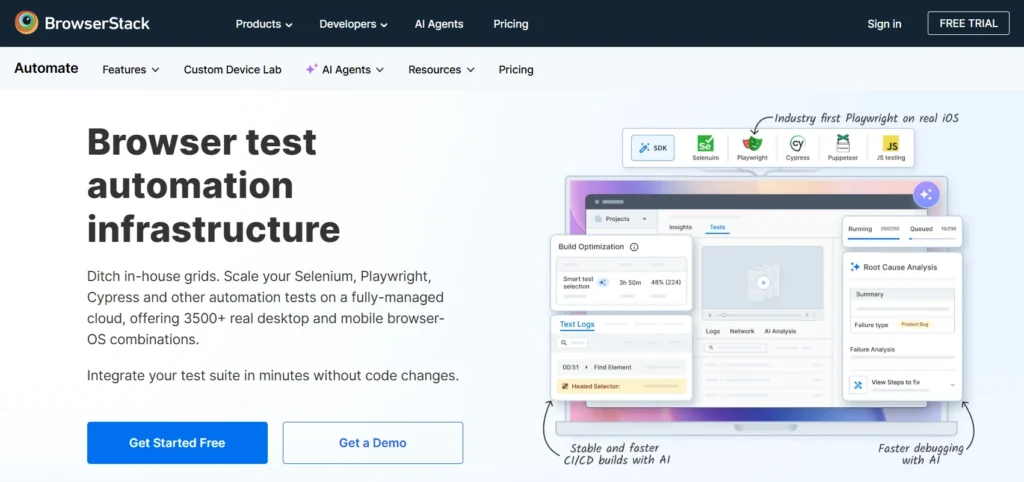
BrowserStack Automate is a cloud-based testing platform that runs regression tests across 3,500+ real browsers, devices, and OS combinations. It eliminates the need to maintain a local device lab and integrates directly with Selenium, Playwright, and Cypress frameworks already in your stack.
-
Strengths:
-
Real device and browser coverage at scale without infrastructure maintenance
-
Native integration with existing frameworks – no migration required
-
-
Limitations:
- Costs scale quickly with parallel test volume
- Dependent on internet connectivity for test execution
-
Best for: Teams needing cross-browser and cross-device regression coverage without managing their own device infrastructure.
9. Tricentis Tosca
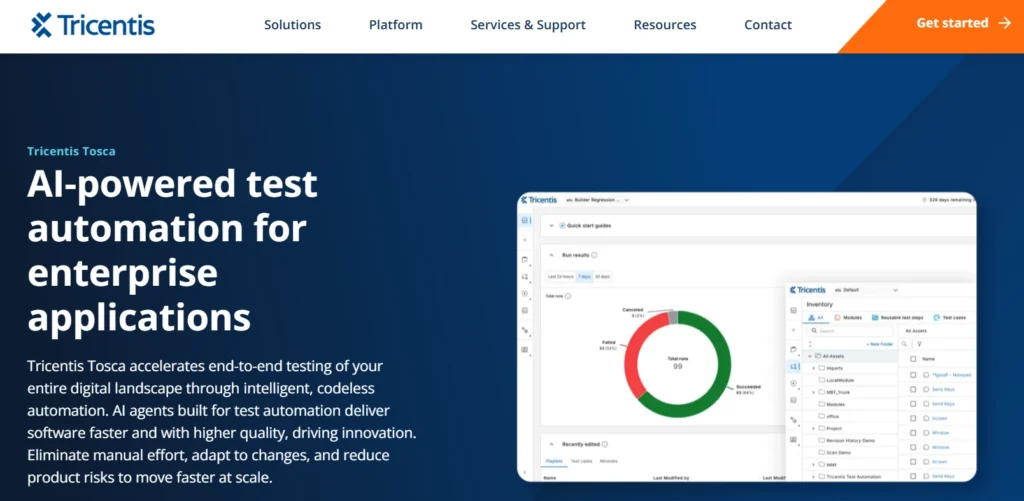
Tricentis Tosca is a model-based, scriptless test automation platform built for enterprise regression testing. It uses a risk-based approach to prioritise which tests to run, reducing regression cycle time without sacrificing coverage.
-
Strengths:
- Scriptless automation reduces reliance on developer support for test creation
- Strong support for enterprise applications including SAP, Salesforce, and Oracle
-
Limitations:
- High licensing cost makes it impractical for smaller teams
- Steep onboarding curve for teams new to model-based testing
-
Best for: Large enterprise teams running regression across complex, multi-system environments.
10. Mabl
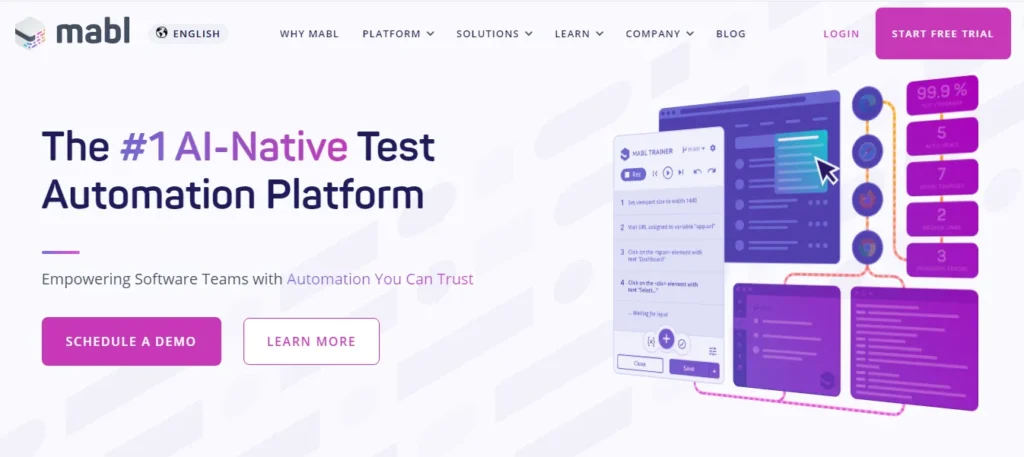
Mabl is an AI-native test automation platform that automatically detects and fixes broken tests when UI elements change – without manual script updates. It covers UI, API, and performance regression in a single platform.
-
Strengths:
- Self-healing tests significantly reduce ongoing maintenance overhead
- Unified coverage across UI and API regression in one platform
-
Limitations:
- Less suitable for teams needing deep backend or database regression coverage
- Developer-centric design can create friction for non-technical QA teams
-
Best for: Teams in continuous delivery environments where regression suites must run on every commit and stay stable without constant manual intervention.
11. Applitools
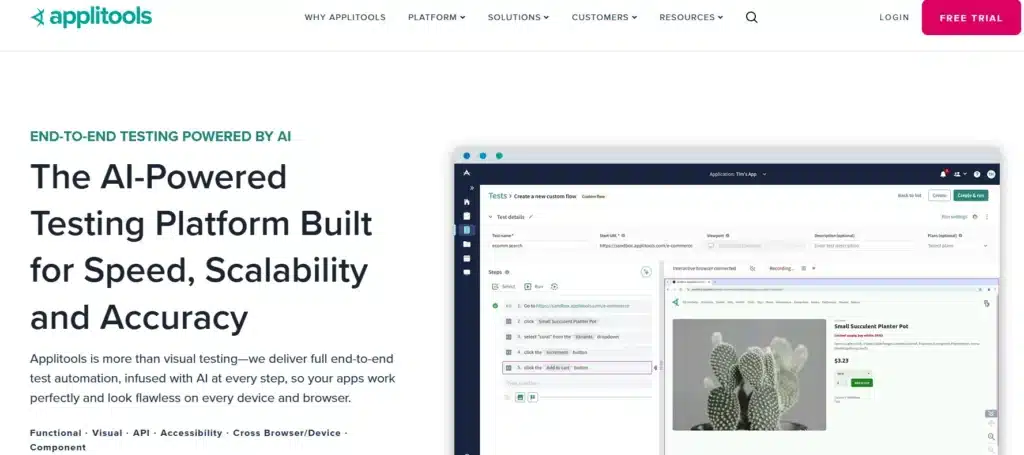
Applitools is the standard tool for visual regression testing — validating that the application renders identically across releases, browsers, and devices at the pixel level. Where every other tool on this list verifies that functionality works correctly, Applitools verifies that what users see has not changed in unintended ways. A CSS update that shifts a layout element, a font rendering change from a browser version update, or a component misalignment on a specific viewport are all regressions that pass every functional regression test and reach users undetected.
Strengths:
- Catches visual regressions that scripted and AI-assisted functional tools cannot detect.
- Cross-browser visual comparison runs against real rendering engines across Chrome, Firefox, Safari, and Edge simultaneously from a single test run.
- Integrates with Selenium, Playwright, Cypress, and Appium without replacing them – visual assertions are added to existing suites.
Limitations:
- Visual regression only — does not validate functional behavior, API response correctness, or backend logic
- AI comparison thresholds require calibration to distinguish meaningful visual defects from acceptable rendering variation across browser versions
- Adds execution time when visual assertions are attached to functional test flows
Best for: Teams where UI visual consistency is a regression risk – particularly those running applications across multiple browsers and device viewports where CSS changes or component library updates cause layout shifts that functional regression tests do not catch.
Pricing: Paid. Free trial available.
How Each Tool Responds When Your Application Changes
The most important regression testing question is not how tests run today. It is what happens when developers deploy a UI change, rename an API field, or update a component library next sprint. Different tools handle this in fundamentally different ways, and this difference determines the long-term cost of maintaining a regression suite.
| Tool | When UI Changes | When API Changes | Maintenance Approach |
|---|---|---|---|
| Keploy | Not applicable (API-focused) | Re-capture traffic automatically | Zero maintenance — tests update from real traffic |
| Selenium | Manual locator rewrite required | Not applicable (UI-focused) | Full manual update every time UI changes |
| Playwright | Manual locator update required | Partial (request context only) | Manual update with trace viewer for debugging |
| TestComplete | AI auto-heals most element changes | Manual update required | Self-healing reduces but does not eliminate maintenance |
| Katalon Studio | Partial self-healing for object changes | Manual update required | Semi-automatic with built-in debugger |
| Cypress | Manual selector update required | Partial (cy.request only) | Full manual, no self-healing |
| Appium | Manual locator update required | Not applicable (mobile UI) | Full manual for native element changes |
| BrowserStack Automate | Depends on connected framework | Depends on connected framework | Inherits maintenance model of the framework used |
| Tricentis Tosca | Model-based adaptation reduces updates | Model-based | Model changes propagate, reducing individual test updates |
| Mabl | AI auto-heals element changes | AI adapts API test assertions | Near-zero maintenance across UI and API layers |
| Applitools | Auto-detects and flags visual changes | Not applicable | AI comparison identifies visual differences automatically |
What this table reveals:
-
Selenium, Playwright, Cypress, and Appium all require full manual updates when UI elements change. This is not a flaw – it is a design choice that gives engineers full control. But at scale, with frequent releases, this manual maintenance becomes the primary cost of running a regression suite.
-
Self-healing tools like Mabl and TestComplete reduce this cost by adapting tests automatically when UI elements shift. The trade-off is less control over exactly what the self-healed test is now checking.
-
Traffic-based tools like Keploy take a different approach entirely. When the application changes, Keploy re-captures the new behavior from real traffic rather than repairing old tests. The regression suite reflects the new behavior automatically. This eliminates maintenance but means regression coverage is derived from observed behavior rather than manually defined scenarios.
The Regression Maintenance Trap
The most common reason regression programmes fail is not lack of coverage when they start. It is that maintenance costs grow faster than the value the suite delivers, until the team quietly stops trusting it.
The pattern looks like this: the regression suite is built carefully over several months. It covers the critical paths. It runs in CI. Then the application starts evolving quickly. UI components get refactored. API response formats change. A dependency is swapped out. With every change, some regression tests break – not because there is a real regression but because the tests were written against the old behavior.
Engineers spend time fixing broken tests instead of running them. The fix cycle competes with feature development. Gradually, the suite gets quarantined, run less frequently, or ignored entirely. When a real regression eventually ships to production, the broken suite is blamed rather than the maintenance model that made it unsustainable.
Three signs a regression programme is in this trap:
-
Test fix time exceeds test value. If the team spends more time repairing broken regression tests in a sprint than the tests caught real regressions in the previous three sprints, the maintenance cost has outpaced the return.
-
Suite runs are deferred because they are broken. When developers check in code and skip the regression run because they already know it will fail on unrelated tests, the suite has lost its function as a safety net.
-
Coverage exists on paper but not in practice. The test inventory shows hundreds of regression tests. The team cannot confidently say which ones still reflect how the application actually behaves. This disconnect between documented coverage and real coverage is the final stage before the suite is abandoned.
The root cause is the same across all three patterns: regression tests that encode assumptions about the application rather than being derived from the application’s actual behavior. Every scripted regression test is a hypothesis about what the application should do. When the application changes, the hypothesis needs updating. At scale, updating hypotheses becomes a full-time job.
How to Choose the Right Regression Testing Tool?
The most important decision in selecting a regression testing tool is not which features it has today. It is how it will behave six months from now when your application has changed significantly.
-
If your team writes regression scripts and can maintain them: Playwright is the strongest foundation for new regression suites in 2026 – native parallel execution, built-in cross-browser including Safari, and a trace viewer that makes debugging regression failures fast. Cypress for JavaScript-first frontend teams where Chrome-only coverage is acceptable. Selenium for teams with existing Selenium infrastructure that would cost more to migrate than to maintain.
-
If regression maintenance is already your biggest testing cost: Mabl is the most complete self-healing regression platform available. When UI elements change, Mabl adapts tests automatically. When API responses shift, Mabl adjusts assertions. For teams where the maintenance burden of scripted regression has become unsustainable, Mabl removes most of it.
-
If you need API regression coverage without writing or maintaining test scripts: Keploy captures real API traffic and generates regression tests from that traffic automatically. When the API behavior changes, re-capture replaces the old tests with tests that reflect the new behavior. There are no scripts to maintain because there are no scripts.
-
If visual consistency across browsers is a regression risk: Add Applitools alongside any functional regression tool. It integrates with Selenium, Playwright, and Cypress without replacing them. Visual regression assertions run alongside functional tests and catch the layout and rendering changes that functional tests cannot detect.
-
If your QA team includes non-developers who must own regression coverage: TestComplete for desktop and GUI-heavy applications where AI object recognition handles element changes. Katalon Studio for teams needing web, API, and mobile regression from one low-code platform. Tricentis Tosca for large enterprise environments where the testing scope spans SAP, Salesforce, or complex multi-system workflows.
-
If mobile regression is a primary requirement: Appium is the open-source standard for iOS and Android native and hybrid app regression. Pair with BrowserStack Automate for real physical device coverage without building your own device lab.
The two questions that matter most for long-term regression success:
| Question | Answer points toward |
|---|---|
| How often does your application change? | High change frequency favors self-healing (Mabl) or traffic-based (Keploy) over scripted tools |
| Who will maintain the regression suite long-term? | Developers favor scripted tools. Non-developers favor codeless. No one favors tools that require constant manual updates. |
Conclusion
The core of software stability is through regression testing, to ensure that newly added features do not disrupt current operations. AI-driven regression testing solutions such as Keploy enable quicker tests through reduced manual intervention, and provide faster feedback allowing developers to execute with conviction. The use of intelligent automation with a knowledge of modern testing practices, allows businesses to maintain high-quality software while accelerating innovation. Choosing the right regression testing tool can significantly improve release speed, test coverage, and overall software reliability.
Ready to automate your API regression testing?
Keploy gets your team up and running in minutes. No setup, no scripts.
FAQs
1. What is the difference between self-healing regression tools and scripted regression tools?
Scripted regression tools require engineers to manually update test cases when the application changes. When a UI element moves or an API field is renamed, the test breaks and someone has to fix it. Self-healing tools like Mabl use AI to detect that the application changed and adapt the test automatically without human intervention. The trade-off: scripted tools give full control over exactly what gets tested. Self-healing tools reduce maintenance overhead significantly but give less precise control over how tests adapt to application changes.
2. What are the best automated regression testing tools for CI/CD pipelines?
For API and backend regression in CI/CD, Keploy generates test cases from real traffic and integrates natively with GitHub Actions, GitLab CI, Jenkins, and CircleCI – with zero manual script maintenance. For web UI regression, Playwright is the strongest choice for new setups, while Cypress works well for JavaScript-first teams.
For teams where frequent UI changes break scripted tests faster than they can be fixed, Mabl’s self-healing tests reduce maintenance overhead significantly. The key CI/CD criterion for any tool: PR checks should complete in under 10 minutes – longer suites belong in nightly pipelines.
3. How do you decide between maintaining scripted regression tests and switching to a self-healing or traffic-based tool?
The signal that a switch is worth evaluating: if your team spends more time maintaining existing regression tests than those tests are catching real regressions, the maintenance model is no longer sustainable. Scripted regression is the right long-term approach when the application is stable, the test suite is well-maintained, and the team has scripting capacity. Self-healing tools are worth evaluating when UI changes frequently break scripted tests faster than the team can repair them. Traffic-based tools like Keploy are worth evaluating when API regression coverage is the priority and the team has no capacity to write or maintain individual test scripts.
4. What factors should be considered when selecting a regression testing tool?
When choosing a regression testing tool, consider factors such as ease of use, test execution speed, CI/CD integration, AI-driven features, cross-browser support, and the level of community support. These factors ensure that the tool aligns with your development workflow and testing needs.
5. Which regression testing tool is best for beginners?
For beginners, Katalon Studio and TestComplete offer user-friendly interfaces, codeless automation, and built-in reporting. These tools simplify regression testing for teams with limited programming experience.
6. Which regression testing tools are free and open source?
Keploy, Selenium, Playwright, Cypress, and Appium are all free and open source. Keploy is purpose-built for API regression with a free open-source tier, while Selenium, Playwright, Cypress, and Appium cover UI and mobile regression needs. These tools cover most regression requirements for teams without a dedicated QA tooling budget, though they require more configuration and maintenance than paid platforms.
7. Can regression testing tools be used for API testing?
Yes, many modern regression testing tools support API testing by validating backend behavior and integrations. Tools like Keploy specialize in API regression testing by capturing real traffic and replaying it to detect breaking changes efficiently.

Leave a Reply