
Introduction
Unit testing is a technique that emphasizes testing a particular piece of code. It is mainly done to check the functionality of a block of code, that is, to confirm the code does what you expect it to do.
But does that mean we have to test every functionality individually? An application has numerous functions, so wouldn’t writing test cases for each of them increase the development time? Let’s look at this in detail.
What Exactly Is a "Unit" in Unit Testing?
A unit can be a class, an interface, a single function, or even an entire package or module. It is the smallest piece of code that can be tested in isolation.
The word "isolation" is emphasized here for a reason. A test case is not really a unit test if it depends on other test cases running alongside it, or if it reaches out to shared resources. A true unit test stands on its own.
The Idea Behind Unit Testing
The primary goal of unit testing is to isolate a chunk of your code and verify whether that piece works exactly as expected.
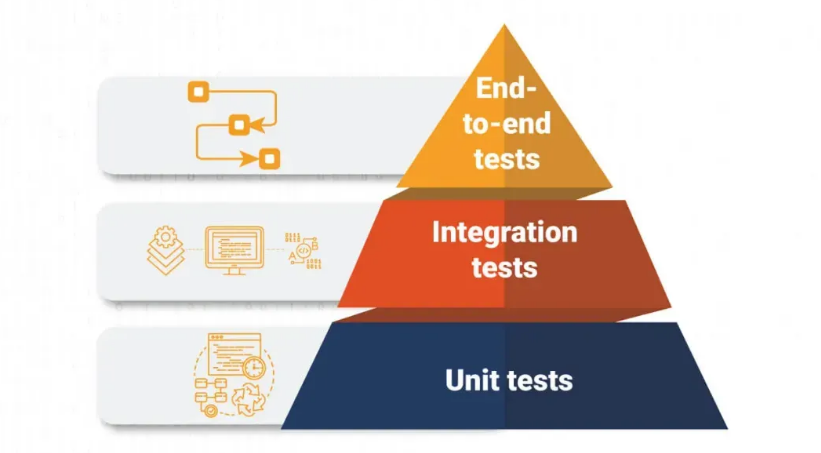
Unit testing is the first level of testing, and it is done mostly by the developers who built the application, since they have first-hand knowledge of the logical execution of the code.
For example, consider an eCommerce application with features like product filtering, a payment gateway, and a login and logout system. To test the product filtering function, you would make sure it returns the same set of outputs for a given range of colors, brands, and prices. This is done by writing another function that calls the product filtering function with different input parameters and then checks whether the output the function gives matches the output you expected.

Developers mostly use unit testing to validate the functionality, or the logical execution, of the code. Since there can be many functionalities in an application, you may need several unit test cases to cover the execution of each function. For that reason, developers need to keep unit tests from slowing down performance or inflating development time. This is why a test case is not considered a unit test if it talks to the database or depends on the file system, since those dependencies would slow it down. When a unit needs such a dependency, it is usually replaced with a mock or a stub so the test stays fast and isolated.
Because unit testing focuses only on a particular piece of code tested in isolation, each test has a very precise scope. A unit test targets a single piece of code, so when it fails, you know exactly where the fault is. That precision helps you find and fix bugs during the early stages of development.
Pros of Unit Testing
- Developers can detect and fix bugs during the early stages of development, which improves the quality of the code. Refactoring also becomes much easier when unit tests are in place.
- Catching errors early helps eliminate bugs that could turn into major issues later in development, which saves the developer’s time.
- Unit testing improves the readability and understandability of the code.
Cons of Unit Testing
- Writing unit tests for every functionality can be cumbersome and time-consuming.
- Even though units are tested in isolation, not all errors are caught this way. Some errors appear only when different modules interface with each other, and those are usually found during integration testing.
- Because unit testing checks the logical implementation of the code, it cannot assess non-functional characteristics such as usability, scalability, and performance.
Techniques of Unit Testing
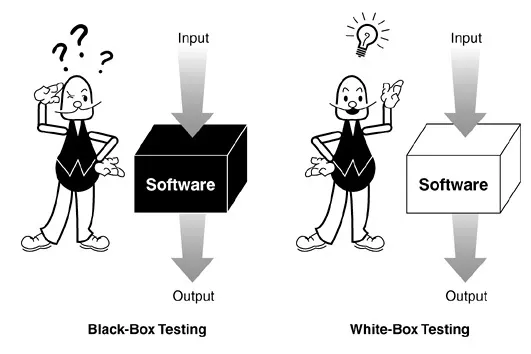
Unit testing techniques are of three types.
- White box testing: Also known as glass box, transparent, or structural testing. This approach requires in-depth knowledge of the internal structure of a function, allowing testers to validate its logical behavior.
- Black box testing: Here, test cases are designed without any knowledge of the internal structure of the program, based entirely on analyzing the input and output behavior of the function. It is also known as functional testing, since cases are designed purely from the user’s point of view.
- Gray box testing: Also known as semi-transparent testing, this is a mixture of black box and white box testing. Testers know the internal structure and how it works, but that knowledge is limited.
Myths of Unit Testing
"Unit testing increases the burden on a project"
While part of this may feel true, unit testing protects your product from major bugs and issues in later development stages. Because it encourages code reusability, it actually saves development time and effort overall.
"It’s a simple piece of code, therefore it does not need testing"
Again, part of this may feel true. But you never know where an error will come from in the future. Code can seem simple until something goes wrong. Writing test cases for even the simplest piece of code adds stability and security to your product.
Conclusion
Unit testing is often called the heart of the development lifecycle. It helps you detect bugs in the early stages of development and saves time, effort, and cost, which makes it a crucial part of any project. There are other levels of testing as well, such as integration testing and end-to-end testing, but unit testing is the core that the others build on. If you want to move faster, Keploy’s unit test generator can create unit tests for you automatically, so you get coverage without hand-writing every case.
Frequently Asked Questions
What is a "unit" in unit testing?
A unit is the smallest piece of code that can be tested on its own, such as a single function, a class, an interface, or a module. The defining trait is that it can be tested in isolation from the rest of the application.
Who is responsible for writing unit tests?
Unit tests are usually written by the developers who built the code, because they have first-hand knowledge of its logic. Since unit testing is the first level of testing, it typically happens as the code is being developed rather than afterward.
Why shouldn’t a unit test talk to the database or file system?
A test that depends on a database or the file system is slower and no longer isolated, which means it is not really a unit test. Those external dependencies are normally replaced with mocks or stubs so the unit test stays fast and self-contained, while real dependencies are exercised later during integration testing.
What is the difference between unit testing and integration testing?
Unit testing checks a single piece of code in isolation, so a failure points directly to where the problem is. Integration testing checks how multiple modules work together, which catches the class of bugs that only appear when components interface with each other.

Leave a Reply