Tag: api-testing-tools
-
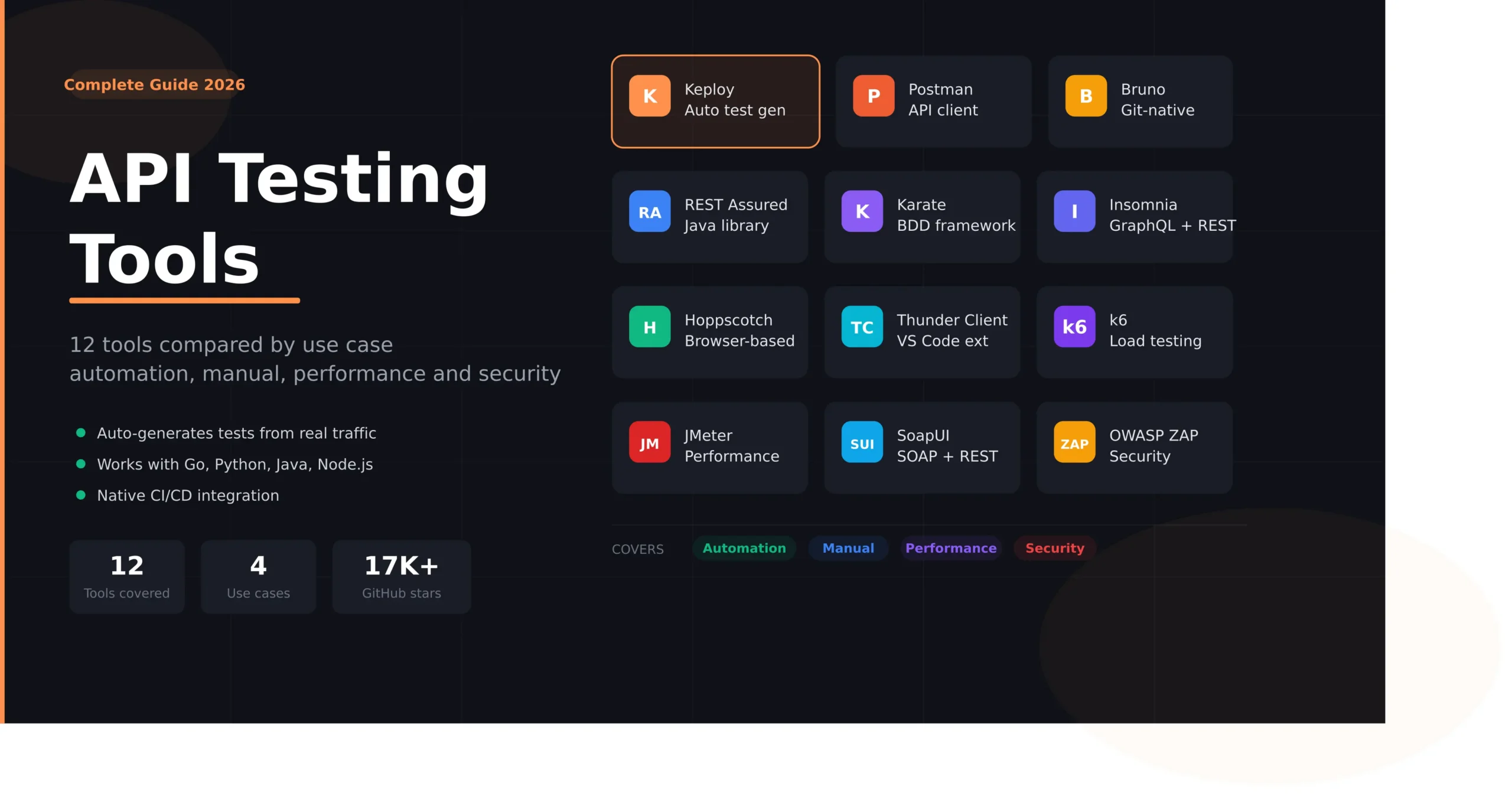
API Testing Tools: The Complete Guide for 2026
Last updated: August 2026 API testing tools let teams validate, automate, and monitor APIs without writing every test by hand. They send requests, assert on responses, mock dependencies, and run inside CI/CD. Alongside traditional options like Postman, REST Assured, and SoapUI, open-source automation tools such as Keploy are gaining ground, with Keploy generating ready-made test…
-
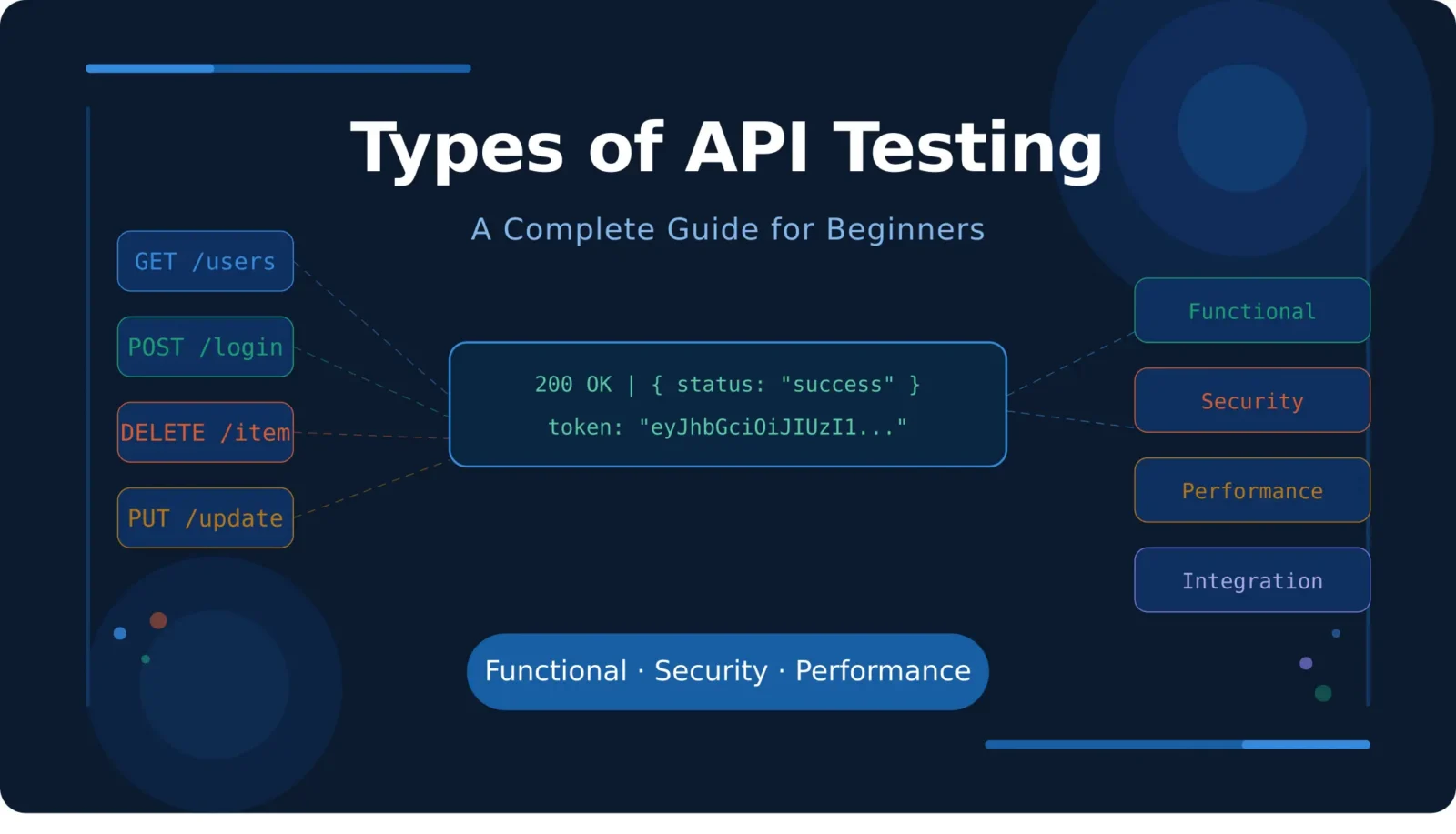
10 Types of API Testing Explained with Examples (2026)
The main types of API testing are functional, integration, load and performance, security, validation, contract, and fuzz testing, each checking a different dimension of how an API behaves. Covering them by hand is slow, which is why teams lean on automation to keep up. Keploy generates tests and mocks across these scenarios straight from real…
-
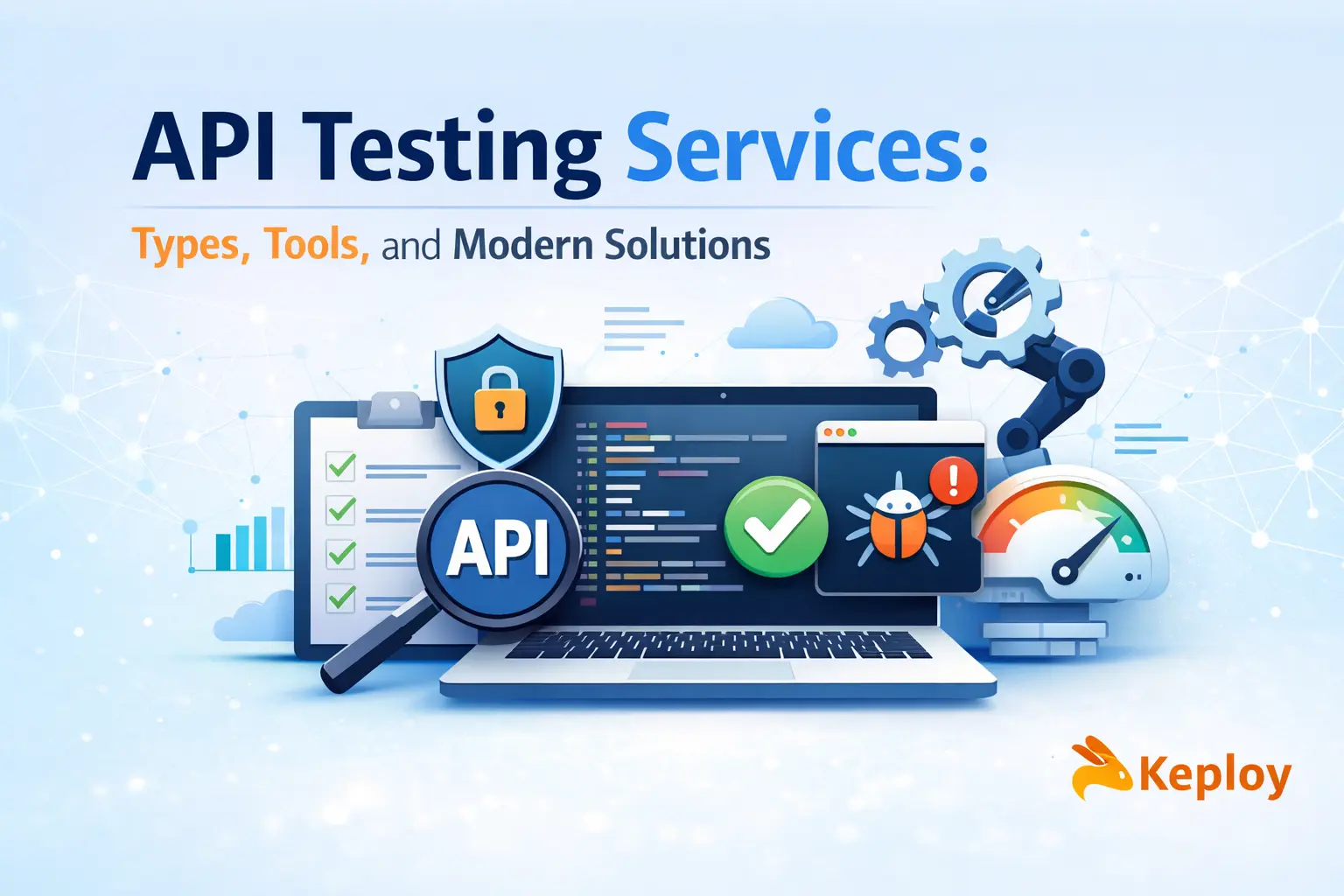
API Testing Services: Solutions, Process, Tools & Best Providers
API testing services help organizations validate API functionality, performance, security, integrations, and reliability across the software lifecycle. These services are typically delivered by QA teams, testing vendors, or automation platforms to ensure APIs work correctly in real-world environments. APIs are no longer just backend infrastructure—they are the backbone of modern digital products. Whether you’re building…
-
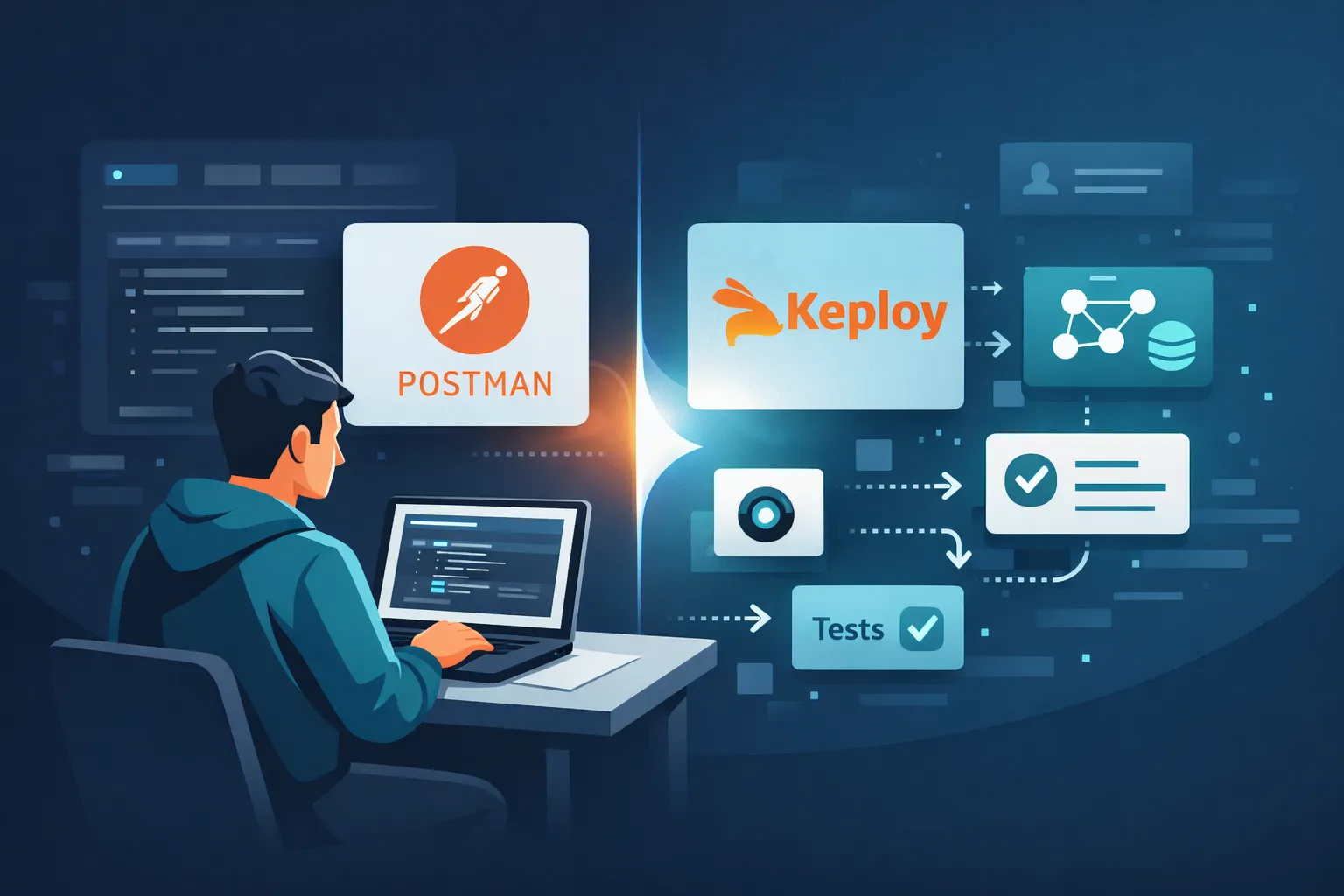
Postman Alternative: The Best API Testing Tools to Use in 2026
A Postman alternative is any API testing tool that can replace Postman for sending HTTP requests, automating tests, or managing API collections. The best options in 2026 include Keploy, which auto-generates API tests and mocks from real traffic, alongside Insomnia, Hoppscotch, Bruno, and SoapUI for manual and exploratory work. A Postman alternative is any API…
-
Top Software Quality Assurance Tools for Modern Teams
Shipping fast without bugs requires specialised tools at every layer – UI automation, API validation, performance, security, and test management each demand different solutions. Keploy anchors the API layer by generating tests automatically from real production traffic, eliminating manual scripting. This guide covers 10 tools across every QA category to help teams build the right…
-
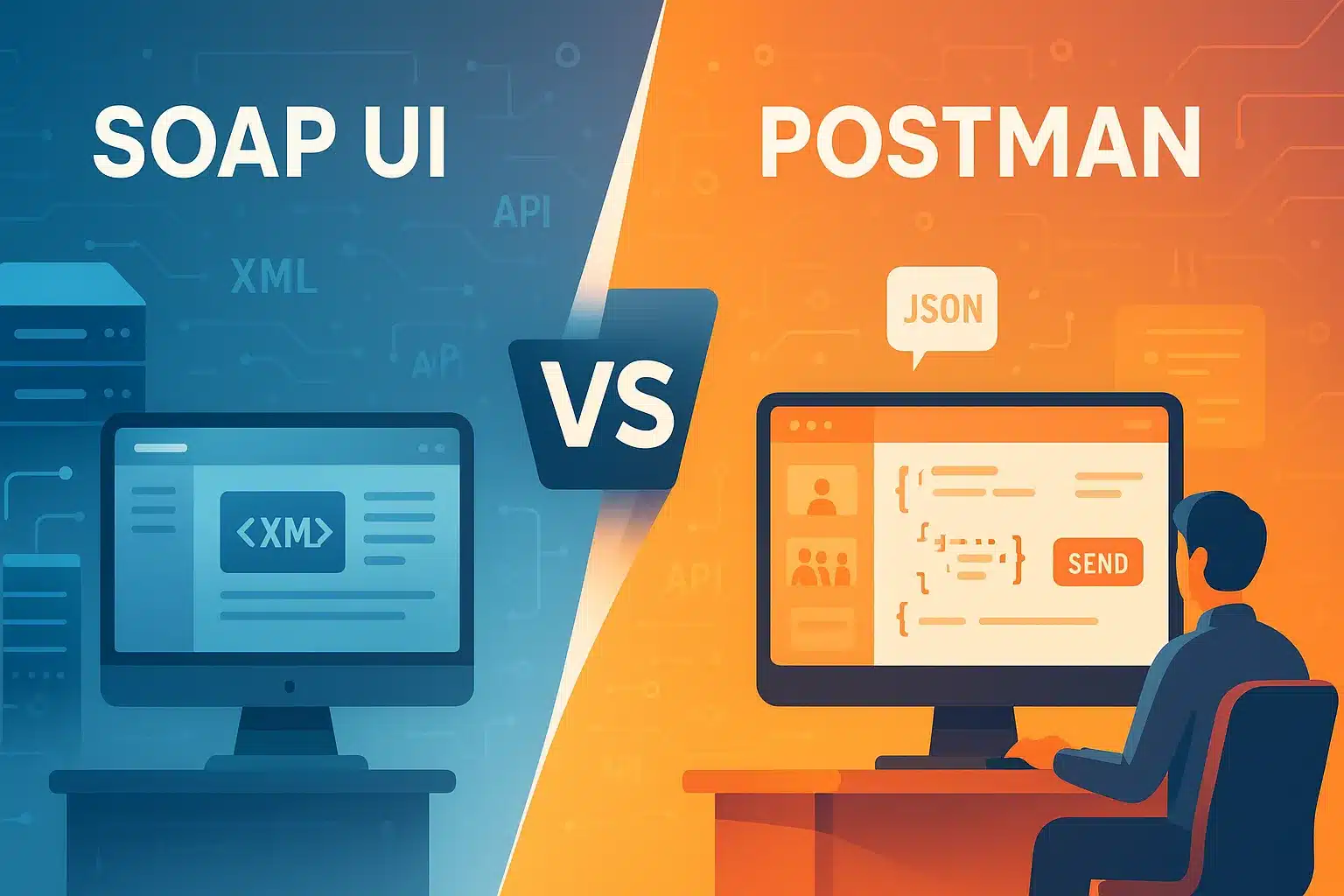
SOAP UI vs Postman for API Testing: Which Should You Use?
Developers and Quality Assurance (QA) teams utilize many different API testing and validation tools to help them simplify the processes of testing, debugging, and validating APIs in the increasingly API-centric world of software development. Modern teams often combine End-to-End Testing with API-level testing to ensure full workflow reliability. Key Takeaway: While SoapUI and Postman both…
-
What is API testing? The complete guide (2026 update)
API testing is a software testing practice that validates application programming interfaces directly at the message and logic layer, rather than through a user interface. It checks that endpoints return correct responses, handle errors, enforce security, and perform reliably under load, verifying functionality, data integrity, and reliability before an application reaches production. API testing operates…
-
5 Best Open Source API Testing Tools in 2026 (Updated)
APIs have become the backbone of communication between applications in today’s software-oriented world. Digital systems are increasingly complex due to the proliferation of microservices and distributed systems, making API testing both efficient and crucial. A recent study projects the API testing industry to grow from USD 4.92 billion in 2025 to USD 27.38 billion by…
-
Essential Free API Testing Tools Every Developer Should Know
API testing is an essential aspect of contemporary software development, ensuring that the interfaces between various components and systems function correctly. In this blog post, we will dive into some of the top free API testing tools that every developer should know about! From basic HTTP clients to comprehensive testing suites, these tools cover a…
-

Everything You Need to Know About Unit Testing
What are APIs? An API is a set of protocols and tools for building software applications. It specifies how software components should interact with each other, allowing them to communicate and exchange data. APIs often expose data and functionality through a set of endpoints, which are URLs that accept requests and return responses. Why use…