Tag: developer
-

What is Unit Testing?
Unit testing is a software testing method that verifies individual units of code, typically functions or methods, in isolation to confirm each behaves as expected. Written and run by developers and usually automated with frameworks like JUnit or pytest, unit tests catch bugs early and make code safer to refactor and maintain. Introduction Jacob Kaplan-Moss,…
-

Top 8 Code Coverage Tools for Free: A Developer’s Guide to Smarter Testing
The right code coverage tool depends on your language stack – Java, Python, JavaScript, C/C++, and .NET each have purpose-built options that integrate differently with CI/CD pipelines. Coverage percentage alone isn’t the goal; meaningful coverage of critical paths is. For teams wanting to generate coverage from real API interactions rather than hand-writing tests, Keploy’s VS…
-

How CI/CD is Changing the Future of Software Development
In today’s fast-paced software development landscape, implementing a CI/CD pipeline is essential for delivering high-quality applications efficiently. CI/CD (Continuous Integration and Continuous Delivery/Deployment) automates code integration, testing, and deployment, ensuring faster releases and improved software quality. These DevOps practices help teams catch bugs early, reduce risks, and streamline workflows. By leveraging tools like GitHub Actions,…
-

Top 5 AI Tools in 2025: Developer Should Must Try
AI agents have taken over the software space and have reduced the time to ship products exponentially. 2025 is shaping up to be the year where AI tools truly become indispensable. Whether you’re debugging, testing, or automating workflows, there’s an AI-powered solution ready to supercharge your coding game. In this blog, we will look at…
-

YAML vs YML: Is There a Difference? Complete Developer Guide
Key Takeaway: YAML and YML are identical in functionality — both extensions are valid for YAML files. The official YAML specification recommends .yaml, and most modern tools and frameworks (Docker Compose, Kubernetes, GitHub Actions) default to .yaml. Use .yml only when required by legacy tools or existing project conventions. The content and parsing behavior is…
-

How to Generate Random Numbers in JavaScript
Random numbers are essential in programming, whether you’re building games, simulations, quizzes, or generating unique identifiers. JavaScript provides built-in methods to create random numbers, integers, booleans, and even shuffle arrays. In this guide, we’ll cover everything from basic javascript random number to advanced randomization techniques, complete with code examples. Basics of Generating a Random Number…
-

How to Create a Grafana Dashboard for Keploy: Easy Step-by-Step Guide
In today’s fast-paced development environment, efficient monitoring and visualization of test results are essential for ensuring the quality of your application. Keploy, a zero-code testing tool, simplifies test generation and integration, but how do you effectively monitor and analyze the test data Keploy generates? This is where Grafana, a powerful open-source analytics and monitoring platform,…
-

13 Best IDEs for Python developers in 2025 (Updated)
Python remains one of the most loved programming languages in 2025, used everywhere from web development to machine learning and AI. But to get the most out of Python, you need the right IDE (Integrated Development Environment). The IDE you choose can make a big difference in productivity, debugging efficiency, and code quality. Some developers…
-
![Smoke Testing: Complete Guide for Developers [2026]](https://wp.keploy.io/wp-content/uploads/2024/08/ChatGPT-Image-Jan-16-2026-07_05_35-PM.png)
Smoke Testing: Complete Guide for Developers [2026]
Smoke testing is a quick, shallow round of tests that checks whether a build’s most critical functions work before deeper testing begins. Often called build verification testing, it catches show-stopping failures early. If the smoke test fails, the build is rejected without wasting time on full regression. Smoke testing is a preliminary software testing technique…
-
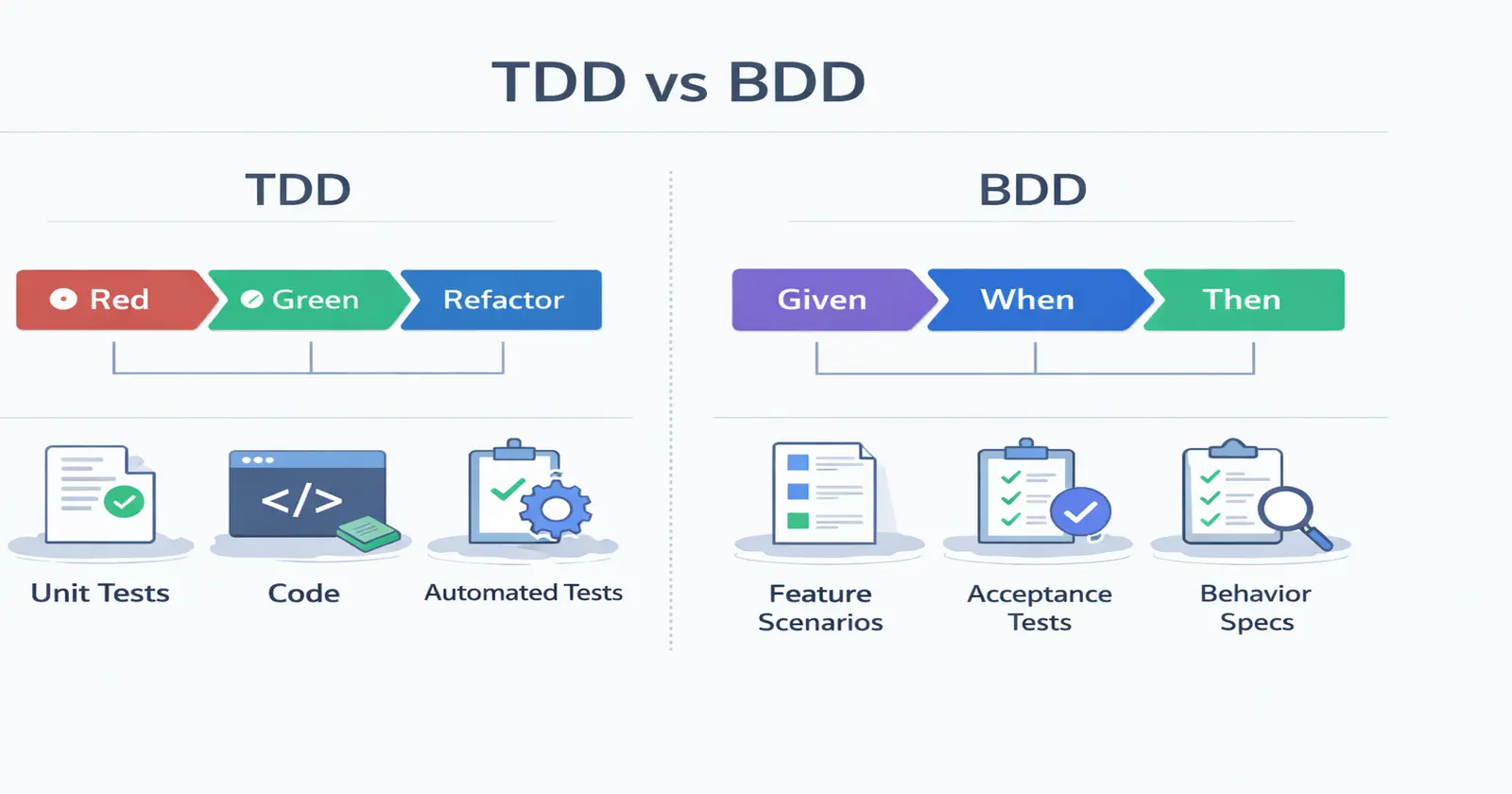
TDD vs BDD: Differences, Benefits, and Use Cases (Updated)
The two most popular methods used in software testing and agile development are Test Driven Development (TDD) and Behaviour Driven Development (BDD). Teams often analyse TDD vs BDD to see how each approach can improve code quality, strengthen team collaboration, and increase overall software reliability. In general, TDD focuses on creating automated tests before writing…