In the last ten years, software testing has advanced significantly, but today’s applications require more than just using conventional forms of automated software testing or entry-level tools that employ artificial intelligence (AI). The rise of microservice architectures, API calls, and continuous deployment has led to another category of software testing products called "Generative" AI Testing tools.
Unlike previous generations of software testing products that provided assistance with various testing tasks, these generative AI testing tools actually generate test assets in addition to assisting with testing activities; thus, increasing the speed, effectiveness, and scalability of Quality Assurance processes.
What Are Generative AI Testing Tools?
Testing Tools for Generative AI use the power of machine learning and large Language Models (LLMs) To Automatically create testing artefacts. In addition to using a pattern analysis approach by optimising material testing tools, generative AI testing tools leverage machine learning to produce completely new test cases, test data, as well as mock and stub objects based on actual application behaviour.
Unlike conventional AI testing tools that focus on future test predictions or optimisation of existing test cases (i.e., reviewing and updating), Generative AI creates:
-
Test Cases based on Actual Traffic and/or Code Execution
-
Mocks and Dependency Objects Created Automatically
-
Tests Adapt to the Application Over Time
As such, there’s enormous potential for both Developers and QA Analysts to rapidly create a huge number of Updated Test Cases, Mocks and Dependency Objects so that they are always on top of changes made in real-time and can maintain high-quality consistency of the code across multiple releases.
How Generative AI Testing Tools Differ from AI Testing Tools?
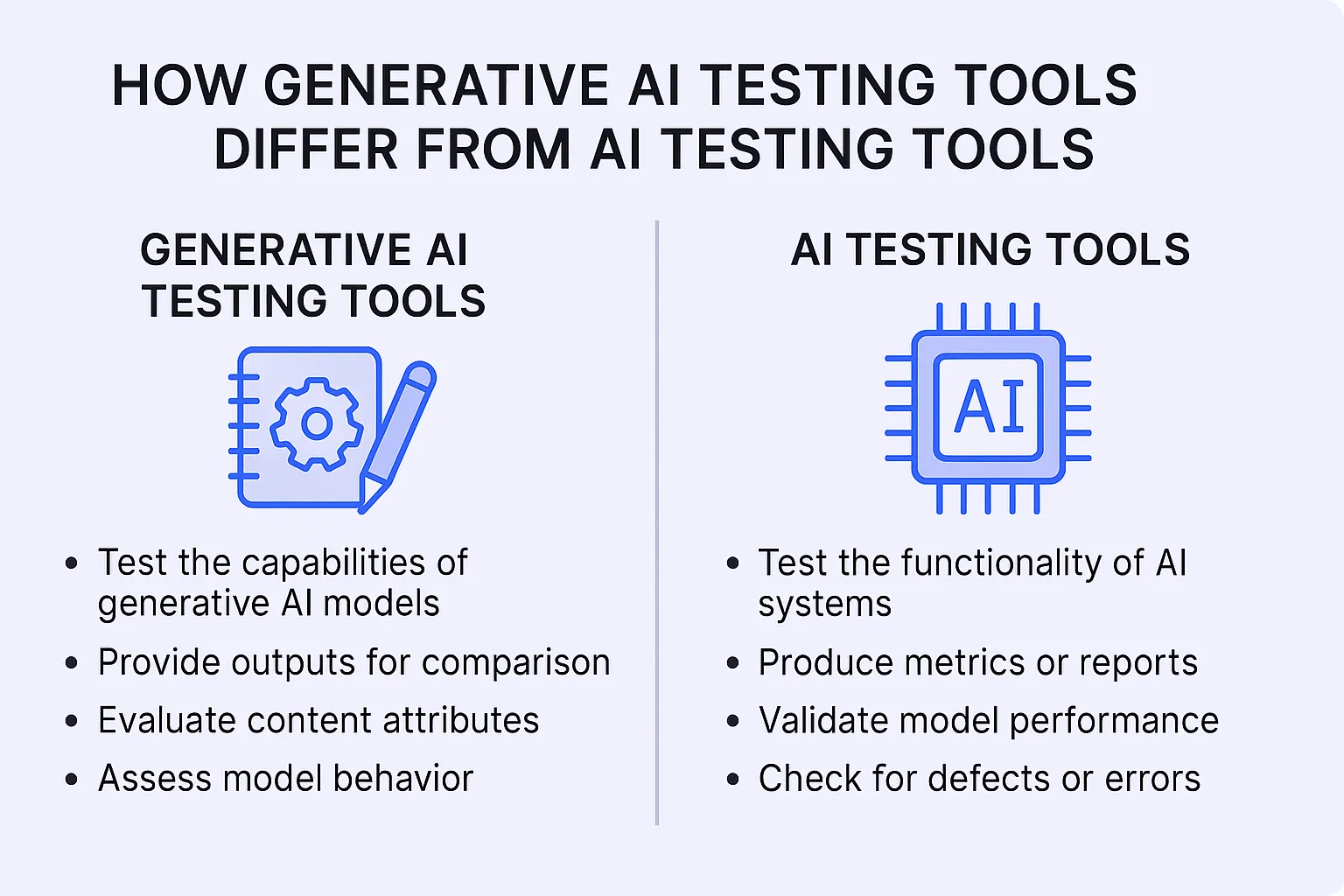
Testing tools for traditional AI test methods generally concentrate on enhancing the efficiency of the testing process (i.e., identifying flaky tests, priorititizing tests to be executed, and identifying visual changes). Whereas with the generative AI test method tools, you can take that a step further by generating new test logic automatically.
In short:
Traditional AI test tools improve efficiency by optimizing the testing process.
Generative AI test tools enable the automation of the creation of tests.
The use of generative AI test method tools greatly alleviates the need for human effort involved in writing and maintaining tests.
Core Capabilities of Generative AI Testing Tools
With some of the latest AI technology available to you through Generative AI test tools, you will experience many advantages not available with traditional tools.
-
Automated Test Case Generation
Generative AI tools are able to create great test cases without the need for test scripts by analysing API calls data, logs from an application or user interactions.
-
Smart Mock and Stubbing
Mocking dependencies of an application like third-party APIs or microservices are now automatically created which allows for greater reliability and decreases test flakiness.
-
Natural Language Based Testing
Some of the new Generative AI tools allow you to write your scenarios in plain English and convert them into executable test cases.
-
Continuous Adaptation
Tests will evolve automatically as your application changes, which will reduce your overhead associated with maintenance.
How Generative AI Testing Tools Work?
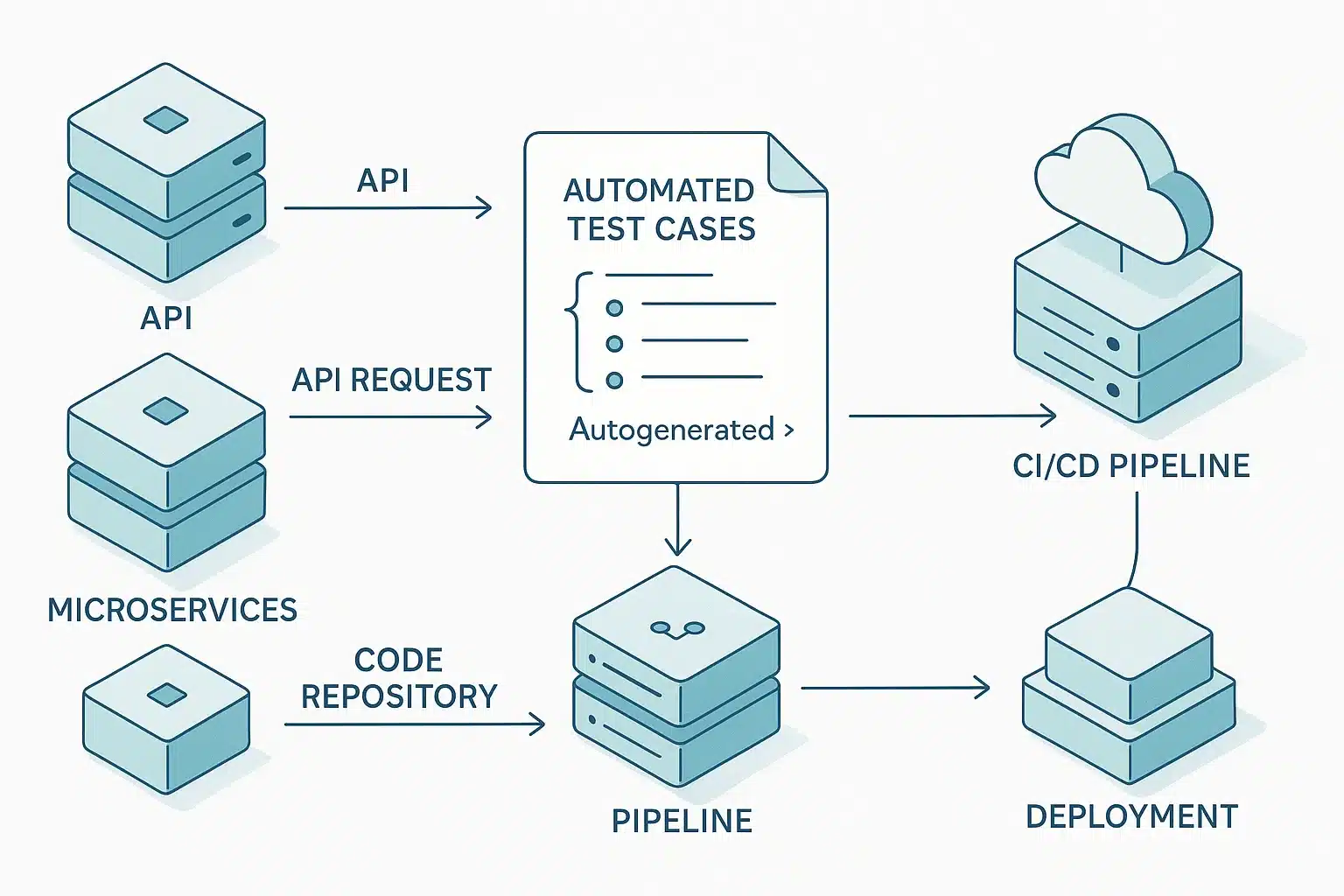
A simple yet powerful approach to the development process involves:
-
Collecting application-related information from actual applications, including API Traffic, Execution Traces, and Logs, etc.
-
Generating behavior of the application is based on this collected information through a generative model.
-
The Generative Model will automatically generate Test Cases, Mocks, and Data Sets for the application.
-
Generated Test Cases are validated during execution and may be integrated into the Continuous Integration and Continuous Deployment (CI/CD) pipeline(s).
-
As part of the process, feedback from the execution of test cases can improve future test generation.
This feedback loop allows for the continuous improvement of the tests alongside the ongoing development of the application.
Types of Testing Best Suited for Generative AI
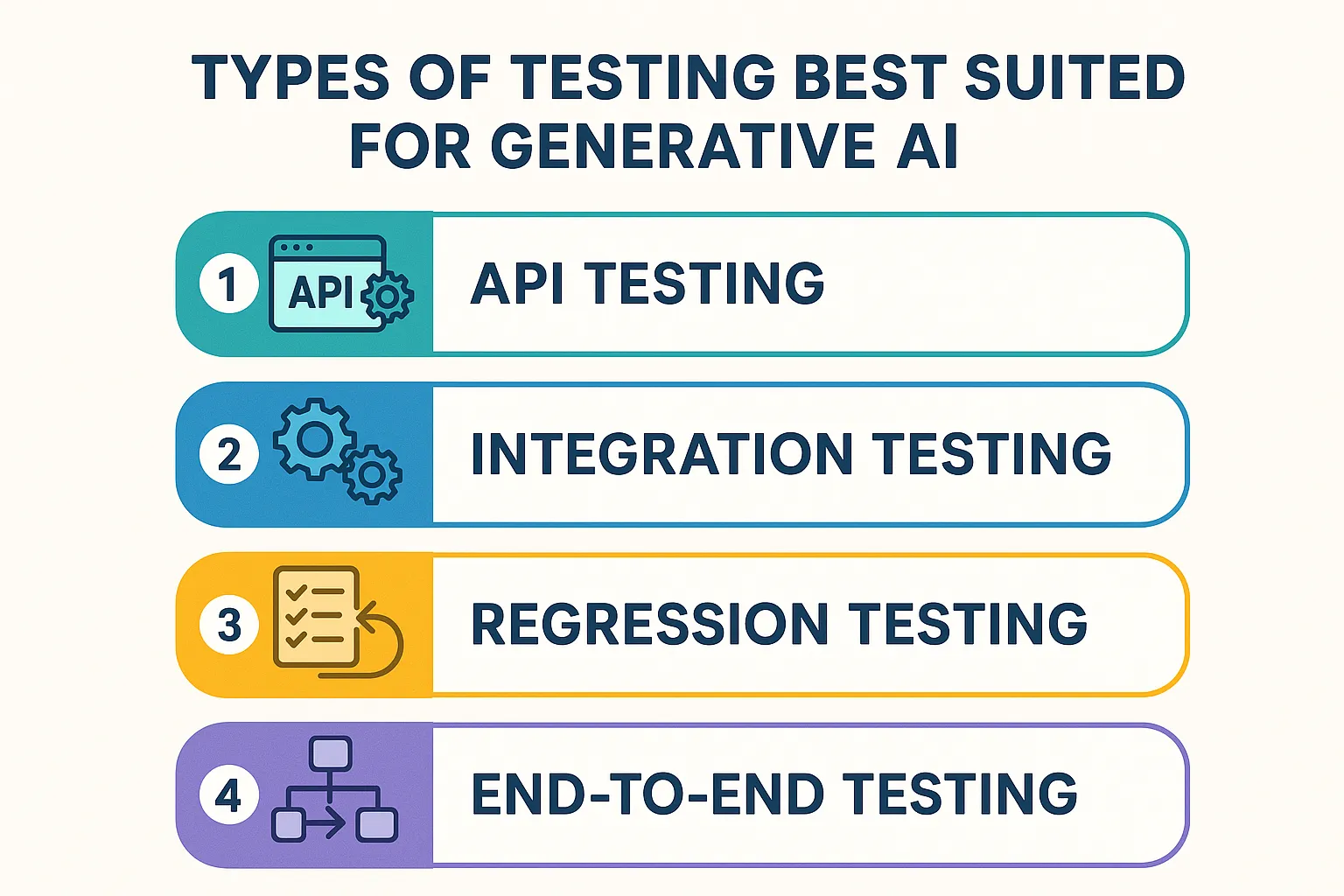
Generative AI Test Tools excel in areas such as:
-
API Testing – Automated (reusable) test cases from API calls.
-
Integration Testing – Tests the interaction of microservices together.
-
Regression Testing – Quickly documents new edge cases after release.
-
End-to-End Testing – Tests entire end-user workflows with minimal manual interactions.
They excel in areas of high-speed testing and coverage.
Benefits of Generative AI Testing Tools
The benefits of implementing generative AI testing solutions include:
-
Drastically reduced creation time to create MANUAL tests
-
Quicker onboarding for Development and Quality Assurance teams
-
More thorough and realistic test coverage
-
Significantly reduced amount of ongoing TEST maintenance over time
-
Increased confidence to continue releasing TEST software more frequently
The aforementioned advantages directly correlate to shorter release cycles for organizations that employ Continuous Integration/Continuous Delivery processes.
Popular Generative AI Testing Tools
Companies are increasingly using several tools to facilitate the adoption of Artificial Intelligence (AI) testing in Software Development (DevOps) organizations, particularly in environments with many APIs or microservices. Keploy is an excellent example of how generative AI has been integrated into back-end API testing. Keploy collects real API traffic and automatically converts that data into reusable test cases and mocks. This extremely helps teams that want to increase test coverage without extensive manual labor for API and microservice testing.
In the area of User Interface (UI) Testing and End-to-end Testing, Testim uses generative AI to create and maintain fully automated test workflows as applications change. These tools learn from user interaction and execution history, which reduces flaky tests and increases the reliability of AI-automated test automation. Mabl utilizes Generative AI to generate and execute end-to-end Testing workflows, thus enabling users to validate mission-critical user journeys as part of their continuous AI Testing Strategy in their Continuous Integration/Continuous Delivery (CI/CD) pipeline.
In general, these tools illustrate how AI testing has evolved from standard automation to systems that can monitor actual application functioning, dynamically generate tests, and continuously enhance the quality of testing through continued improvement of the software.
Real-World Use Cases
Testing tools powered by Generative AI can be found in:
-
SaaS organisations that continuously add new features at a fast pace
-
Applications built using cloud technology or microservices architecture
-
Start-Up companies looking to streamline their testing processes on limited resources
-
Large Corporations who are trying to be able to increase their Quality Programmer without having to double the staff that does testing.
Immediate benefits can be seen from using testing tools created with Generative AI where traditional Automated testing cannot keep up.
Challenges and Limitations
While generative AI testing tools offer many advantages, they also have some challenges that must be considered:
-
Human Validation is required for generated tests.
-
The Quality of generated tests is heavily dependent upon the accuracy of the input data used to create them.
-
There are considerable security and privacy issues that must be managed with generated tests.
-
The majority of teams require a period of adaptation to successfully implement AI-based testing workflows.
Awareness and understanding of these limitations will allow teams to be more successful in the adoption of generative AI testing tools.
Best Practices for Using Generative AI Testing Tools
Maximising the benefits from:
-
Begin testing at the API level prior to UI testing
-
Utilise AI generated tests that are overseen by humans
-
Incorporate tools into CI/CD processes as soon as possible
-
Monitor how much you are covering and detecting defects
All of these best practices will help create automated, stable environments.
The Future of Generative AI in Software Testing
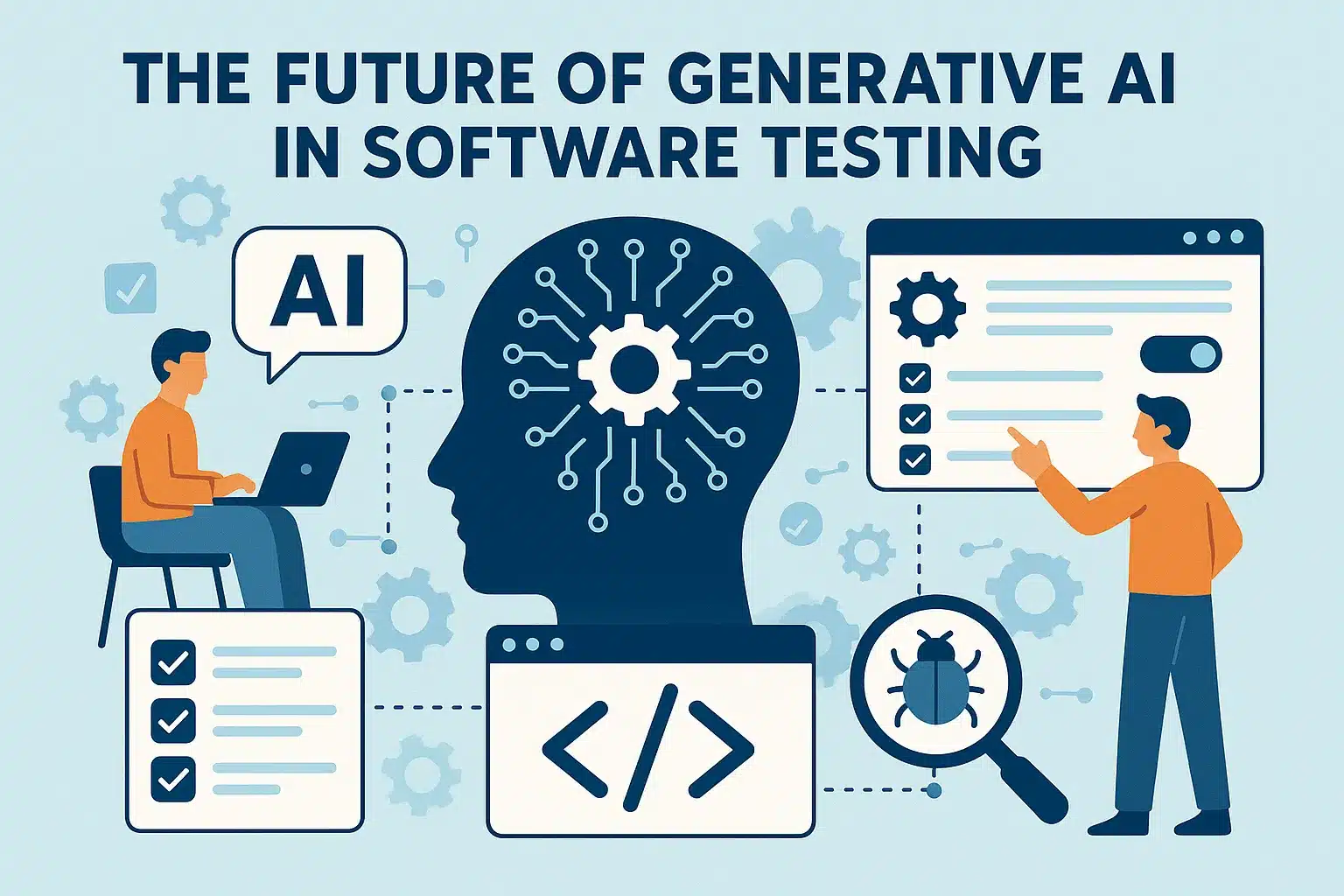
Generative AI testing tool is a major step toward an independent and autonomous approach to testing systems. Testing frameworks of the future will create automated test cases, including decision making on the what, when and how. In the future, generative AI will help transform QA into a strategic, intelligent-led approach.
Conclusion
The future of Quality Assurance (QA) and testing will include the continued advancement and adoption of generative AI-powered testing tools. The developments made possible through generative AI-powered testing tools provide improved speed, coverage, and maintainability to address age-old challenges. For those teams already utilising AI testing tools, generative AI represents a natural evolution towards creating scalable and intelligent Quality Assurance Practices.
Frequently Asked Questions (FAQs)
1. What problems do generative AI testing tools solve?
They solve the challenge of reducing repetitive creation of tests, increasing the effort involved in maintaining those tests, decreasing the number of flaky tests and, enabling scalable testing of microservices and CI/CD (Fast Delivery) environments.
2. In what ways are generative AI testing tools different from AI testing tools?
AI testing tools focus on optimising and analysing already created test cases; for example, decreasing the frequency of flaky tests, and predicting which tests will fail. Generative AI testing tools take it a step further by generating new test cases (based on real behaviour of an application) and also providing testing assets that can be reused.
3. Can generative AI testing tools replace manual testing?
No. Generative AI testing tools cannot replace human testers in all areas. Human validation will still be highly required especially in areas of exploratory testing and User Experience (UX) testing. However, these tools will significantly reduce the amount of repetitive test creation and maintenance work that humans would otherwise do.
4. Are generative AI testing tools suitable for API testing?
Yes, generative AI testing tools are well-suited for API testing. Generative AI testing tools can capture real-time API traffic and create automated test cases/mock objects that can be reused.
5. Who are the best users for using generative AI testing tools?
SaaS teams, Startups, DevOps Organisations and any Enterprise organisations using microservices or cyclical delivery schedules, would benefit the most from utilising Generative AI testing tools.

Leave a Reply