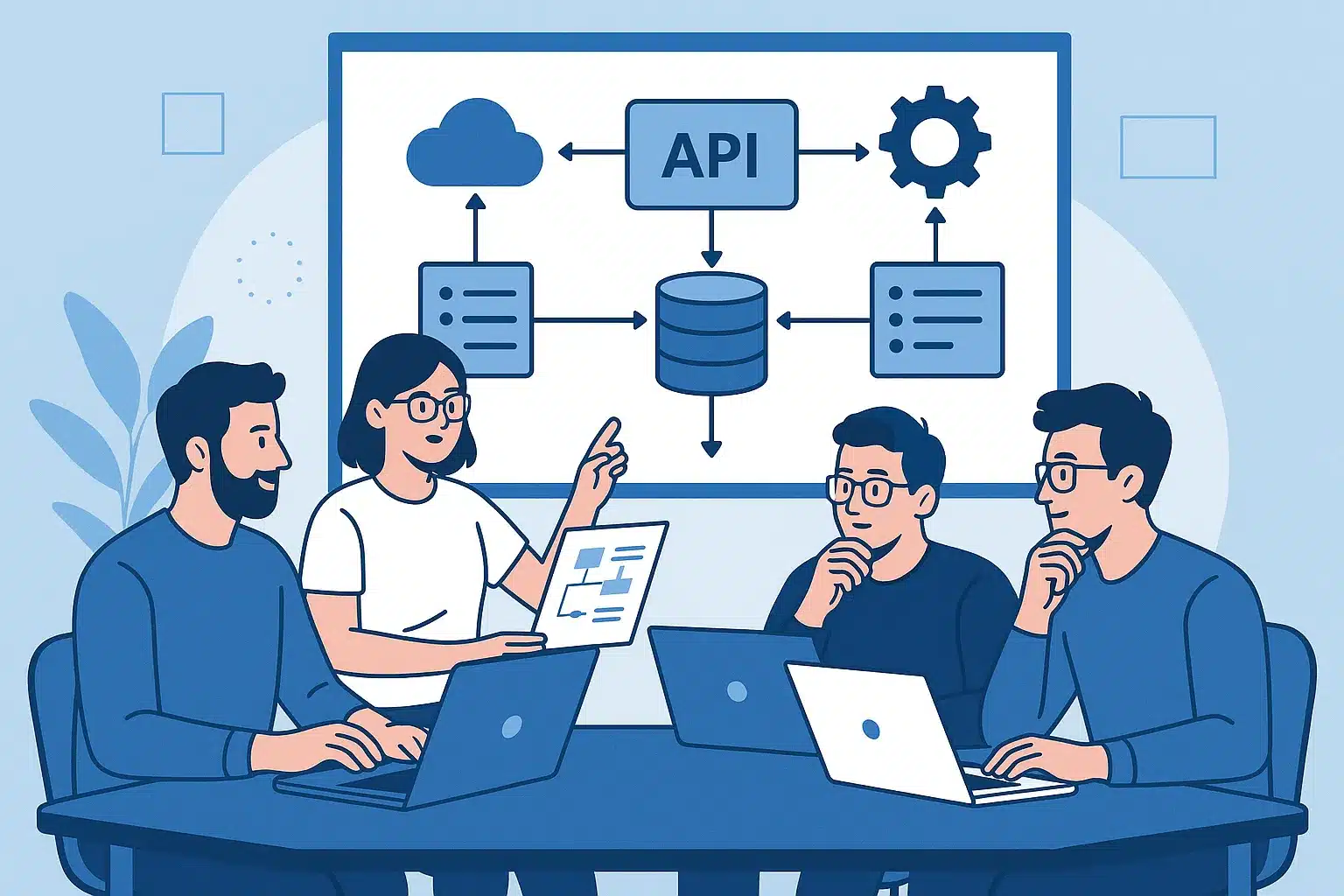
In today’s world of software development, API-first has become more than a trend it is a best practice that allows teams to build scalable, modular and best of all future-ready applications. In an API-first approach, the Application Programming Interface (APIs) are not an afterthought, they are envisioned, documented and agreed upon before the development of an project in begins.
By thinking about the API first, teams can build each component of the application; frontend, backend, mobile, and integrations can all be developed in parallel with the benefits of clear communication and consistent flow of data.
What Is API-First?
API-first development is an approach where the API contract (endpoints, data structures, and expected behavior) is created and finalized before any coding begins. This contract defines how systems interact and ensures consistency across all services.
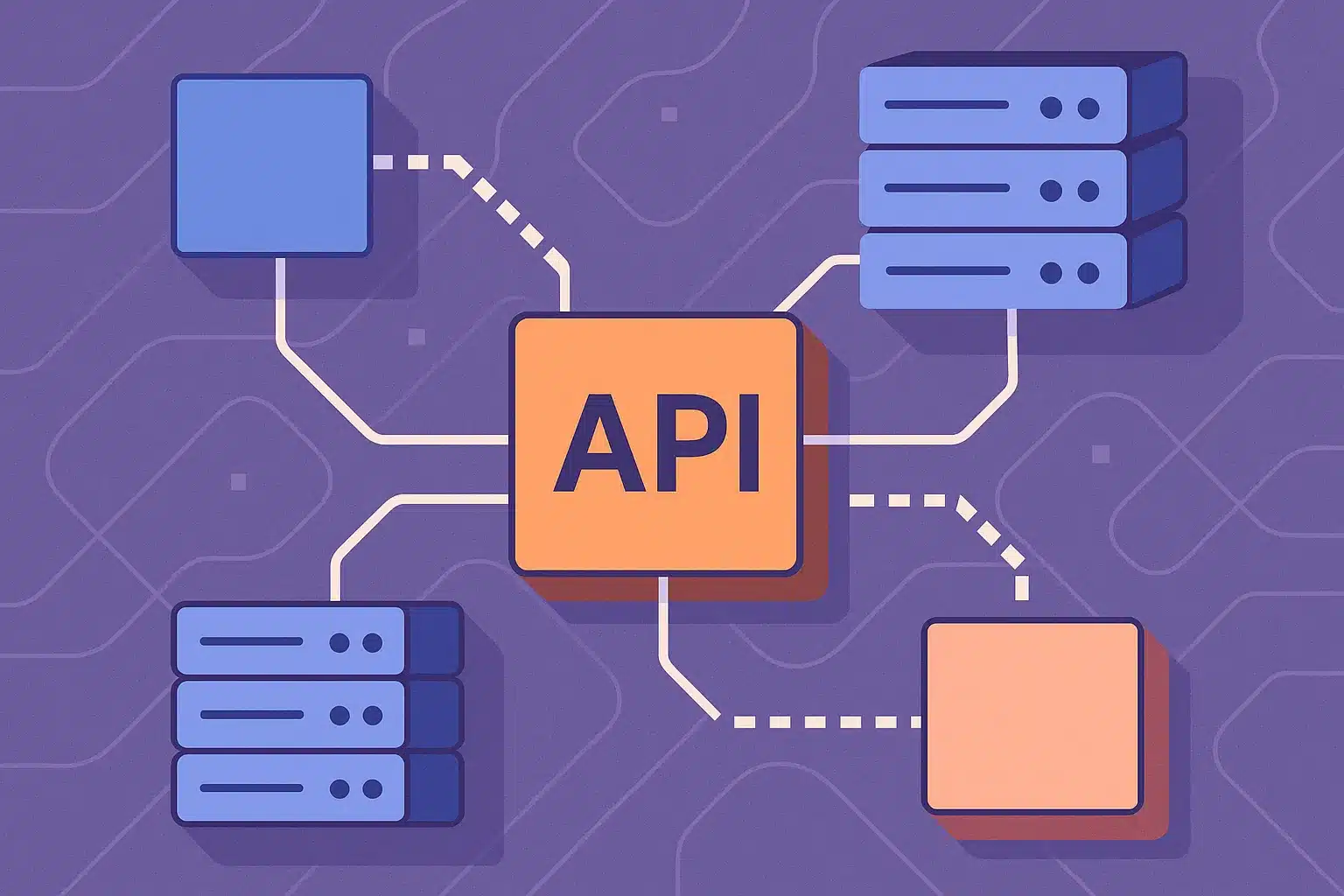
Instead of writing code first and generating APIs from it (the code-first model), API-first ensures that APIs are the foundation of your application architecture.
Key Tools Used in API-First:
-
OpenAPI/Swagger: For designing and documenting REST APIs.
-
RAML or API Blueprint: For defining API structures.
-
Postman and Stoplight: For mocking, testing, and collaborating on APIs.
Why API-First Matters
1. Faster Time-to-Market
API contracts enable teams to code at the same time. Backend developers are able to build functionality while frontend developers work with mock APIs, allowing for faster release cycles.
2. Better Developer Experience
Clear documentation and predictable responses for internal and external developers to integrate will diminish friction and allow for faster development.
3. Scalability and Reusability
Mobile applications, web applications, and third-party integrations can utilize APIs for reusability that create a more modular and scalable environment.
4.Consistency Across Platforms
Because all clients utilize the same API contract, the data representation and behavior are consistent.
5. Strategic Business Value
APIs enable partnerships, integrations, and monetization through an API marketplace.
API-First vs. Code-First
| Feature | API-First | Code-First |
|---|---|---|
| Definition | Design API before writing code | Write code and expose an API |
| Speed | Allows parallel development | Slower, as API is secondary |
| Consistency | More consistency because of contracts | Low, depends on developers |
| Best For | Larger or distributed teams | Small projects or prototypes |
How to Implement API-First
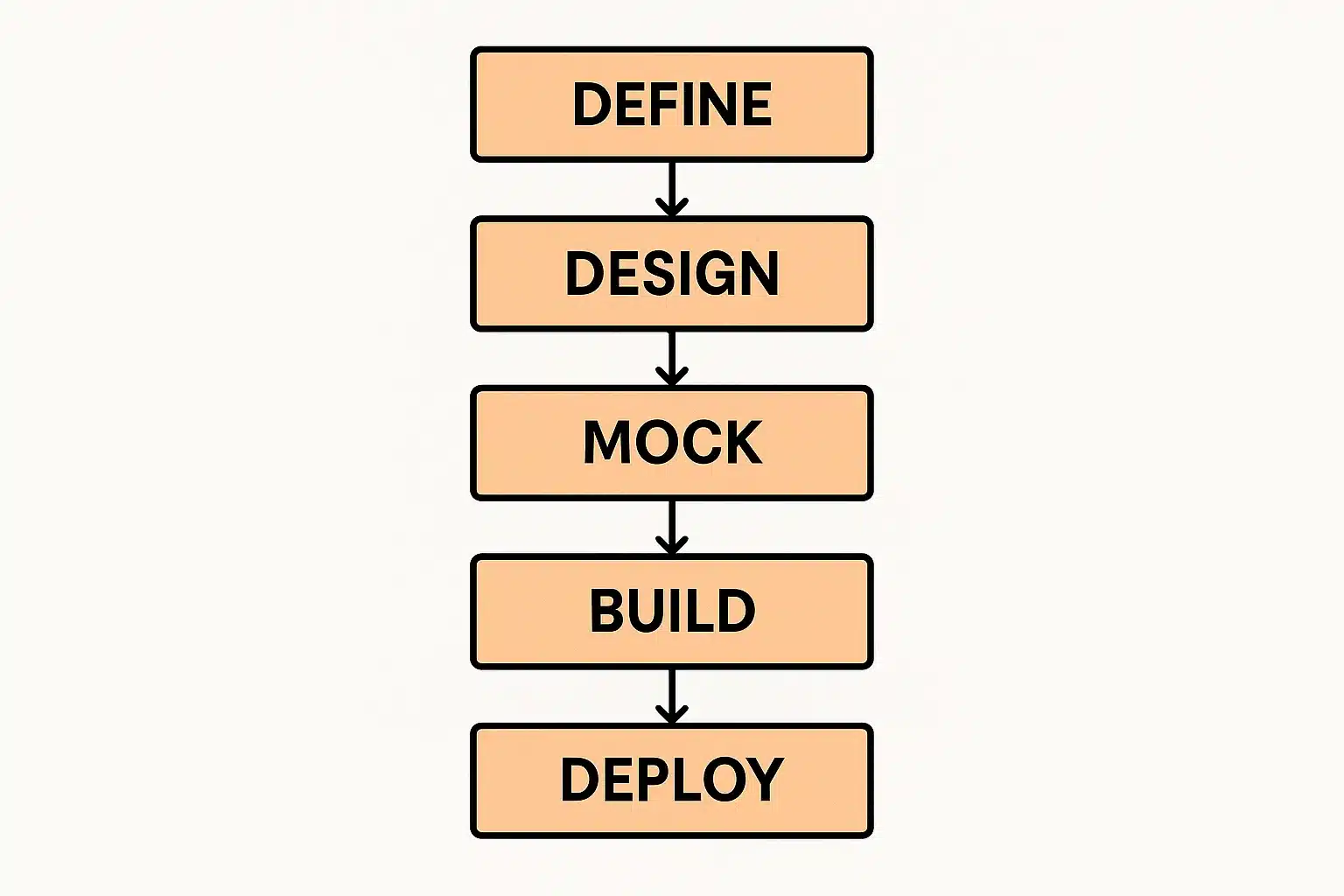
Step 1: Define the Purpose
The first step is to determine for whom you will have your API consumed, and what operations will those individuals need? This process includes identifying what your primary functionalities and resources are.
Step 2: Create the Contract
The next step is using either OpenAPI or RAML to create your endpoints, request parameters and responses. Be sure to ask for feedback across teams.
Step 3: Mock APIs for Testing
Once you have closed your contract, and you can mock the APIs without the backend present. You can use tools such as Postman or SwaggerHub to create your mock APIs. This allows for your developers to start testing their integrations sooner.
Step 4: Build the Backend
After finalizing the contract, the backend teams will build the logic that the API requires, making sure to adhere to the API definition.
Step 5: Test and Validate
With the API built, then it is time to automate API testing. You can use tools such as Keploy or k6 to automate and assure performance as well as adherence with the contract.
Step 6: Document and Govern
Be sure to automatically build and manage API documentation for internal stakeholders and code-friends. Ensure that it is accessible and current.
Benefits of API-First
-
Better Collaboration: Clear contracts create streamlining conversations and silos between teams.
-
Less Mistakes: Clear inputs and outputs reduce integration problems.
-
Better Integration: Third-party developers can integrate without backend access.
-
Better Security: Centralized governance and consistent authentication standards.
-
Platform Agnostic: With an API, it is easy to incorporate new services or applications.
Real-World Applications of API-First
-
SaaS Platforms: Allow third-party developers to integrate external tools seamlessly.
-
AI & Machine Learning: APIs expose models for prediction, scoring, and automation.
-
E-Commerce: APIs manage product listings, payments, and customer data.
-
PropTech & Real Estate: Enable data exchange between investment portals, CRMs, and analytics dashboards.
Difficulties in API-First Development
Although an API-first method provides significant long-term value, it is also the case that it can be more difficult to implement in an organization for a number of technical and organizational reasons. If you understand these upfront, you will be able to more effectively navigate a future implementation approach for your organization.
1. Initial Time Investment
Using an API-first approach necessitates time and an upfront investment in the project. The team will need to produce the API contract up front, document the endpoints, and obtain stakeholder agreement before any code is written.
The entire process can feel like the team is moving slowly compared to the code-first approach, however, this initial time investment is worth is for the quicker releases you will see later on, fewer integration errors, and lower maintenance costs. The important action is for your team to treat this design time upfront as an investment, instead of disruption.
2. Governance and Standardization
In the absence of sound API governance, teams may have inconsistent naming conventions, endpoints or formatting practices. This, in turn, makes integrations challenging and raises maintenance costs. Therefore, companies should establish general guidelines around API design, versioning and approval workflows. An API design team or governance platform (e.g. Postman, Stoplight, and Apigee) can help ensure consistency in all projects.
3. Versioning.
APIs need to evolve as their products and designs evolve or change, but breaking functionality to users leads to a loss of trust or product development. Managing API versions can be tricky, especially in large-scale platforms, as sometimes you need to support multiple versions at the same time. To solve this, teams should consider semantic versioning (v1, v2), deprecation policies, and backward compatibility practices. You will also want to communicate these policies to consumers in a clear and well-documented way.
4. Tooling and Skill Gap
API-first development entails familiarity with tools such as OpenAPI, SwaggerHub, Postman, and Keploy, as well as experience with API design practices. Developers that are not experienced with these topics may have a difficult time at first and experience poorly designed APIs or duplicative work because they lack basic skills. Training sessions, internal workshops, with clear examples in a shared style guide can slow the skill gap and develop a culture of developing usable APIs.
5. Collaboration Overhead
API-first development requires multiple stakeholders to review the API along the way, backend engineers, frontend teams, product managers, and QA team members. When everyone must be up to date on API specifics, changes to the APIs, and addition of priorities in API development, things can slow down substantially if not handled well.
The best recommendation to overcome this is to use collaborative API design tools, while keeping a single source of truth. Change should be reviewed frequently and a clear change log shows everyone is up to date.
6. Managing API Documentation
Using updated documentation is one of the major headaches for a team in an API first world Where the API contract may change and the documentation does not, developers may confuse themselves and break the integration.
In order not to have conflicting information develop as time goes on, teams need to manage automation of documentation change – this could be through OpenAPI specs, or gateway API documentation that is real time synced.
Helpful API-First Best Practices
-
Consider APIs as Products: Each API should have a specific function, audience, and durability.
-
Standard Naming Conventions: Naming conventions can help with reading endpoint names consistently.
-
Versioning: Use versioning (ex. semantic versioning v1, v2) to maintain backwards compatibility.
-
Testing: Make automated tests to include unit tests, integration tests and contract tests.
-
Monitoring: Use API analytics to monitor uptime as well as length of response time.
-
Security: Strengthen authentication (ex. OAuth, JWT) and rate limiting.
Conclusion
API-first is not just a technical methodology, but also a contemporary mindset for creating scalable software into the future. This philosophy centers the API-first approaches place your APIs at the forefront which enables developers to work more effectively and efficiently, while your integrations become quicker, and it impacts the agility of your business.
Having an API-first approach means that your technology will scale effectively with your instance and increase in complexity whether you are building a SaaS, automation, or AI solution.
FAQs
-
What is an API-first approach in simple terms?
The API-first approach is one where developers first plan and design APIs before building the software that will call those APIs. This ensures all the parts will communicate and talk to each other properly.
-
What are the biggest benefits of an API-first approach to building applications?
The benefits of an API-first approach include improving collaboration between teams, faster development, improved consistency, and easier integration.
-
What tools will help me on the API-first journey?
Tools that developers most often use when implementing this approach are OpenAPI (formerly known as Swagger), Keploy, Postman, and Stoplight.
-
Can small teams adopt an API-first development strategy?
Yes, even smaller teams can take the opportunity to create less miscommunication and scale easily.
-
Where does API-first development fit within AI or automation?
APIs are essential to allowing workflows for automation, and integrating AI models into products means systems can seamlessly communicate yet keep all information separate.
-
What’s the first step for adopting an API-first approach in my company?
Start with defining API standards, training your team, and then take a simple pilot project to implement using OpenAPI and show consensus improvement.

Leave a Reply