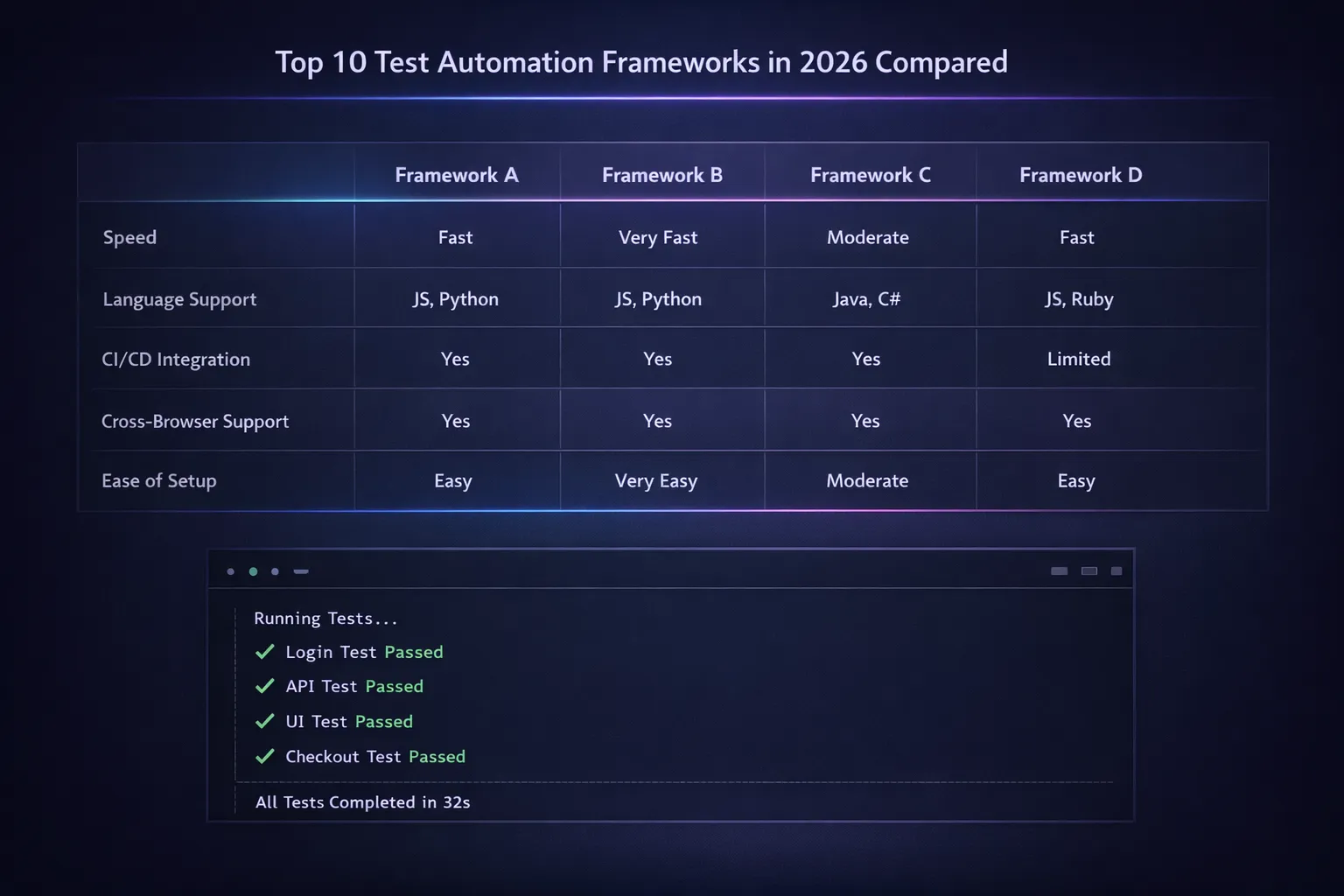
Test automation frameworks are shaping how modern teams ship software in 2026. Automation alone is not enough anymore. The structure behind automation decides whether your tests scale or collapse under maintenance pressure.
I’ve seen teams struggle when they invest in automation but lack a structured system. Let’s explore how test automation frameworks can make automation reliable and scalable.
What is a Test Automation Framework?
A test automation framework is a system that creates a structured method for designing, executing, and maintaining automated tests. It includes many aspects of automation, including:
-
Coding standards and folder structures
-
Reusable parts and libraries
-
Handling test data and setting up test environments
-
Rules for execution and reporting.
By providing guidelines for creating, executing, and maintaining tests, the framework helps test cases remain maintainable and dependable as applications change and evolve. A strong test automation framework is the foundation of a sustainable automation strategy.
Types of Test Automation Frameworks
Various automation frameworks exist to support different types of testing. Some of the common frameworks available today include those that meet most of the requirements of modern engineering teams. Below are a few examples of the most popular frameworks used in current engineering teams:
1. Linear Framework
Tests run in a sequential order with very low levels of abstraction and script-level communication between the script and the GUI or API. While this framework can be quickly implemented initially, as you add more tests, the overall test suite becomes increasingly fragile.
Best suited for:
-
Small projects
-
Short term
-
Proof of concept
2. Modular Framework
The application is broken down into modules based on functionality. There are separate reusable functions and scripts for each module of the application. Changes made to one module will not affect other modules, causing greater maintainability and readability.
Best suited for:
-
Mid to large-sized applications
-
BSM/enablement-focused Teams
-
Structured by Feature
3. Data Driven Framework
The logic used during testing is stored separately from the data that is used during testing; therefore, the input variables for the tests are stored externally (CSV, JSON, DB, etc.) and can be used in multiple instances/scenarios, minimizing redundancy and providing increased coverage to regression testing through the use of the same test cases for multiple input variable combinations.
Best suited for:
-
Applications that utilize numerous input variable combinations
-
Enterprise systems
-
Regression-heavy platforms
4. Keyword Driven Framework
The steps taken in the test case are documented as “keywords,” which represent actions to perform when executing each test step. The framework interprets the keyword at execution time to perform the appropriate actions defined by each keyword. This ability allows non-developers to contribute/test the definitions of tests, making it a good fit in organizations that have varied testing skill levels.
Best suited for:
-
QA and Product teams collaborating
-
BDD-friendly projects
-
Business-readable automation
5. BDD Framework
BDD frameworks utilize written scenarios to align product testing with product behavior. This, in turn, leads to greater communication among Developers, QA, & Product teams, as well as creating structured testing scenarios for verification purposes.
Suitable For:
-
Agile and Cross-Functional Teams
-
Customer-Facing Applications
-
Automation Driven by Requirements.
6. Hybrid Framework
The Hybrid Framework is a combination of a Modular Approach, a Data-Driven Approach, and a BDD Framework. It maximizes each type of framework’s ability to provide flexibility, readability, and maintainability for Software Development Teams. Most mature software development teams will utilize Hybrid Frameworks as they grow.
Suitable For:
-
Startups and Enterprises in Growth Mode
-
Complex Feature Sets
-
Microservices-Based Applications
Key Components of Automation Testing Framework
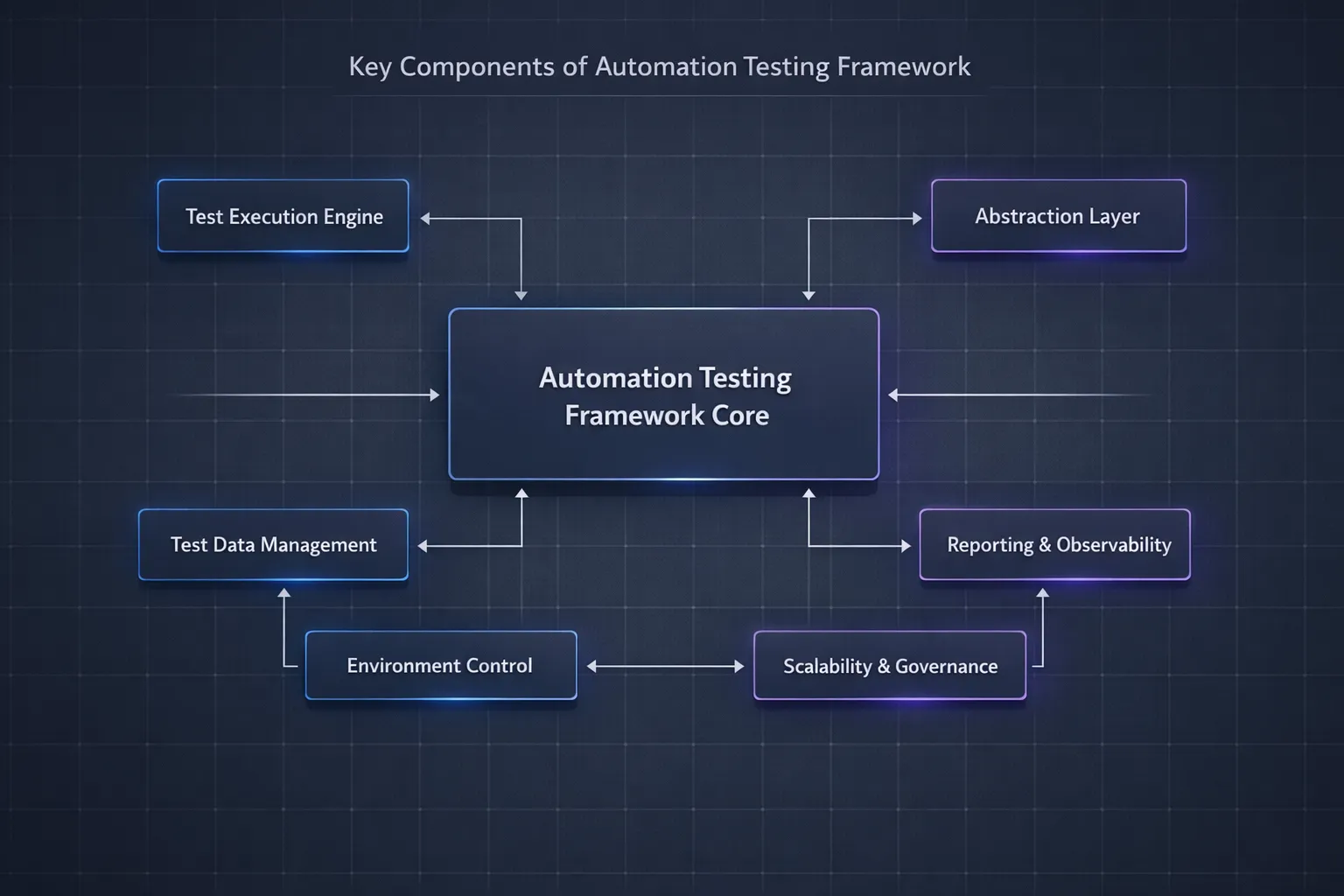
Frameworks that can grow in size and complexity depend on more than just scripts for building out their infrastructure; they rely on structural components as well. Key Elements include:
-
Test Execution Engine – Responsible for managing when/how tests are executed (like teams using SaaS or fintech platforms that schedule nightly regression suite execution). Provides support for CI pipelines and parallel execution.
-
Abstraction Layer – Provides a separate location for your test logic from your locators and endpoints (i.e., if there’s a change to the UI or an API, you won’t need to modify your entire suite of tests). This reduces the time spent maintaining the tests themselves.
-
Test Data Management – Provides a way to ensure that your tests are able to be run in an identical and isolated environment, eliminating any impact to results due to leftover data.
-
Reporting and Observability – Using logs, traces, screenshots, dashboards, etc. will help your team long before they have come close to completing an automation regression testing, working back through issues or failures found.
-
Environment Control – Provides a way to ensure that your environments are consistent with one another in that they are either entirely containerized or willfully mocked.
-
Governance & Scalability – Governs the way in which you maintain your framework and also keeps it compliant as your business continues to grow.
Popular Test Automation Frameworks in 2026
Modern teams select frameworks, not just tools. The choice depends on architecture, scalability, and CI integration.
1. Keploy
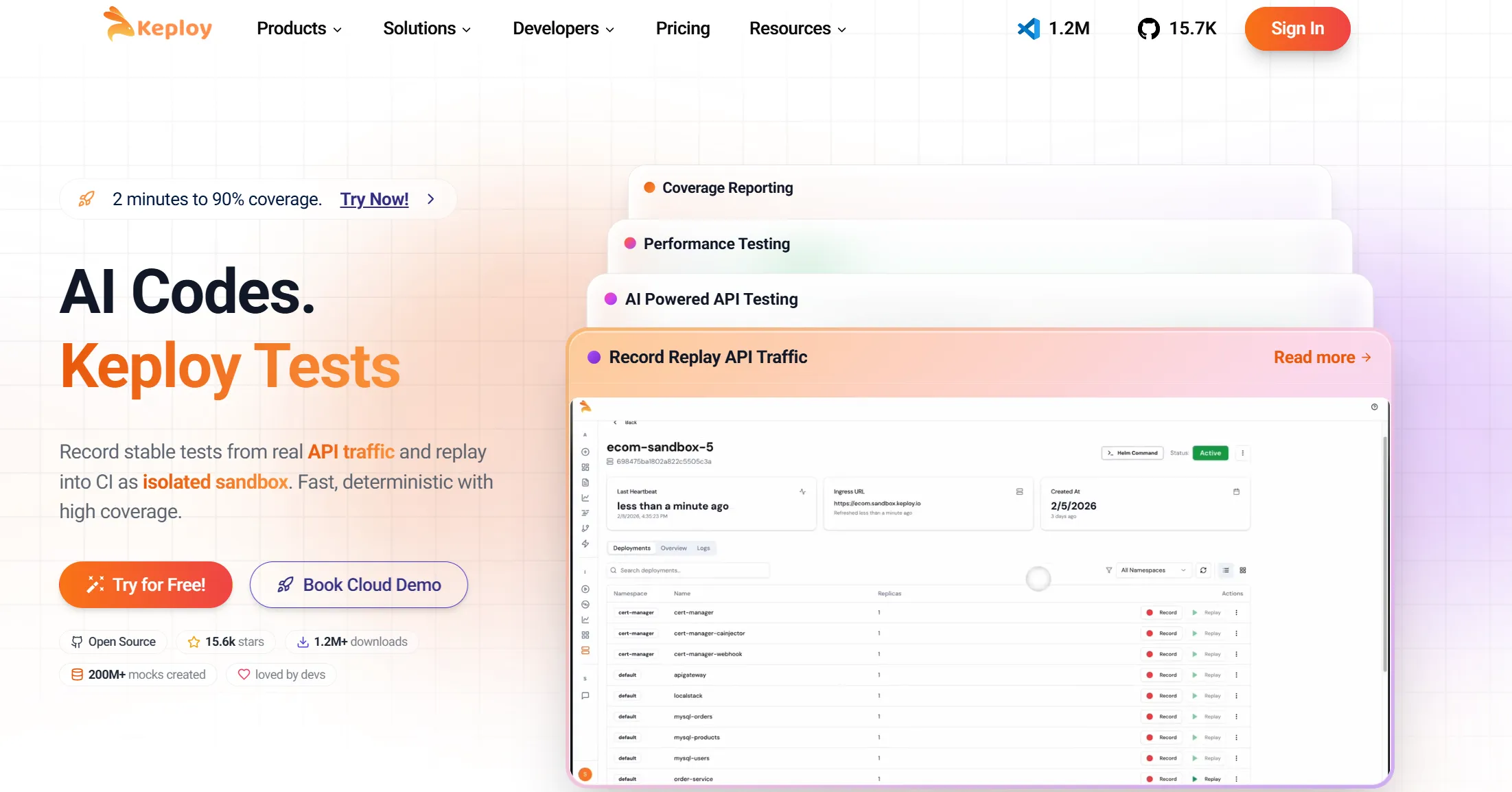
Keploy is a developer-first, API-driven test automation framework that has been designed specifically for microservices architectures that are built primarily on a back-end service model. Keploy creates automated tests from real API traffic, enabling your CI pipeline to automatically catch code regressions without the need for manual mocks. Furthermore, since everything is done in a replayable development environment, the number of false positives when running tests is reduced significantly, and you are able to perform regression testing consistently across multiple services.
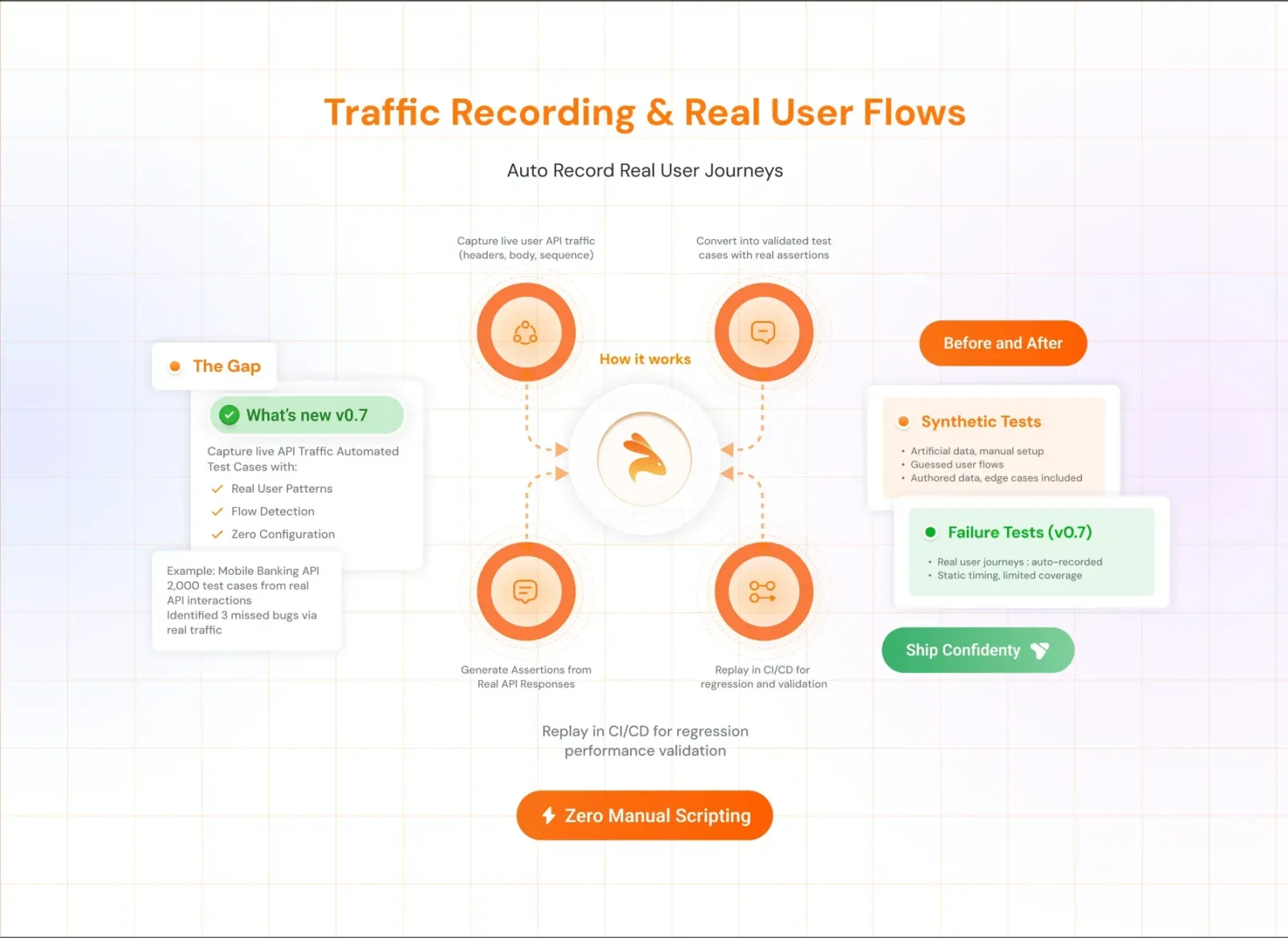
Key Features:
-
Automatic Test Case Generation
-
Verifying API Regression Failures
-
CI-Native Execution (In continuous integration)
-
Developer First Workflow
2. Selenium

Selenium is a popular open-source test automation framework used for automating web applications. It is flexible and supports all programming languages. Selenium will allow you to easily create complex interactions on a website and leverage your CI Pipeline for the integration of automated tests. It is also highly extensible with a large number of plugins available through the community.
Key Features:
-
Multiple Language Support
-
Browser Automation Across All Major Browsers
-
A Large Number of Community-Based Plugins
-
Integration Into Your CI/CD Pipeline
3. Playwright

Playwright is a modern end-to-end testing framework that enables parallel execution out of the box. With Playwright, it is very easy to automate tests for heavy-based UI applications that require more complicated user interactions. The auto-waiting feature of Playwright allows for better consistency and allows you to do regression testing for mid to low traffic applications across all major browsers, as well as perform API testing.
Key Features:
-
Parallel Execution Out Of The Box
-
Multiple Browser Engine Support
-
Auto-Waiting Features & Stable Selectors
-
Perform API Testing
4. Cypress
Cypress is an automation engine that has a JavaScript-based frontend testing framework that emphasizes quick, developer-friendly frontend test automation. Cypress offers real-time reloading, debugging capabilities, built-in assertions, and RA testing of the frontend platform, which helps to ensure quick regression testing of the frontend platform will be reliable.
Key Features:
-
Real-time reloading
-
Built-in assertions and mocks
-
Easy-to-use, developer-friendly debug tools
-
Works with modern frontend framework integration
5. Appium

Appium is an automation tool for Android and iOS that allows automated testing of mobile apps (native apps, hybrid apps, and mobile web apps) across different platforms, as well as using Selenium Grids for provide automated cross-platform testing of mobile devices.
Key Features:
-
Cross-platform mobile app testing.
-
Multiple programming language support
-
Works with Selenium Grid for automated cross-platform mobile app testing
-
Supports hybrid and native app testing
6. Cucumber
Cucumber uses Gherkin syntax to define BDD tests; therefore, BDD tests are very readable and understandable to both developers and the stakeholders of the project. The goal of using Cucumber to define BDD tests is to drive and contribute to test automation and, ultimately, provide feedback related to the expected behavior of the system, thus providing transparency and encouraging collaboration.
Key Features:
-
Plain text test scenarios.
-
Supports multiple programming languages.
-
Easy integration with CI/CD systems.
-
Encourages collaboration among teams.
7. Robot Framework
Robot Framework is an automation framework that supports keyword-driven testing across multiple platforms and has readable syntax, extensible libraries, and supports many different tools for testing web applications, mobile applications, or enterprise applications.
Key Features:
-
Supports keyword-driven automated test writing
-
Extensible libraries
-
Cross-platform support of automation
-
Flexibly integrates with other tools to perform automated testing of web applications, mobile applications, and enterprise applications
8. Karate
Karate is an API-first testing framework that allows you to quickly write automated API tests with built-in assertions and requires little setup. Karate simplifies API testing, supports JSON/XML, allows tests to execute in parallel for CI pipelines.
Key Features:
-
Supports both API and UI testing
-
Allows automated tests to run in parallel
-
Supports validation of JSON/XML data
-
Requires minimal boilerplate code when writing automated tests
9. Ranorex
Ranorex is a commercial automation testing framework that is designed for enterprise testing and is based on the needs of large enterprises. The framework provides enterprise-level support for testing desktop, web, and mobile applications, and provides built-in object recognition and robust reporting for large enterprise projects.
Key Features:
-
Contains built-in reporting for large enterprise projects
-
Supports automated testing of desktop, web, and mobile applications in the same framework
-
Supports built-in object recognition capabilities for complex user interfaces
-
Provides vendor support and maintenance
10. Katalon
Katalon is a hybrid automation testing framework designed for ease of use, but it also provides a structured architecture for automated testing. Katalon supports both script-based and keyword-based automation testing, allows you to integrate with CI/CD pipelines, and supports built-in reports for every automated test.
Key Features:
-
Supports both keyword-based and script-based automated testing
-
Provides cross-platform automated testing framework
-
Contains built-in dashboards and reports for automated tests
-
Supports integration with CI/CD pipelines to automate the delivery of tested software
Each of these four frameworks provides teams with a solution for performing automation testing and allows teams to create reliable, scalable, and maintainable automated test cases for any project.
How to Choose the Right Test Automation Framework?
Selecting the correct test automation framework will help you succeed in the long run, as these frameworks must work for your team, system, and long-term goals and objectives.
Here are the deciding factors that will guide the selection of a test automation framework:
-
System Architecture – If your application is a monolithic architecture, a micro-services or an API-first or mobile-first application, it will influence your choice of framework to use for your automation tests.
-
Expertise of the team – JavaScript-based teams typically use Playwright or Cypress. However, if you have a Java-based team, you may want to look at Selenium or Cucumber, which may work with your team better.
-
Integration into CI/CD pipelines – The test automation framework will need to seamlessly integrate within your CI/CD pipeline, allowing for the automated running of your tests for every successful deployment of your application.
-
Maintenance of ownership – Will your team be able to continue with the development of the framework over time, support, refactor, and update the framework without incurring increased costs for your team.
-
Product evolution – The test automation framework you choose will support the evolution of your product, including changes to your product’s features and architecture.
Be mindful of how you make your decision on the test automation framework, as this will ultimately decrease the amount of technical debt and allow for automation to be scaled more easily as your products continue to grow. Exploring other types of tools, such as those used for automation testing, as well as DevOps automation tools, can allow teams to get context on the overall ecosystem of automation.
How to Build a Successful Automated Testing Framework?
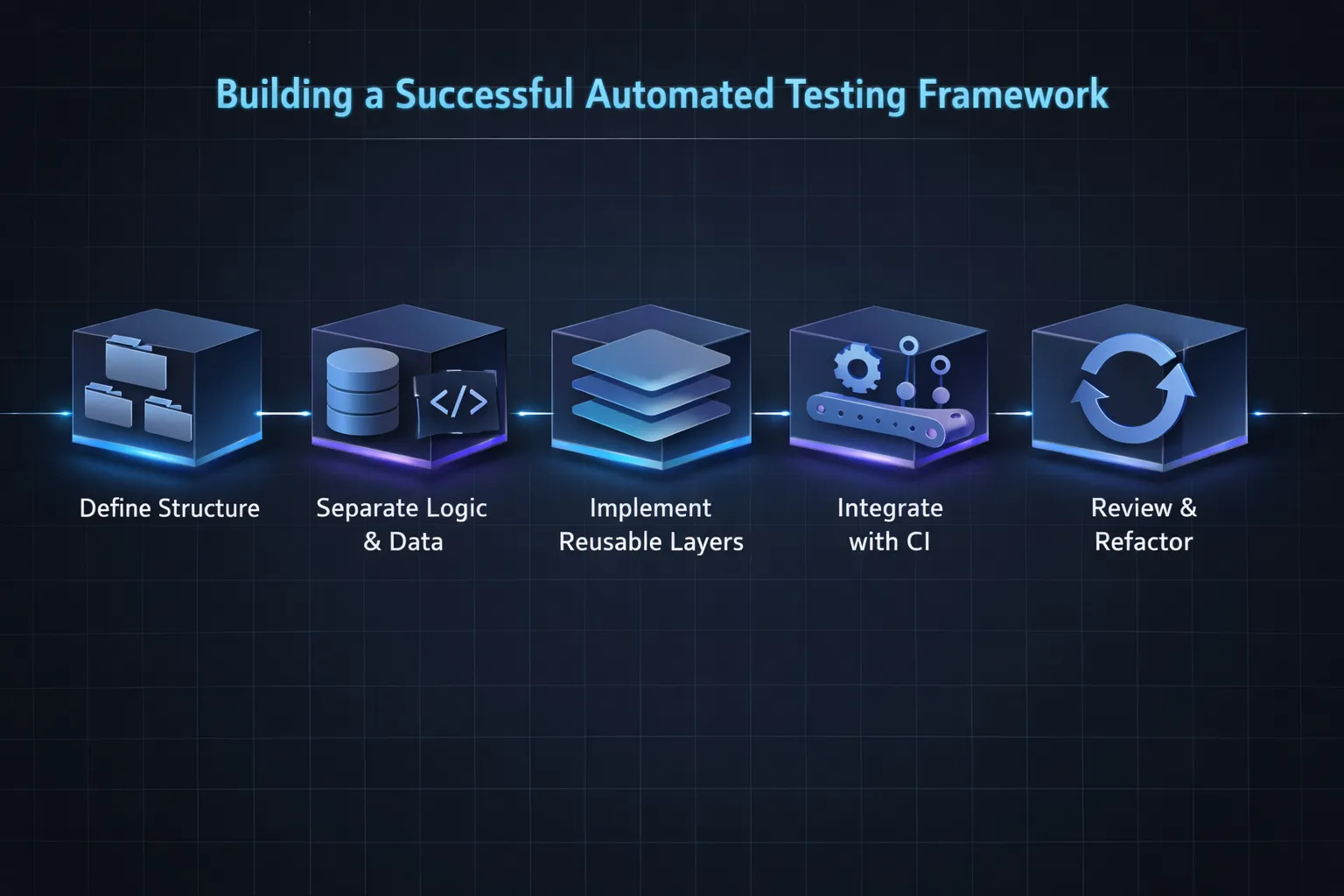
The worth of a system is based on the combination of its structural dependability and the degree of implementation. A solid base (foundation), the application of reusable components and integration of CI will help to accomplish this. Listing the major actions to take:
-
Define the Structure of the Test – You need to determine which structure will provide for modular, hybrid, or data-driven tests to achieve repeatable and maintainable tests.
-
Separate your Business Logic from the Test Data – Isolating your test logic (business rules) and your test data (input values) makes it easier to maintain your tests and increases the readability of your tests.
-
Develop Reusable Layers – You should develop a shared helper for all use-case related functionality, such as API/helper functionality, UI locator/helper functionality, and configuration functionality, to both eliminate duplication of efforts and lessen the probability of (fragile tests) as a result of duplicated code.
-
Incorporate Early With Continuous Integration – Configuring continuous integration (CI) and running all of your tests (both manually and automatically through CI) on pull requests and nightly builds will help you identify issues much sooner than you would if you did not implement the CI function.
Perform Regular Reviews of Your Framework and Refactor Where Necessary – By performing continual reviews of your framework and refactoring as appropriate, you will avoid the problems caused by the decay of your tests over time and will provide your automated testing framework with ongoing efficiency.
By combining structure with automation best practices, your framework will not only support current testing needs but also adapt as your product evolves.
Testing Frameworks as the Backbone of Continuous Testing
Continuous testing relies heavily on the framework itself. Without a solid structure, automated tests can be flaky or hard to maintain. Frameworks serve multiple roles in modern testing pipelines:
-
Execution Coordinator – Ensures all tests run consistently and in the right sequence.
-
Feedback System – Provides actionable results quickly, helping teams address issues before they reach production.
-
Stability Engine – Maintains predictable test outcomes, even during rapid release cycles.
Strong frameworks transform continuous testing from a process into a predictable, reliable system. When done right, they enable faster releases, higher confidence, and fewer regression issues.
Conclusion
In 2026, the framework you choose defines automation success. Teams that scale fast focus on stability, repeatable execution, and CI integration.
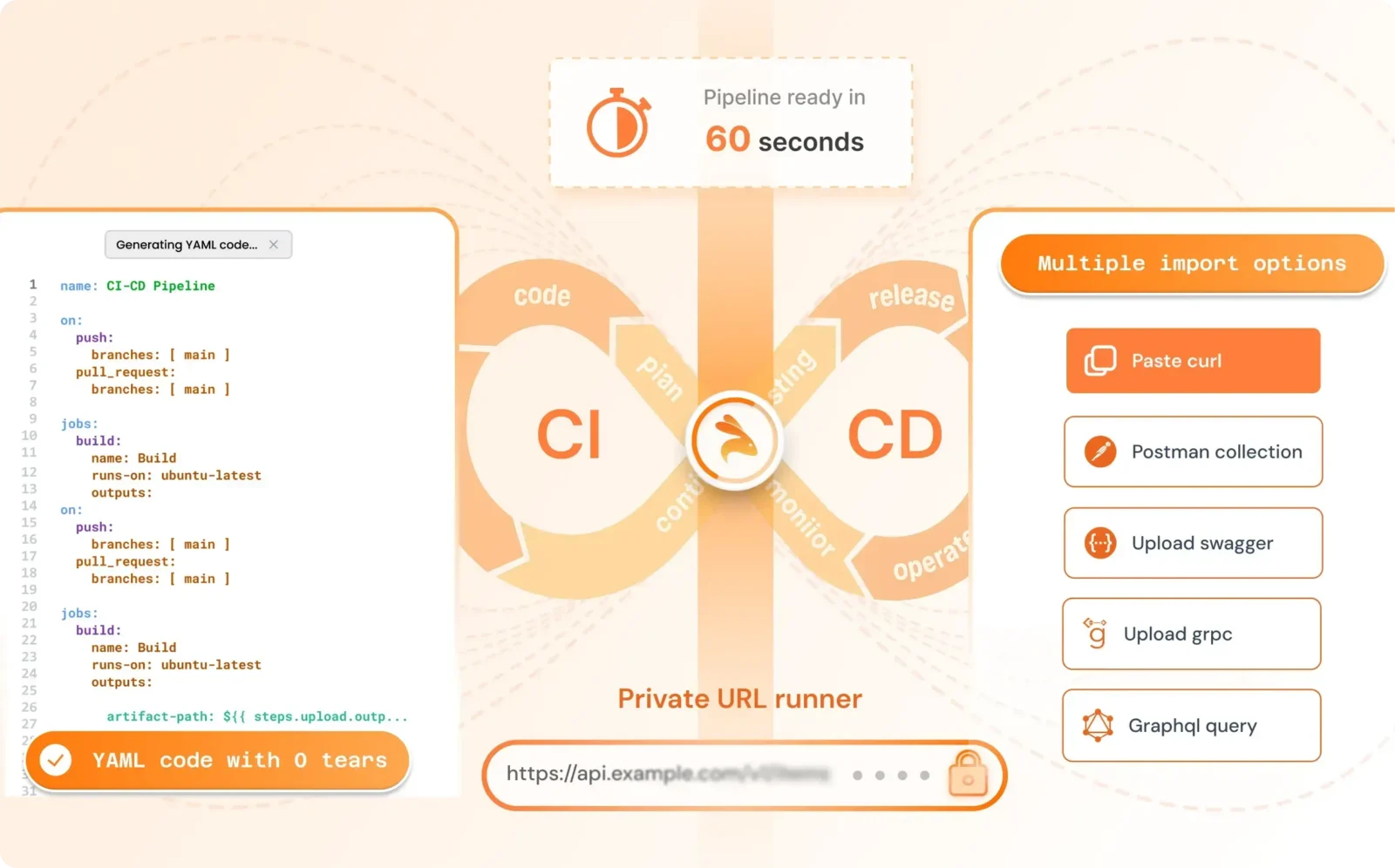
The future belongs to frameworks that evolve with your product, support API-driven systems, and empower developers to maintain confidence in every release.
FAQs
1. What is the difference between a test automation framework and approaches for automating test cases?
The framework provides the structure, execution, and architecture for the automation of tests, while the automated testing approaches determine how testing will take place – the overall strategy and methodology.
2. What are the most widely adopted test automation frameworks in 2026?
Keploy, Selenium, Playwright, Cypress, Appium, Cucumber, Robot, Karate, Ranorex, Katalon.
3. What makes a testing framework scalable?
A scalable automation testing framework will have capabilities for parallel execution, modular design, CI integration, reusable layers, and solid reporting.
4. Should startups build their own automation testing framework?
If the company is planning to be around for a long period of time, it should establish an automated testing framework from scratch. If not, it will take less time to customize an existing automated testing framework.
5. How often should automation frameworks be refactored?
Quarterly evaluations and occasional refactoring can ensure that automated testing frameworks remain stable and efficient.

Leave a Reply