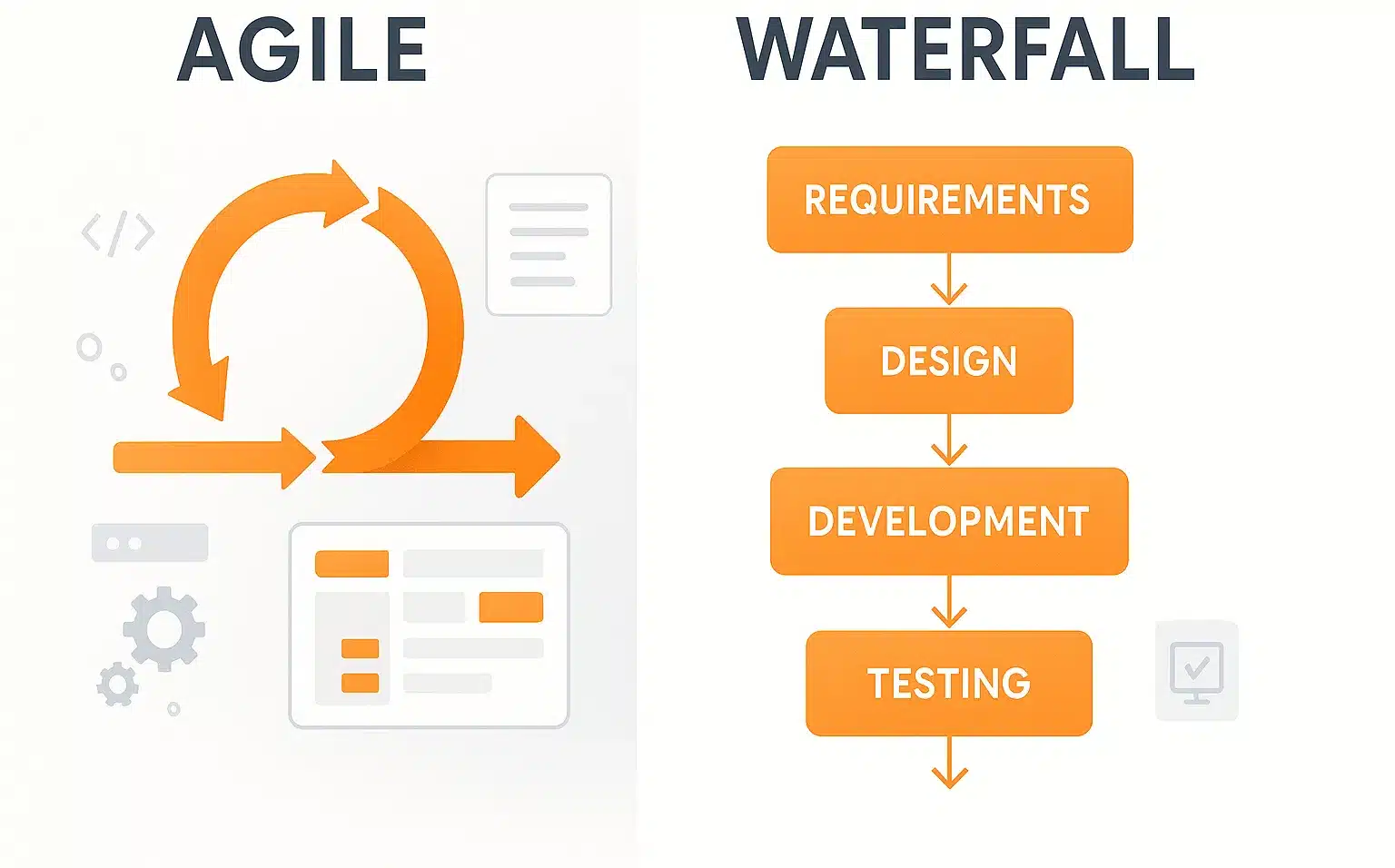
Choosing the best project methodology for a software project can help or hinder it greatly. Teams frequently evaluate Agile vs Waterfall, especially when adopting agile testing practices to support faster releases and continuous feedback. This choice becomes especially important when engineering teams and QA teams work together. Rapid changes during development along with rapid product releases and QA testing are common.
This guide will review and explain Agile vs Waterfall methodology, identify the differences and benefits between these two methodologies, and detail when to use each one. Additionally, we will discuss modern adaptations of both methodologies as they relate to QA and Automation tools, specifically how Keploy supports Agile and Waterfall-based work processes. This is a practice-oriented guide that will provide developers, QA Engineers, and Product Teams with an experienced point of view.
What are the Waterfall and Agile Methodologies?
Waterfall
Waterfall is a linear, sequential software development model. Each phase must be completed before the next phase begins. The typical flow is:
-
Requirements
-
Design
-
Implementation
-
Testing
-
Deployment
-
Maintenance
This approach to Software Development is best suited for a structured environment where the clarity of requirements and documentation is the focus of the project.
Agile
Agile is an iterative and incremental approach to Software Development that originated from the Agile Manifesto, which emphasises adapting to changing conditions, working together with others to achieve success, and continually delivering value. Agile uses "Sprints," a series of short cycles of work, to deliver working increments of the product and foster responsiveness to change.
Frameworks like feature-driven development take this further by organizing these cycles entirely around delivering specific product features, helping teams accelerate their development workflow.
Why This Debate Matters
The debate between Agile and Waterfall Methodologies is significant for development and QA teams because it will define their communication, schedule, test strategy, stakeholder engagement, and level of predictability within a project as a whole. Because of the way that requirements evolve, this decision becomes fundamental to modern working practices within development teams.
Core Principles & Philosophies
Waterfall Principles
-
Linear and structured workflow
-
Heavy documentation
-
Fixed scope and timeline
-
Minimal customer involvement after requirement gathering
Agile Principles
-
Iterative development in short sprints
-
High customer involvement
-
Frequent releases
-
Responding to change over following a rigid plan
Quick Comparison Table
| Principle | Waterfall | Agile |
|---|---|---|
| Flexibility | Low | High |
| Documentation | Heavy | Balanced |
| Customer Involvement | Low | High |
| Delivery Structure | Single release | Continuous increments |
Advantages & Disadvantages of Each Approach
Pros of Waterfall
-
Clear structure with well-defined phases
-
Easy to estimate timelines and budgets
-
Works well for large teams and regulated industries
-
Strong documentation ensures long-term maintainability
Cons of Waterfall
-
Not ideal for changing requirements
-
Late testing exposes risks at the end
-
Lack of customer feedback during development
-
Rigid process slows adaptation
Pros of Agile
-
Highly flexible and adaptive
-
Continuous delivery enables faster releases
-
Customers validate the product throughout
-
Earlier detection of bugs due to iterative testing
Cons of Agile
-
Requires strong collaboration across teams
-
Harder to estimate exact timelines and budgets
-
Risk of scope creep
-
Team discipline and communication are crucial
Key Differences Between Agile vs Waterfall
| Dimension | Waterfall | Agile |
|---|---|---|
| Flexibility | Low | High |
| Customer Involvement | After requirements | Throughout delivery |
| Testing | End of cycle | Continuous |
| Delivery Frequency | Single launch | Multiple iterations |
| Best Fit | Stable, fixed-scope projects | Evolving, high-change environments |
Similarities:
Both Testing and Documentation serve to create quality software. Both require planning in order to successfully deliver product(s). However, Testing and Documentation are incorporated into the delivery process at different stages of development and to different degrees.When to Use Waterfall vs When to Use Agile
When to choose Waterfall Over Agile
A Waterfall approach should be considered when:
-
Project Requirements are fixed and well-defined
-
Projects are in Healthcare, Finance, Aerospace or Government
-
Projects must comply with strict regulatory and compliance requirements
-
Projects require the implementation of Hardware or Infrastructure
An Agile approach should be considered when:
-
Project Requirements Change Frequently
-
There are Rapidly-Evolving Products being built by Startups
-
Customer Feedback is Frequently Needed throughout the Life of the Project
-
Project Teams will be utilizing DevOps or CI/CD
Waterfall or Agile Quick Decision Checklist
Use a Waterfall model if:
Requirements are stable
Predictability is prioritized
Documentation-heavy processes are essential
Use an Agile Model if:
Requirements change often
Rapid releases are needed
QA/testing must run in parallel with development
The Use of Hybrid Methods and Modernized Techniques
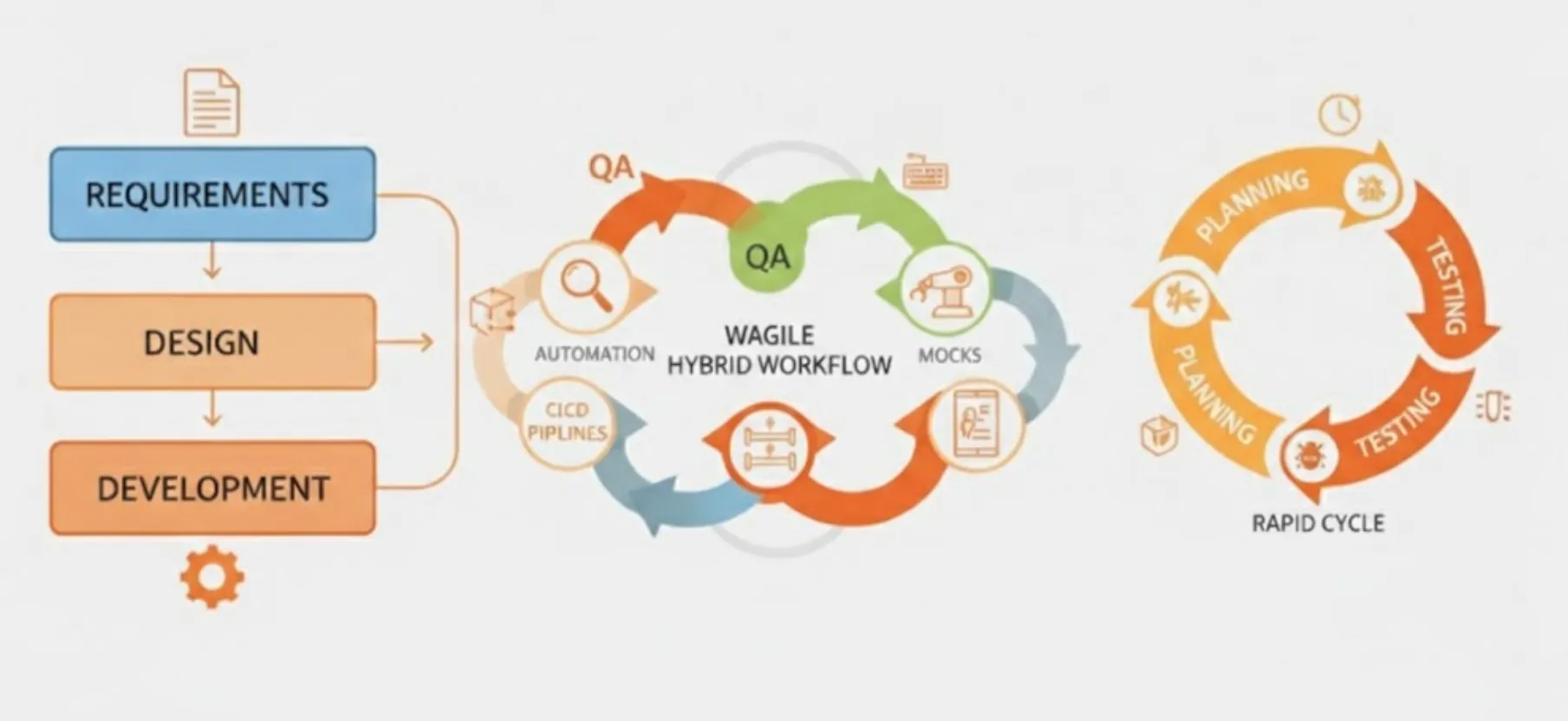
Often referred to as "wagile," several teams employ the hybrid waterfall-agile model method wherein they will plan on a high level with Waterfall and execute with Agile. For example, in regulated industries, the requirements might be completed with Waterfall but executed with Agile by taking advantage of the Scrum sprints.
With tools like Keploy on the market today to assist in ease of adoption when adopting Agile for QA and Automation, teams have an easy way to automatically generate test cases, mocks, and facilitate ongoing testing which helps to reduce the risk of quality-related issues due to high-speed execution cycles.
Large organizations are also implementing Hybrid Methods during their Digital Transformation activities and transitioning at a slow pace from Waterfall to Agile.
How the Methodology Impacts the QA, Automation and Testing Strategy
The methodology used will define the nature of the tests performed.
In Waterfall
-
The testing occurs at the end of the project, which results in increased risk.
-
Testing requires extensive documentation and planning.
In Agile
-
Testing is continuous and integrated into each iteration/sprint.
-
Automation is crucial for obtaining timely feedback.
Keploy supports agile teams by:

-
Auto-generating test cases from real API traffic
-
Creating mocks/stubs for complex dependencies
-
Reducing manual test creation effort
-
Enabling faster sprint execution and regression testing
This brings agility to QA teams without compromising stability.
Illustrative Examples of Adaptive Models
Scenario 1: Startup → Agile Model
An early-stage FinTech company is developing an MVP that will continue to develop over time. The company utilizes an Agile approach to product development by regularly seeking customer feedback and implementing changes in a series of incremental releases.
Scenario 2: Compliance-based System → Waterfall Model
A government-controlled dashboard was developed based on fixed requirements and therefore utilized a Waterfall approach to ensure that all relevant documentation existed and that changes could only be made through an established process.
Scenario 3: Large Company → Hybrid Model
A large banking institution uses a Waterfall approach to create an annual plan; however, Agile teams within make use of Sprint bases development.
Common Pitfalls & How to Avoid Them
Pitfall 1: Agile Without Culture Change
Teams follow agile ceremonies but deliver like waterfall.
Fix: Train teams on agile principles, not just rituals.
Pitfall 2: Waterfall with Unclear Requirements
Leads to massive rework later.
Fix: Invest in upfront discovery and validation.
Pitfall 3: Hybrid Chaos Without Ownership
Unclear boundaries create confusion.
Fix: Define which phases are waterfall vs agile and assign owners.
Future Trends & Why It Matters Now
-
DevOps adoption pushes teams toward agile and continuous delivery.
-
Shift-left testing brings QA earlier into development.
-
AI-powered automation tools like Keploy accelerate agile adoption by simplifying test generation and maintenance.
-
Waterfall still retains its place in industries needing predictability and compliance.
Conclusion
To determine which method of developing a project is best for you, it is imperative to first comprehend how Agile and the Waterfall difference from one another; this will assist you in deciding which method to use for your specific project type and requirement. There is no single correct answer to this question; rather, your project requirements, as well as your team’s experience with these methodologies, will dictate what the best approach for your team will be.
If you are in the process of several Agile Adoptions within your business, you may want to investigate the ways that Keploy can assist you in automating tests and speeding up your entire development process.
Frequently Asked Questions (FAQ)
1. What is the difference between agile and waterfall?
Waterfall is linear and structured; agile is iterative and adaptive.
2. Can a project switch from waterfall to agile mid-way?
Yes, many teams transition during development, though it requires re-planning.
3. Does testing differ in agile vs waterfall?
Yes—waterfall tests at the end; agile tests continuously.
4. Is waterfall obsolete?
No. It’s still widely used in regulated and predictable project environments.
5. How does automation fit into each method?
Agile relies heavily on automation. Waterfall uses automation but within fixed phases.

Leave a Reply