Author: Arindam Majumder
-
Mock vs Stub vs Fake: Understand the difference
Mocks, stubs, and fakes are all test doubles that stand in for real dependencies, but they serve different purposes. A stub returns predefined responses, a mock also verifies how it was called, and a fake is a lightweight working implementation, like an in-memory database. Choosing the right one keeps tests fast, isolated, and reliable. Introduction…
-
Understanding Testing in production
Introduction Testing in production was previously ignored by Product Developers, But recently it gaining Popularity Again! Even, more organizations are planning use this. In this Article, We’ll explore What is Testing in Production,How & Why to use it,It’s Benefits , drawbacks and many more. So Without Delaying Further, Let’s START! What is Testing in Production?…
-

5 Unit Testing Tools You Must Know in 2024
Unit testing is one of the most important areas to ensure code coverage and basic software testing for our applications. With so many different unit testing tools available, choosing the right tool can be challenging. But you don’t have to worry, in this article we’ll explore 5 Unit Testing Tool you must know in 2025.…
-
Condition Coverage in Software Testing
Condition coverage is a white-box testing metric ensuring every boolean condition within a decision – not just the overall branch. Branch coverage only needs the whole expression to go both ways; condition coverage requires each sub-condition tested independently, catching logic bugs that short-circuit evaluation would otherwise hide. For API-driven codebases, Keploy surfaces both condition and…
-

All about System Integration Testing in software testing
Introduction Ever wondered how your favorite apps and software run so smoothly? There’s a behind-the-scenes hero ensuring everything works together seamlessly—System Integration Testing (SIT). This essential process guarantees that all parts of your software interact flawlessly. In this article, we’ll explore what System Integration Testing is, why it’s crucial, its drawbacks, and more. Excited? Let’s…
-
Branch Coverage in Software Testing
Branch coverage is a white-box metric measuring the percentage of decision branches, the true and false outcomes of every conditional, exercised by your tests. Unlike statement coverage, it requires each branch of an if/else or loop to run, making it a stronger indicator that tests reach the code’s decision logic. When testing software, it’s not…
-
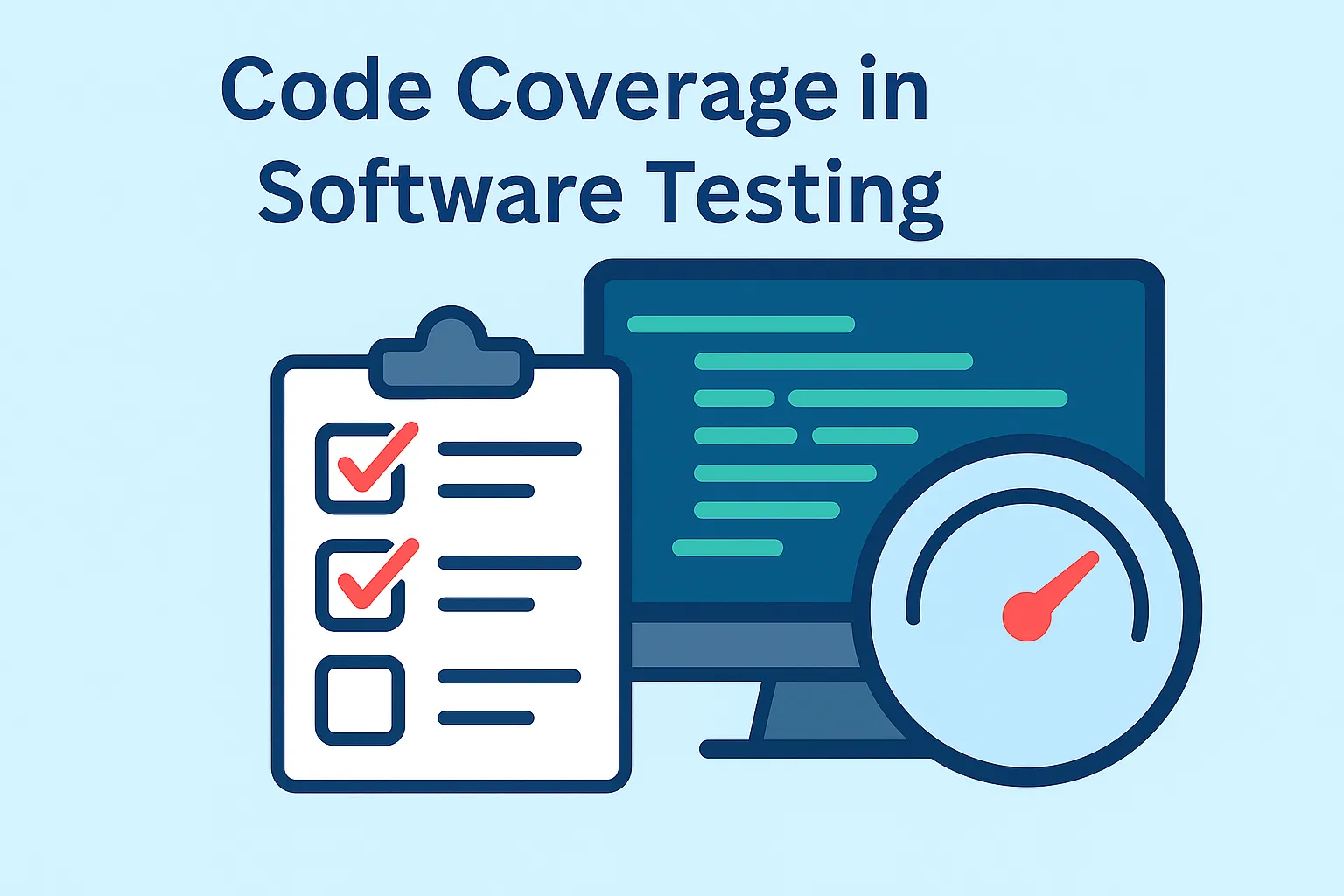
What Is Code Coverage? Metrics, Tools & Coverage Goals
Code Coverage is a very important part of the Software Development life cycle, especially when working with code coverage in Go for backend systems. It helps to ensure that tests are covering the most critical parts of our application, and is an important measure to determine the reliability of the code! In this article, we’ll…
-
Understanding Statement Coverage in Software Testing
Statement coverage is a white-box metric that measures the percentage of executable statements in your code exercised by a test suite. Full statement coverage means every line ran at least once during testing. It is a basic coverage measure, useful for spotting untested code, though it does not guarantee every branch or condition was checked.…
-
All about API testing solution & Keploy
Introduction Nowadays, Application Programming Interfaces (APIs) have become the backbone of modern applications. And to check the functionalities of the APIs, api testing solution is very Important! So, In this Article, we’ll understand What is API, API solution Testing And How Keploy Helps in Writing Test Cases. So Without Delaying Further! Let’s START! What is…
-
Getting Started with Keploy
Keploy is an open-source API testing platform that records real API interactions and automatically converts them into test cases and data mocks – no manual test writing required. Learn how to set it up natively on WSL with a Node.js/Express/MongoDB sample app: installing the binary, capturing test cases from live API calls, and running them…