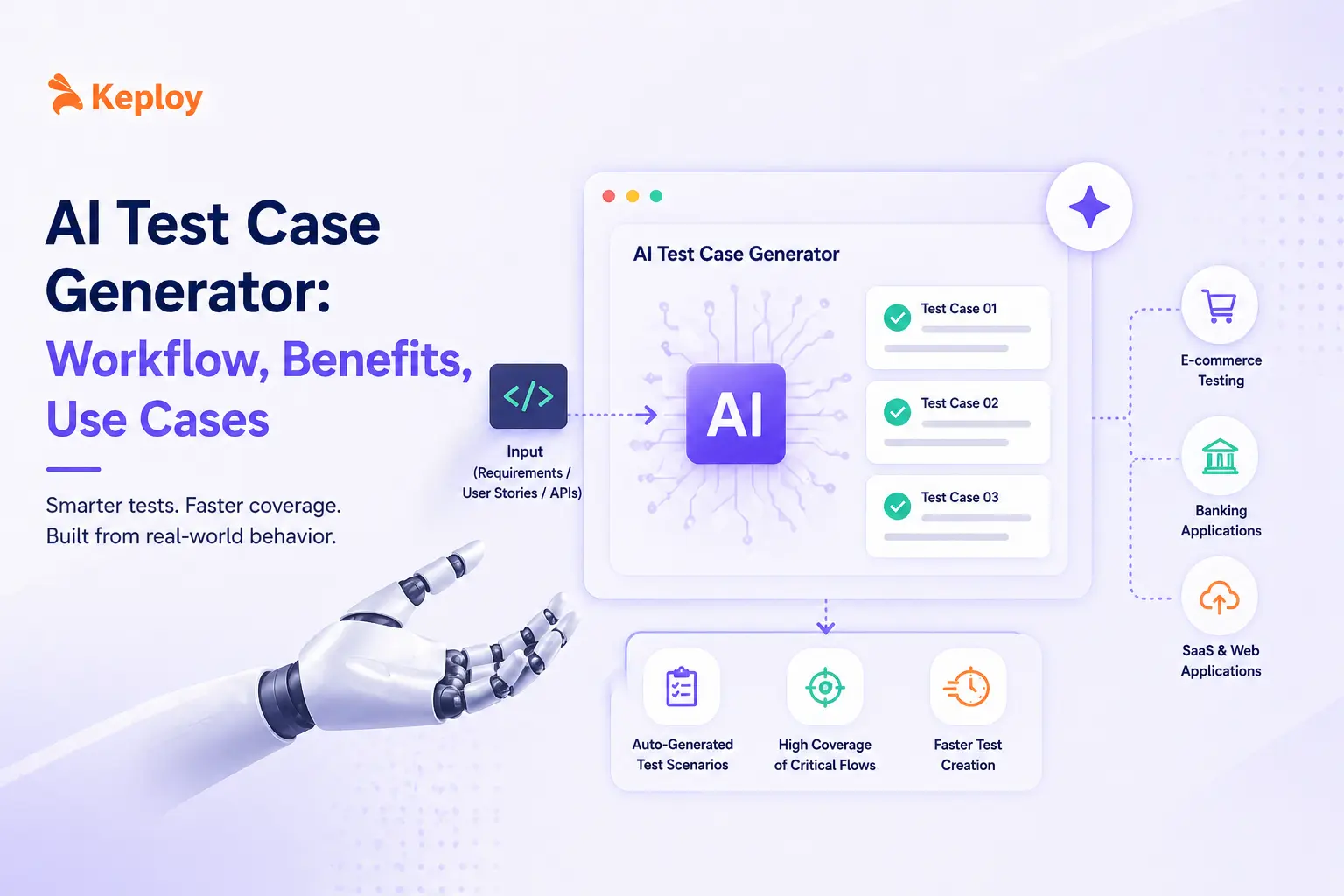
AI test case generator uses artificial intelligence to automatically create test cases, scripts, and data based on application behavior, requirements, or code. As software systems grow more complex, manually creating and maintaining tests becomes time-consuming and error-prone.
For API-driven applications in particular, where changes are frequent and integrations are complex, an AI test case generator helps improve test coverage, reduce manual effort, and ensure reliable performance at scale.
What Is an AI Test Case Generator?
Instead of manually writing test cases, an AI test case generator analyzes inputs like API specifications, user interactions, or source code to automatically create meaningful and scalable test scenarios.
These tools can identify edge cases, detect untested scenarios, and adapt tests as the application evolves – something traditional test generation approaches struggle to handle efficiently.
AI test case generators are especially effective for API testing, where they can learn from request-response patterns and generate tests based on real usage.
How Does an AI Test Case Generator Work?
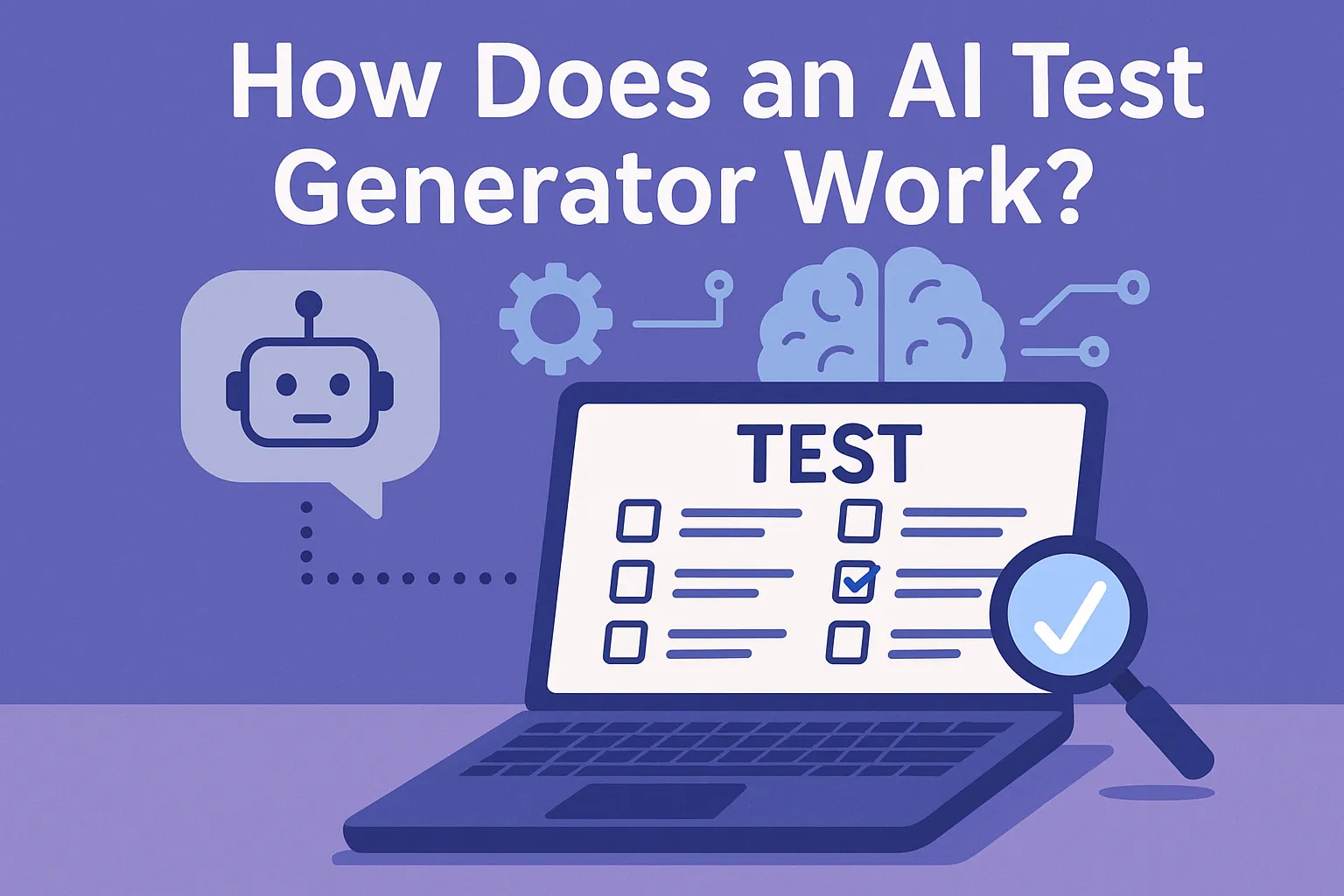
AI test case generators follow a structured process to analyze inputs and automatically generate test cases based on real-world behavior and system logic. An AI test case generator’s operation would usually follow the following steps:
1. Input Analysis (API Specs or Real Traffic)
Most AI tools begin with consuming either:
-
OpenAPI/Swagger specifications (static)
-
Real API traffic (dynamic)
The AI model analyzes endpoints, request patterns, and expected responses to understand how the API behaves under different conditions.
2. Intelligent Test Case Creation
Based on the analysis, the AI test case generator creates:
-
Positive tests (valid inputs).
-
Negative tests (edge-case or invalid inputs).
-
Security tests (e.g., auth failures or injection attempts).
3. Test Data Generation
Such platforms, with an embedded or in-built test data generator function, generate mock or synthetic data to simulate realistic usage to obtain realism and richness for the tests.
4. Execution & Feedback Loop
Generated tests are executed automatically, and results are used to refine future test cases through continuous feedback.
Benefits of AI Test Case Generators for API Testing
-
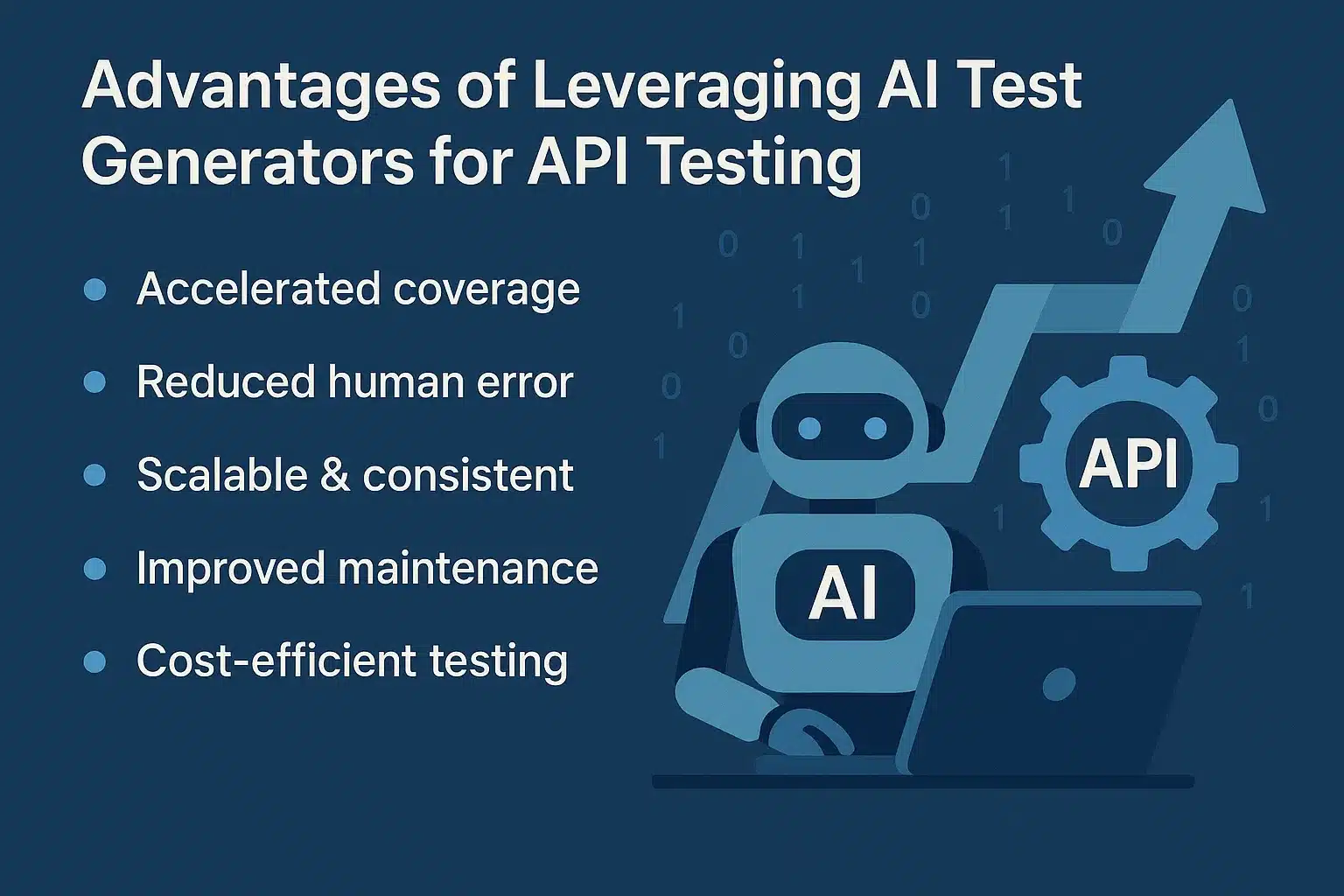
Accelerated Test Coverage
Rather than taking days to develop test cases manually, AI gets it done in minutes, freeing your QA team for more important tasks.
-
Less Human Error
Manual test writing is subject to overlooking. An AI test case generator tests more systematically, leaving less behind.
-
Scalable and Consistent
Whether you’re working on a few endpoints or hundreds, AI handles scale effortlessly. Tests remain consistent in logic and format.
-
Improved Maintenance
As APIs evolve, maintaining outdated tests is a common challenge. AI-based generators adapt to changes, updating tests accordingly.
-
Cost-Efficient Testing
Many tools offer test case generator free or open-source solutions, making adoption feasible even for startups or small teams.
Limitations of AI Test Case Generators
While AI test case generators offer clear advantages, they are not without limitations. The quality of generated tests heavily depends on the input data, such as API specifications or real traffic. If the input is incomplete or inconsistent, the generated test cases may miss critical scenarios.
Some common limitations include:
- Dependence on input quality, which can affect test accuracy
- Need for human validation in business-critical workflows
- Possibility of generating redundant or low-value test cases
- Limited understanding of domain-specific logic
Despite these challenges, AI test case generators remain highly effective when combined with human oversight. Filtering and refining generated tests ensures a more reliable and maintainable test suite.
Real-World Use Cases
AI test case generators are widely used across different testing scenarios, especially in API validation, regression testing, and continuous integration workflows. Here’s how businesses are applying AI test case generators in practice:
Keploy: Keploy enables automatic test generation from real API traffic, allowing teams to create and validate test cases without manual scripting.
Diffblue: Specializes in unit test generation for Java code with the aid of AI.
RestAssured + AI: Experimental implementations leverage OpenAPI specs and GPT models to suggest tests automatically.
How to Select the Right AI Test Case Generator Tool?
Choosing the right AI test case generator depends on your testing needs, system complexity, and integration requirements.
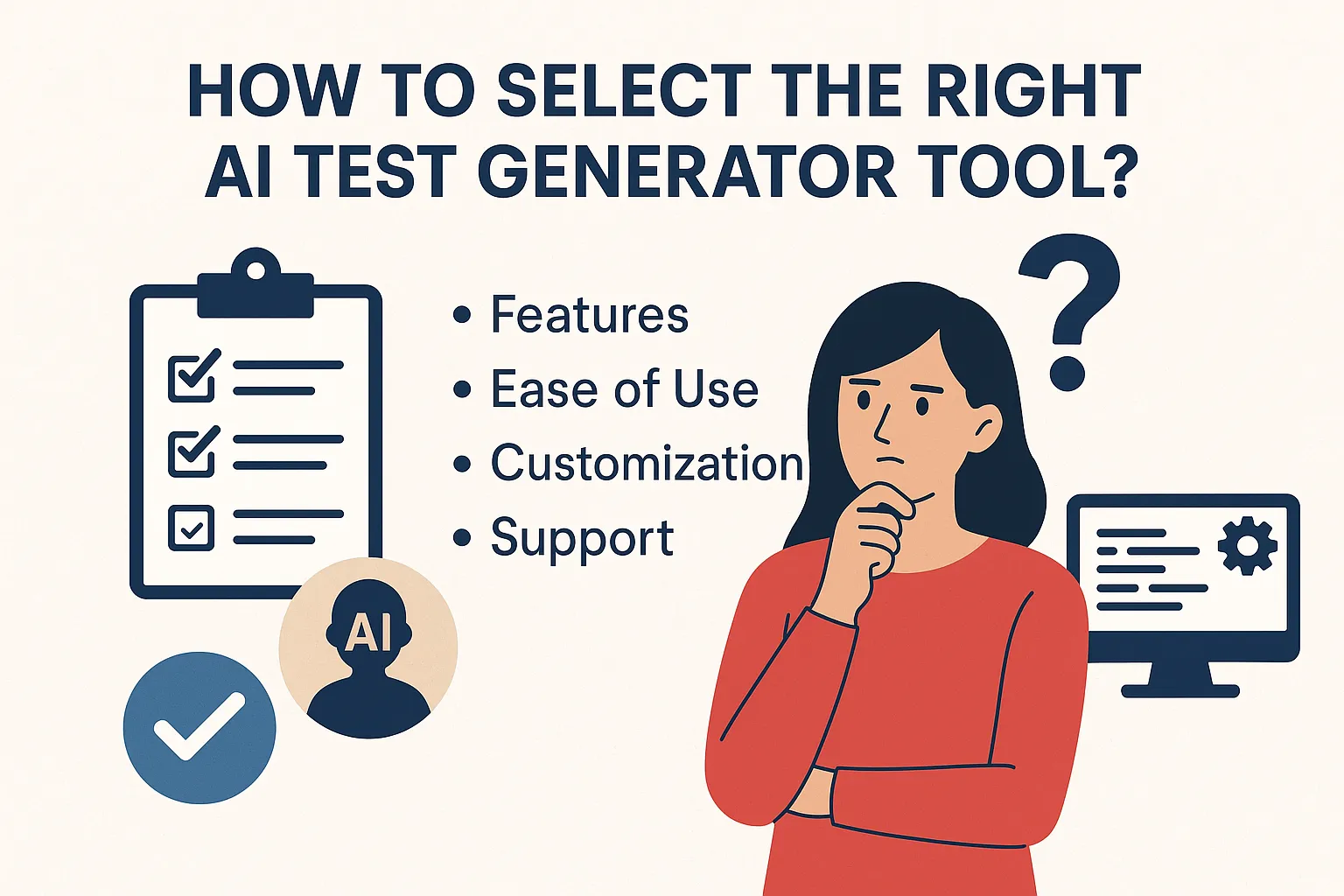
When considering alternatives, seek:
-
Support for OpenAPI/Swagger
-
Integration with CI/CD pipelines
-
Built-in or pluggable test data generator tool
-
Capability to generate and maintain a complete test case generator logic
-
Access to a test case generator free trial or open-source version to try out
Also, verify if the tool is listed or reviewed as a best api test generator tool to see how community ratings and features compare.
When to Use AI Test Case Generators?
AI test case generators are most effective in environments where applications are rapidly evolving and require frequent validation. They are particularly useful for API-driven systems, where changes in endpoints, payloads, or integrations can quickly break existing functionality.
You should consider using AI test case generators in scenarios such as:
- Rapidly changing applications with frequent releases
- API-driven architectures with complex integrations
- CI/CD pipelines requiring continuous testing
- Large systems where manual test maintenance becomes inefficient
Teams working with CI/CD pipelines benefit significantly from AI-generated tests, as they enable continuous validation without increasing manual effort. When used correctly, these tools help scale test coverage while maintaining consistency across environments.
Why Choose Keploy as an AI Test Case Generator?

Keploy is an advanced AI test case generator for APIs, which automatically generates test cases and mocks from actual user traffic without requiring manual scripting. It enables teams to speed up testing, expand coverage, and cut down on the time wasted on repetitive test creation. Unlike other tools, Keploy records actual API interactions at runtime, converting them into deterministic test cases, which are replayable across environments with guaranteed outcomes.
With native unit, integration, and regression testing support, it integrates perfectly into contemporary CI/CD pipelines, making it a perfect fit for developers and QA teams who wish to automate API testing with AI.
Looking to generate test cases automatically? Try Keploy’s AI test case generator – no manual scripting required.
Why AI Test Case Generators Are the Future of API Testing?
AI test case generators are becoming essential as software complexity and release frequency continue to increase. Legacy testing processes are becoming backstops in CI/CD pipelines. Writing test cases manually for every small change is just not viable. An AI test case generator revolutionizes the process by introducing speed, precision, and smarts to the equation.
As development cycles get shorter and release speeds pick up, adopting AI-powered automation is no longer a choice, it’s a competitive imperative.
Final Thoughts
AI test case generators are becoming a core part of modern software testing strategies. The use of AI in testing software is already transforming QA strategies. With microservices, complicated APIs, and constantly shifting user requirements, an AI test case generator gives an advantage that’s both effective and pragmatic.
Whether a startup or an enterprise squad, incorporating AI into API testing can not only save time, decrease bugs, but also increase confidence in every release. Avoid letting testing debt accrue – take advantage of automation today, and future-proof your QA process.
FAQs
-
What is an AI test case generator?
An AI test case generator automatically creates test cases using artificial intelligence based on application behavior, APIs, or code.
-
How is an AI test case generator different from traditional test case generators?
Traditional test case generators rely on predefined rules and manual setup, whereas AI test case generators use machine learning and pattern recognition to automatically create and adapt test cases based on real usage and system behavior.
-
Can AI test case generators also generate test data?
Yes, many AI test case generators include test data generation capabilities, allowing them to create realistic and diverse data for validating different scenarios, including edge cases.
-
Are AI test case generators reliable for production testing?
AI test case generators are reliable when used alongside proper validation and monitoring. While they can automate test creation and improve coverage, human oversight is still important to ensure accuracy for critical workflows.

Leave a Reply