Keploy Blog Website
-
![How to Exit Full Screen on Mac: Every Method Explained [2026]](https://wp.keploy.io/wp-content/uploads/2024/12/Add-a-heading.png)
How to Exit Full Screen on Mac: Every Method Explained [2026]
Key Takeaway: To exit full screen on Mac: press Ctrl+Cmd+F, click the green button in the top-left corner, hover at the top of the screen to reveal the menu bar and click the green button, or use the Esc key (works in most apps). In Mission Control, you can also drag a full-screen window out…
-
![Redo Shortcut Key: Ctrl+Y, Cmd+Shift+Z & More for Every App [2026]](https://wp.keploy.io/wp-content/uploads/2024/12/keploy_92635_redo_shortcut_key_add_tech_guy_using_ctrl__Y_on__2c8fbd03-757f-4d7f-901d-83e060f45e2b_2.webp)
Redo Shortcut Key: Ctrl+Y, Cmd+Shift+Z & More for Every App [2026]
The modern digital environment requires people to focus on efficiency above all else. Understanding several important keyboard shortcuts unlocks greater productivity because they cut down the amount of time required for repetitive operations. The redo shortcut key stands as one of the most helpful keyboard shortcuts because it enables users to undo previous undo operations.…
-
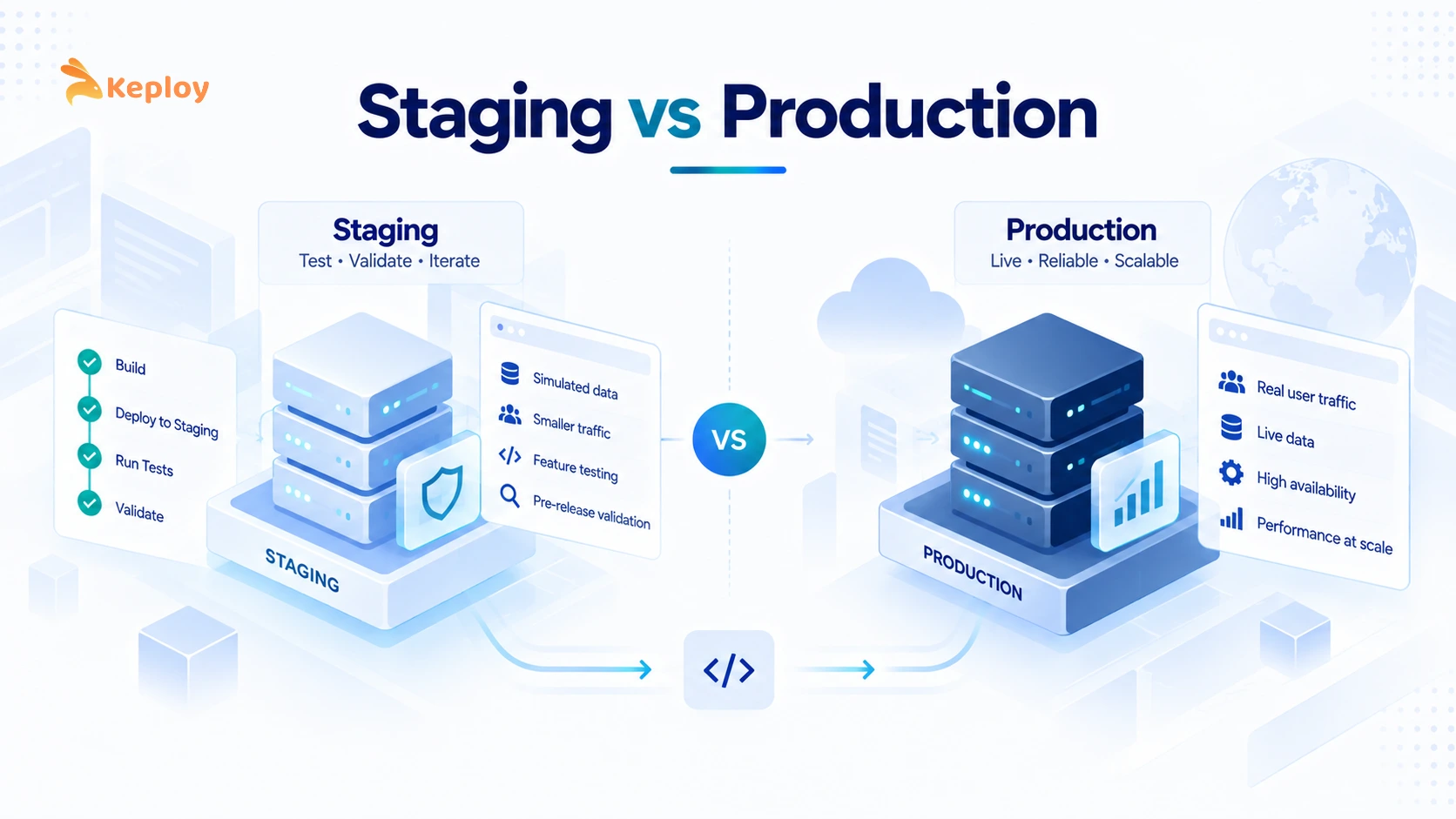
Staging vs. Production: Key Differences Explained
A staging environment mirrors production – same infrastructure, same configurations, but uses anonymized data so teams can validate features and catch issues without affecting real users. The production environment is live, handles actual customer data, and has zero tolerance for errors. In CI/CD pipelines, staging is the mandatory gate before deployment, where Keploy simulates real…
-

Comparing GitHub Copilot vs. ChatGPT for Unit Testing
With the rise of AI-driven tools, the debate of ‘ChatGPT vs Copilot’ has become central for developers seeking productivity boosts in coding and testing. In this blog, we will dive into the key features, strengths, limitations, and use cases of these tools to help you understand their differences and make an informed decision on which…
-

Choosing the right Penetration Testing Tools for your system
Organizations are in a sheer need to stay up-to the minute, and be ahead for protecting their systems and data. Penetration testing can prove to be a structured process that can mimic the real-world vulnerabilities before it’s prone to any malicious exploits. In this entire lifecycle of pentesting, we got some tools in order to…
-

Everything You Need to Know About API Testing
Introduction In the realm of software development, Application Programming Interfaces (APIs) serve as the backbone for communication between different software systems. As APIs become increasingly integral to modern applications, ensuring their reliability and functionality is paramount. One crucial aspect of this is testing API endpoints thoroughly. In this guide, we’ll delve into API testing, exploring…
-
How AI code is Transforming the Future of Software Development
The world of software development is undergoing a huge transformation, due to the emergence of artificial intelligence (AI). AI-powered tools and methodologies are reshaping how we write, test, and deploy code, which is making our programming faster, more efficient, and more accessible. In this blog, we’ll explore the concept of code with AI, its applications,…
-

How to Use Assertions in Python Selenium for Testing
When writing test automation scripts in Selenium Python, verifying that the actual outcomes match the expected results is crucial. This is where assertions come into play. Assertions help ensure that your application is working as intended by checking specific conditions and halting execution if they fail. In this blog, we’ll break down the concept of…
-

How Exploratory Testing Can Improve Software Quality
In the fast-paced world of software development, ensuring top-notch quality is a must. One approach that has gained significant traction over the years is Exploratory Testing. Unlike scripted testing, exploratory testing focuses on real-time discovery, creativity, and problem-solving. In this article, we will understand exploratory testing, its benefits, techniques, and how tools like Keploy can…
-

Docker Containers: Enabling SSL for Secure Databases
Why Enable SSL for Databases? Security is critical for any application, especially when dealing with sensitive data like financial records or user information. Databases such as MongoDB and PostgreSQL communicate over the network, making them vulnerable to interception. SSL (Secure Sockets Layer) encrypts the communication between the client and the database server to prevent data…
![How to Exit Full Screen on Mac: Every Method Explained [2026]](https://wp.keploy.io/wp-content/uploads/2024/12/Add-a-heading.png.webp)