Tag: ci-cd
-
Automated functional testing: How it works and tools
Automated functional testing means using scripts or tools to check that each feature of an application does what the requirements say, without a person clicking through every step. The tool sends the inputs, compares the result with what was expected and flags anything that breaks, on every build if you want it to. That is…
-
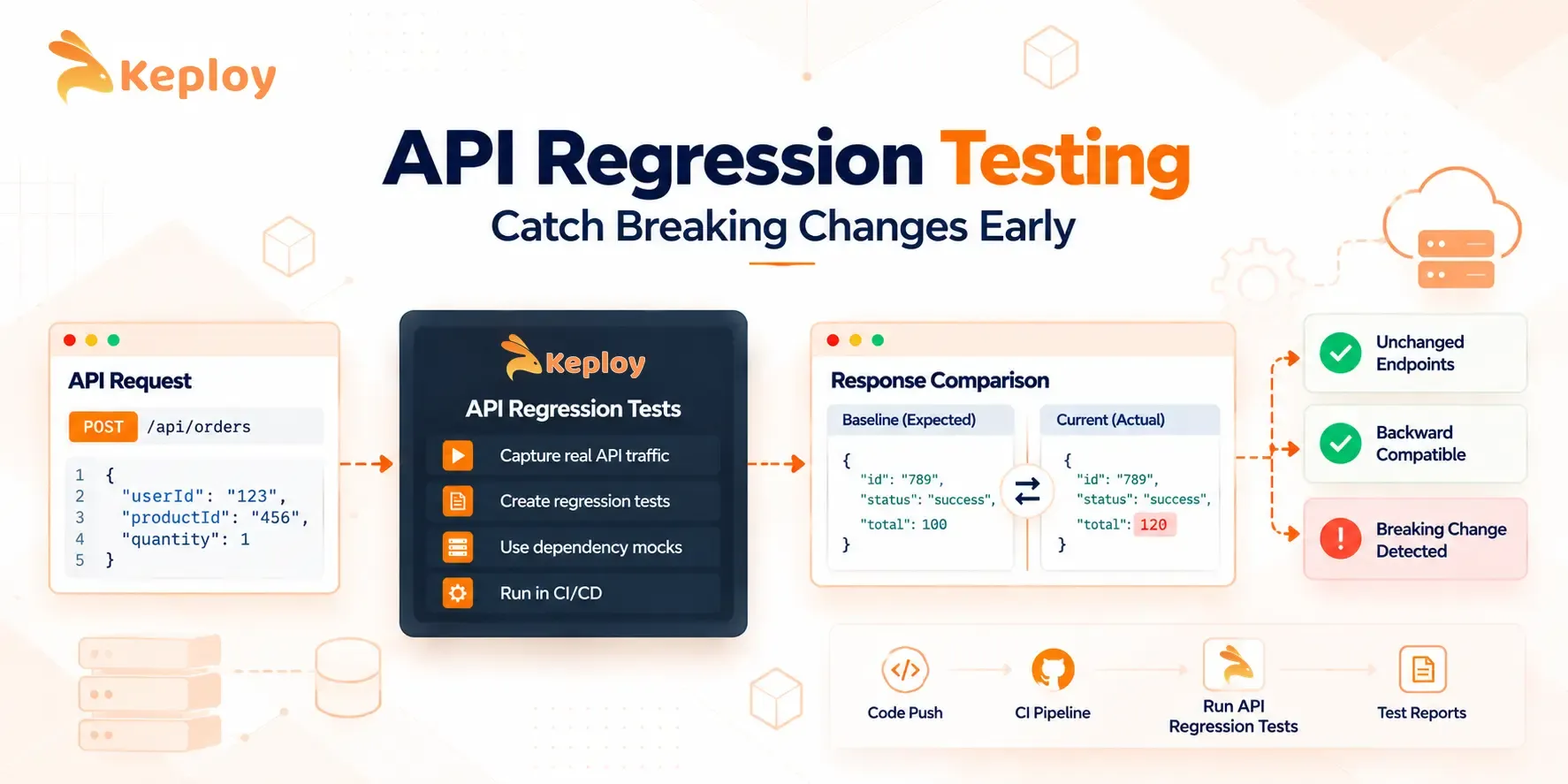
API Regression Testing: Catch Breaking Changes Early
API regression testing re-runs your API tests after every code change so existing endpoints keep returning what clients expect. A solid setup checks response shapes, auth, and latency, mocks external dependencies, and runs a fast suite on each pull request with the full suite nightly. Keploy, an open-source tool, generates that suite and its dependency…
-
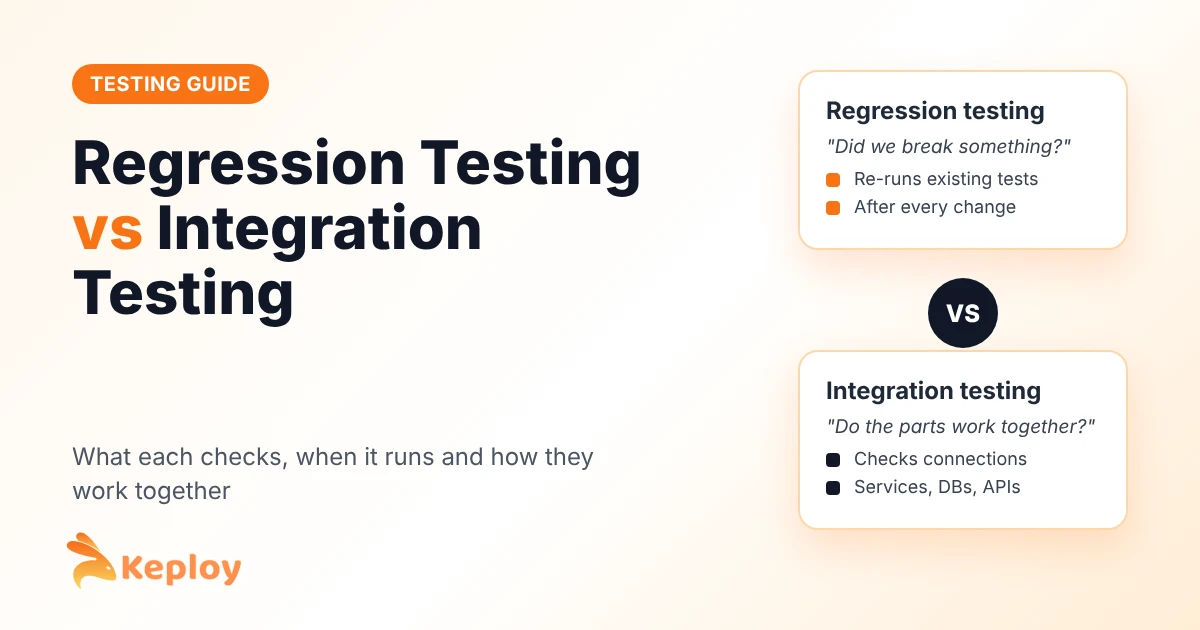
Regression Testing vs Integration Testing: Key Differences
Here is a situation most backend teams have lived through. A developer changes how the user service formats dates. It is a tiny change: one line, a cleaner ISO format, every unit test still green. The pull request gets approved in five minutes. Two days later, the billing service starts failing to generate invoices, because…
-
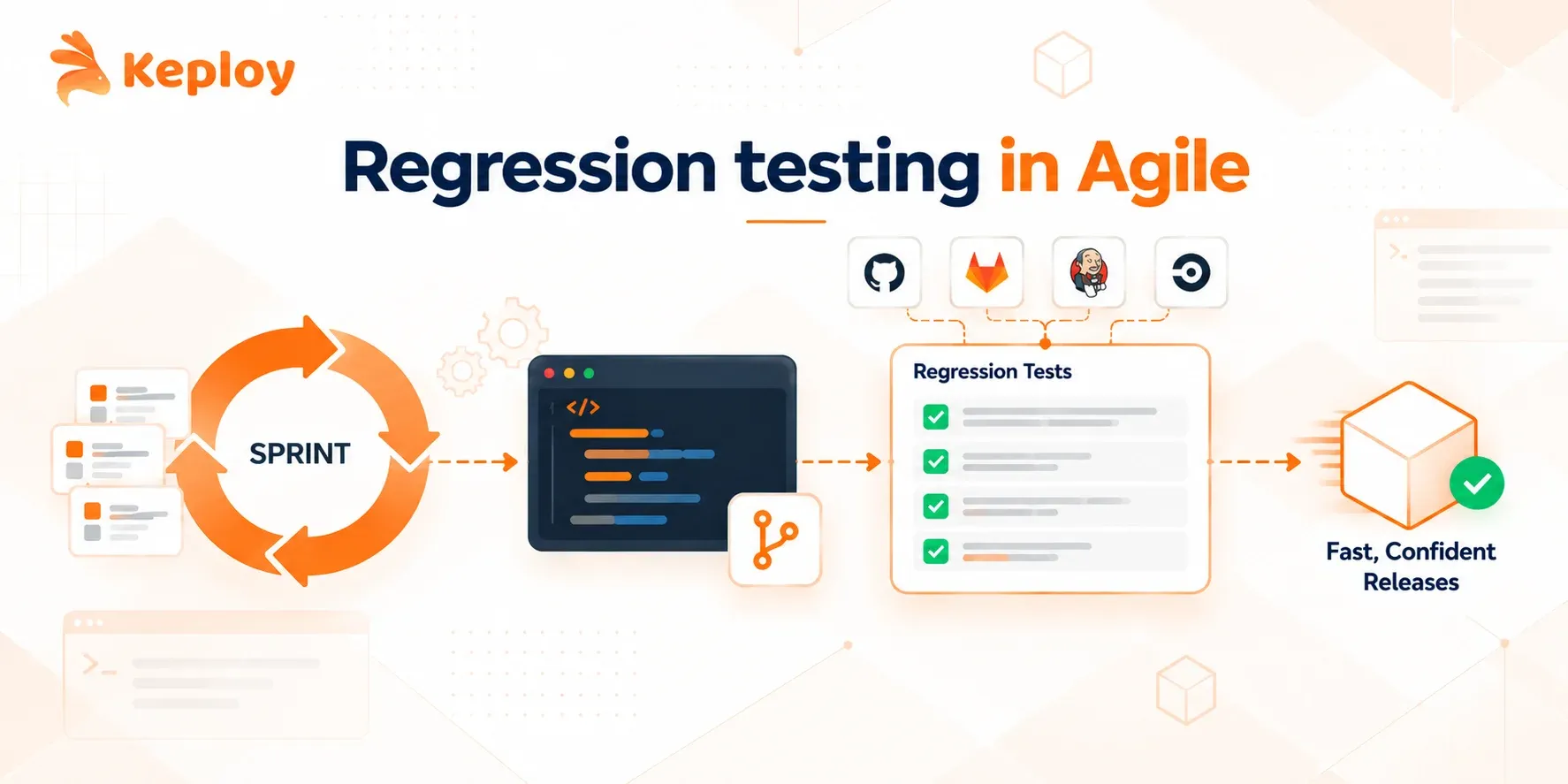
Regression Testing in Agile: Test Every Sprint Without Slowing Down
Regression testing in agile happens inside every sprint, alongside the stories being built. Targeted tests run on each pull request, the full suite runs before sprint review and every release, and hotfixes get a check of their own. The whole team shares the work while one tester curates the suite, and it stays fast when…
-
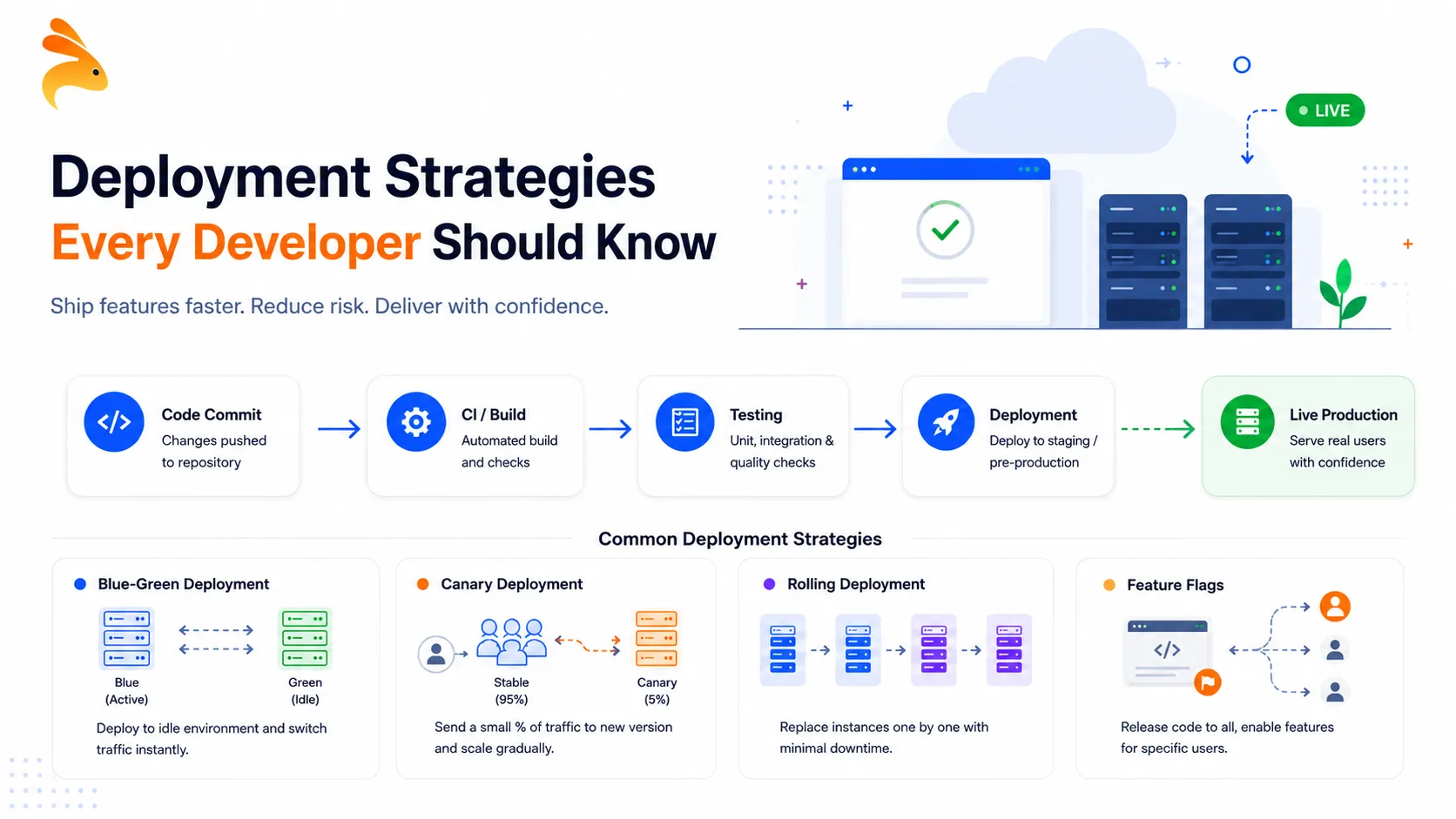
Deployment Strategies Every Developer Should Know
Deployment strategies define how new software versions are released to production while minimizing risk and downtime. Common approaches include blue-green, canary, rolling, and recreate deployments, each balancing speed, safety, and rollback ease differently. The right choice depends on your uptime needs, infrastructure, and tolerance for risk. The first time I watched a deployment take down…
-
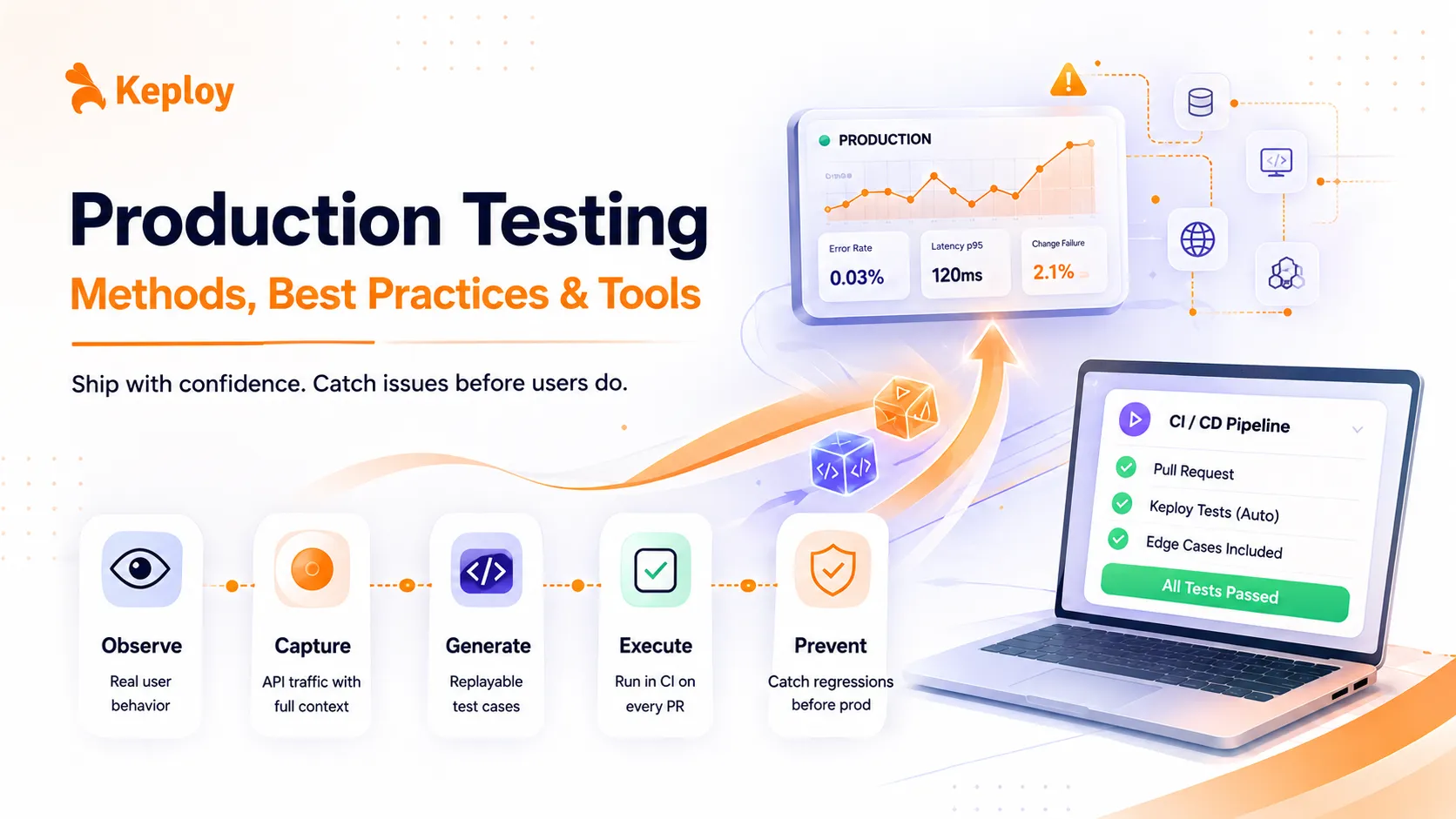
Production Testing: Methods, Best Practices & Tools (2026)
Production testing is the practice of validating software in the live environment using real user traffic – not as a replacement for staging, but as an additional layer that catches what no controlled environment can replicate. Done with guardrails like canary releases, feature flags, and rollback plans, it’s standard practice at Netflix, Google, and Meta.…
-
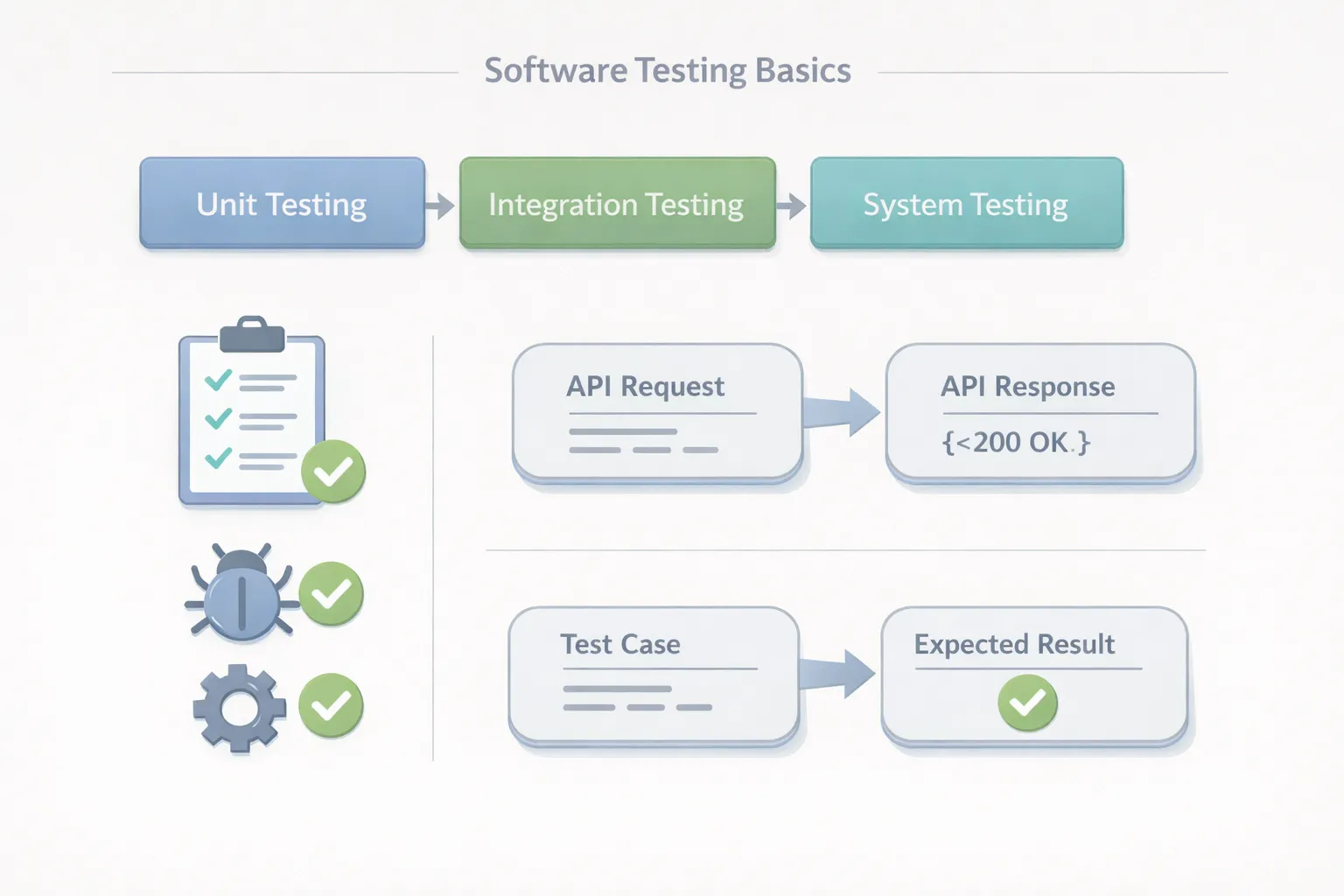
Software Testing Basics Simplified: A Guide For Beginners (2026)
Software testing basics are the shared vocabulary and principles – defect vs failure, verification vs validation, test levels – that turn ad hoc checks into a process teams can trust. Most beginner confusion isn’t about picking test types; it’s these fundamentals staying unclear. The fix: one high-impact flow, a mix of positive, negative, and boundary…
-
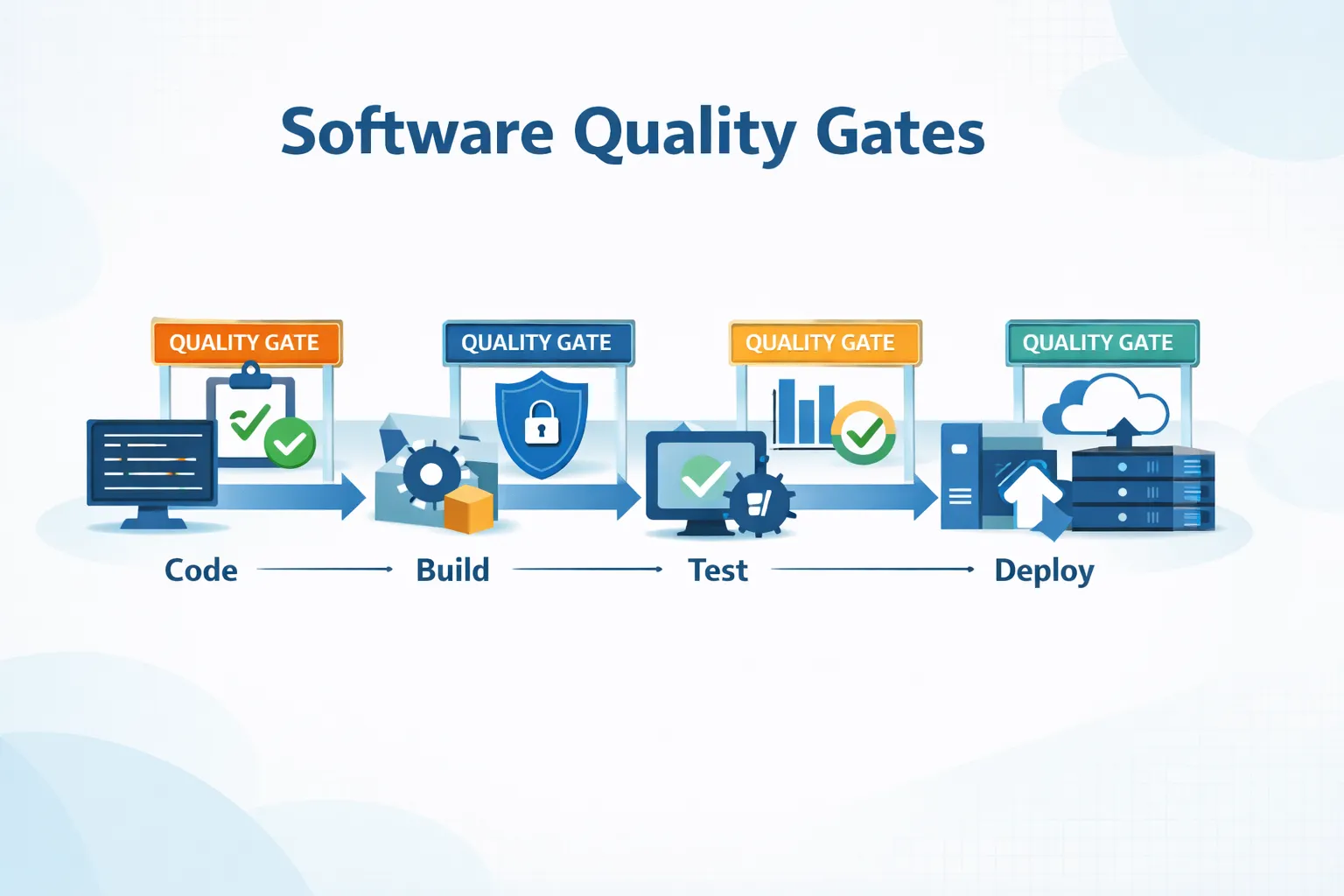
Software Quality Gates: Benefits, Use Cases & Best Practices
Software quality gates are automated pass/fail checkpoints in CI/CD pipelines that block code from progressing unless it meets predefined thresholds – coverage minimums, zero failed regressions, no critical vulnerabilities. They replace subjective debates with objective pipeline signals. Teams increasingly gate on API schema and business use-case coverage – the layer where Keploy’s traffic-based testing adds…
-
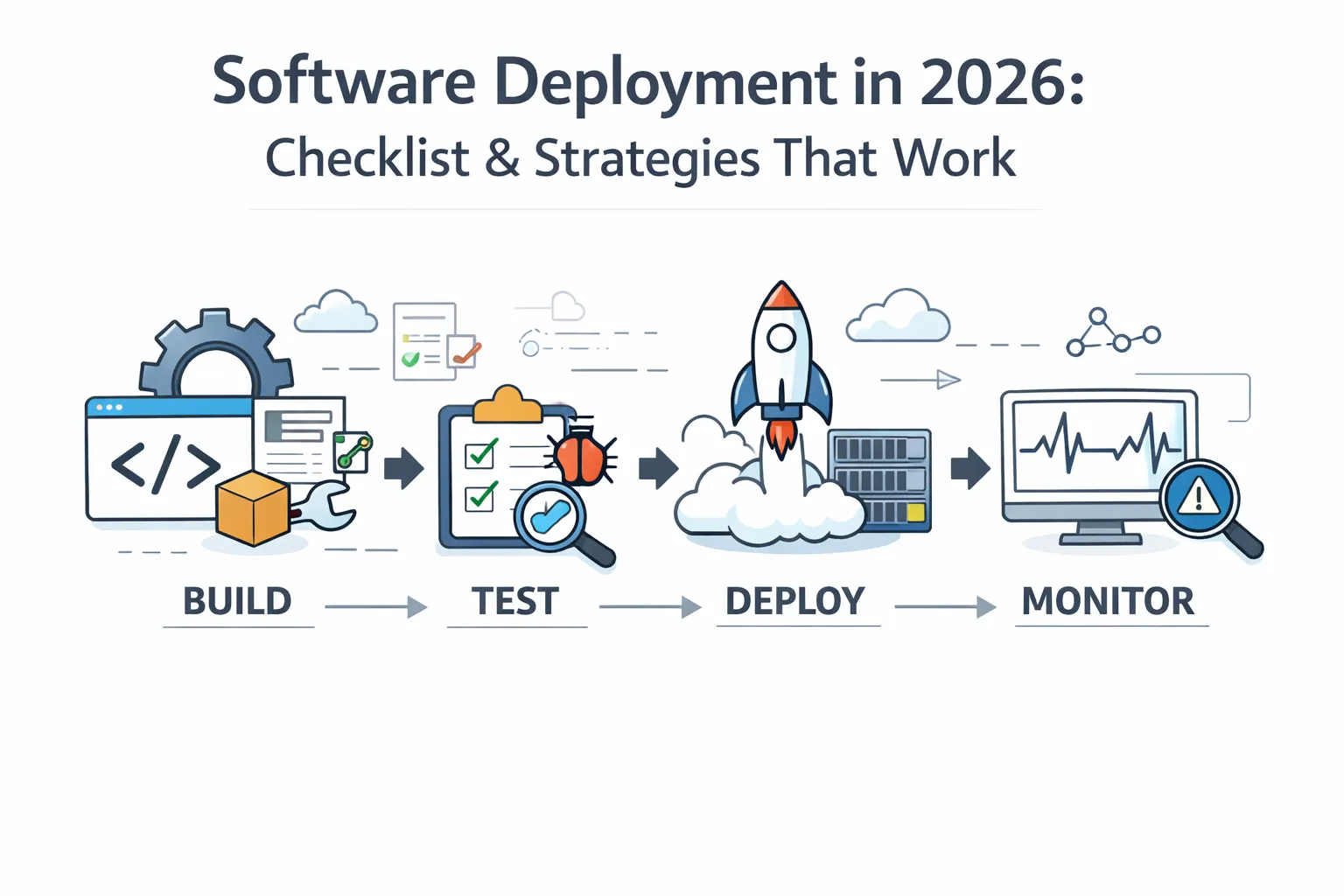
Software Deployment in 2026: Strategies & Best Practices
Most software projects fail not in development – but at software deployment. Even stable, well-tested code can break in production when the deployment process isn’t planned well. In 2026, software deployment is no longer just about pushing code – it’s about reliability, speed, and control. Let’s explore how modern teams deploy smarter, faster, and safer…
-
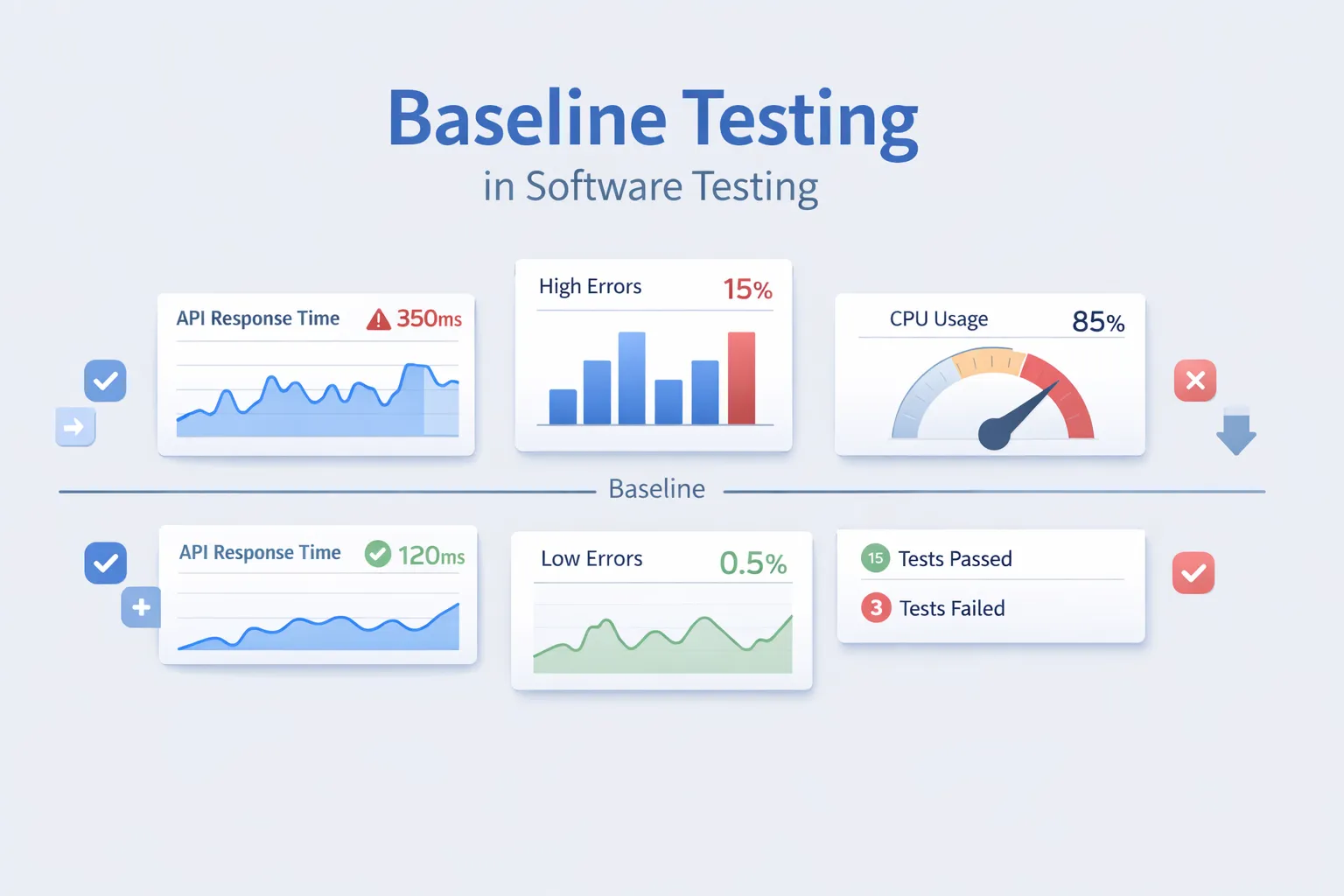
What Is Baseline Testing? Meaning, Examples & Use Cases (2026)
Baseline testing compares current test results against an approved reference from a previously validated version – not to find bugs in isolation, but to detect whether something changed unexpectedly. The most reliable approach is record-replay: capture real application behavior from a working version, then replay against each new release in CI. Keploy applies this directly…