Tag: devops
-
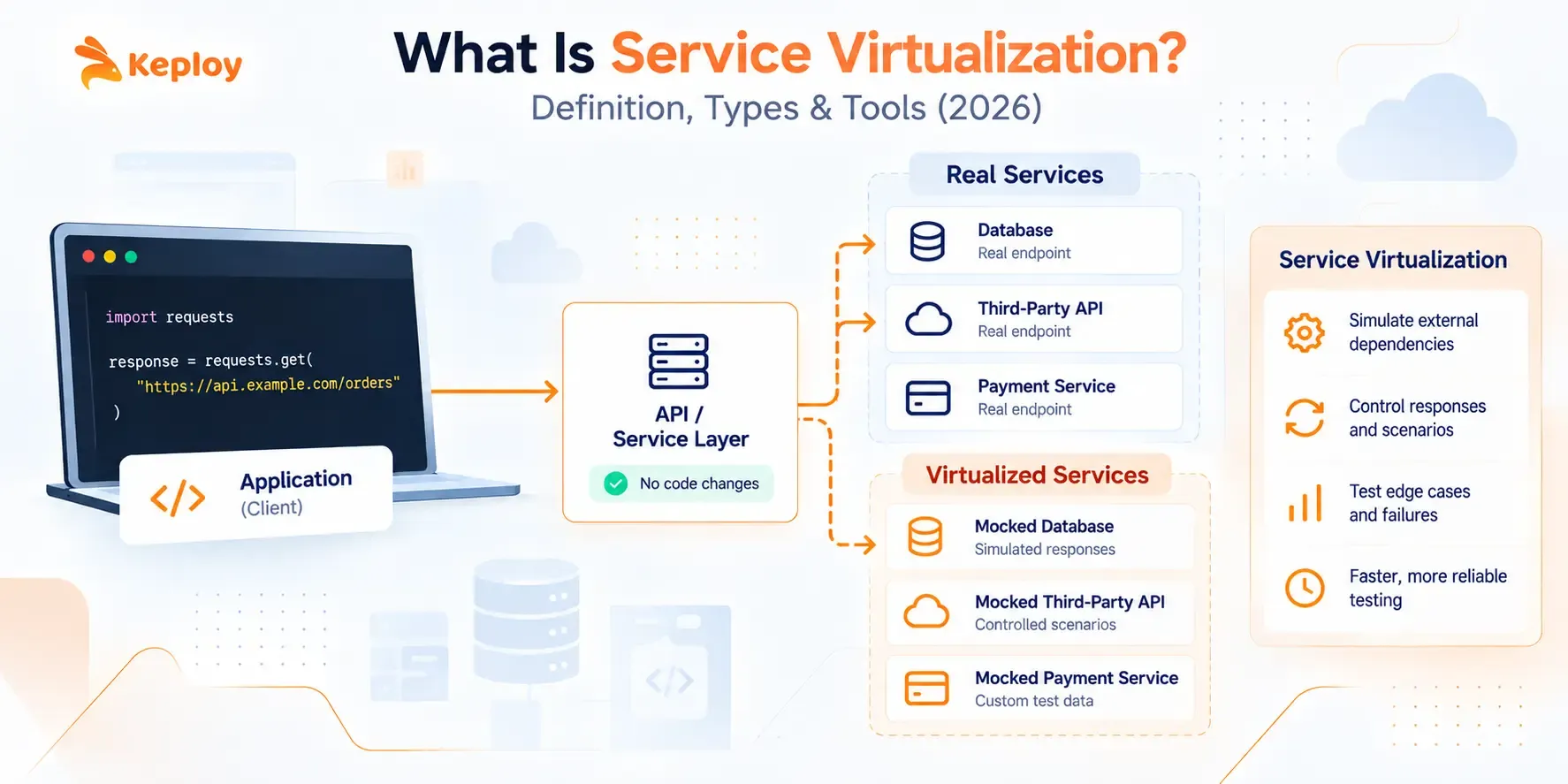
What Is Service Virtualization: Definition, Types & Tools (2026)
Service virtualization replaces real external dependencies (APIs, databases, queues, or third-party services) with controlled simulations that respond like the real thing. Tests run against these virtual services whether the real dependency is unavailable, expensive to call, or still being built. Keploy implements this by capturing real dependency interactions from live traffic and replaying them automatically…
-
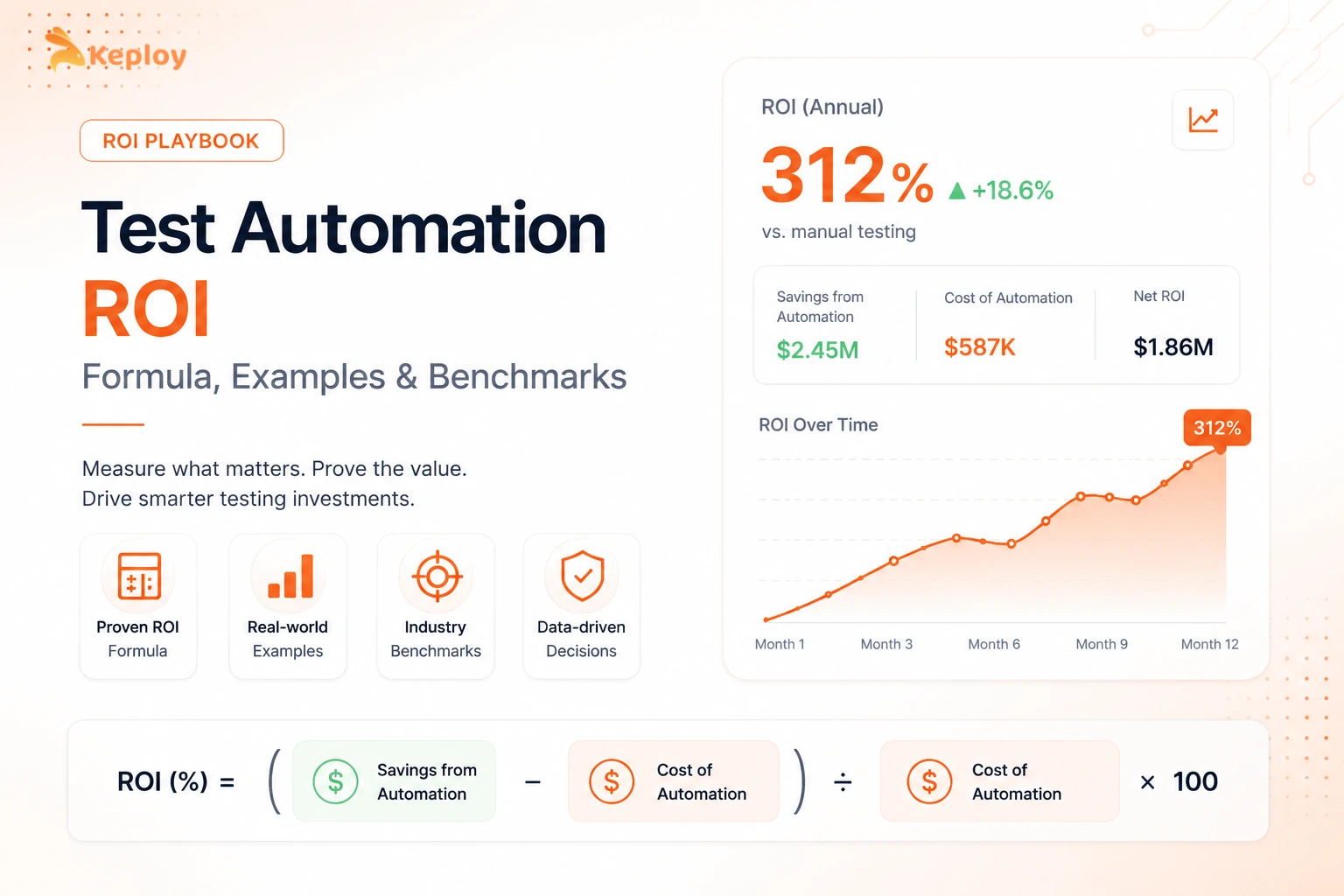
Test Automation ROI: Formula, Examples & Benchmarks (2026)
Test automation ROI measures the financial return of automating tests against the full cost of building and maintaining them. Most teams overstate savings and underestimate maintenance – the cost that compounds quietly year over year. The strongest returns come from keeping the investment side lean. Keploy addresses this directly by eliminating manual test authoring, which…
-
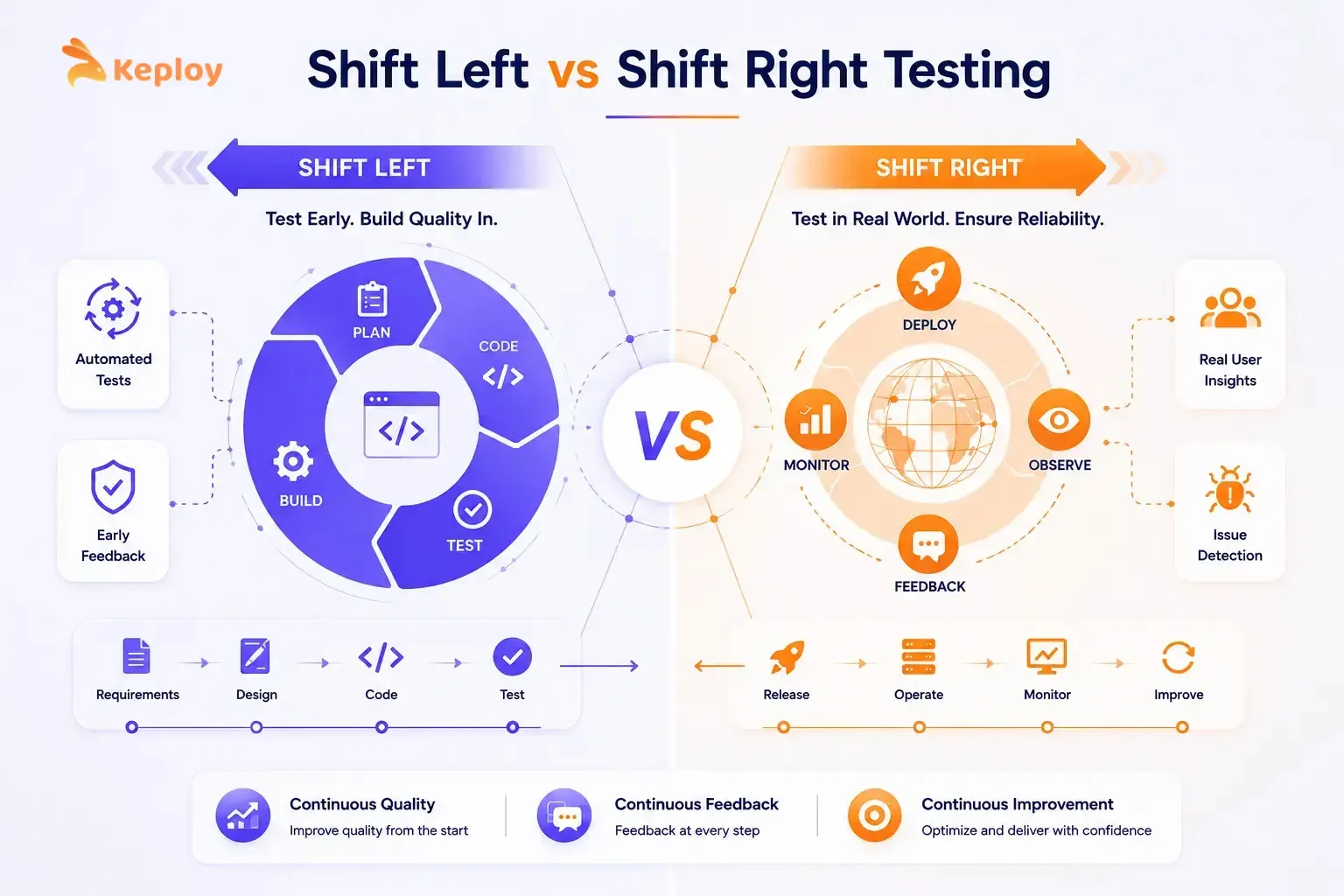
Shift Left vs Shift Right Testing: Key Differences & Use Cases (2026)
Shift left vs shift right testing isn’t really a debate. Teams that treat it as one end up with gaps that neither approach covers alone. Shift left catches defects before they reach production. Shift right learns from what happens after they do. The teams shipping most reliably in 2026 don’t choose between them. They run…
-
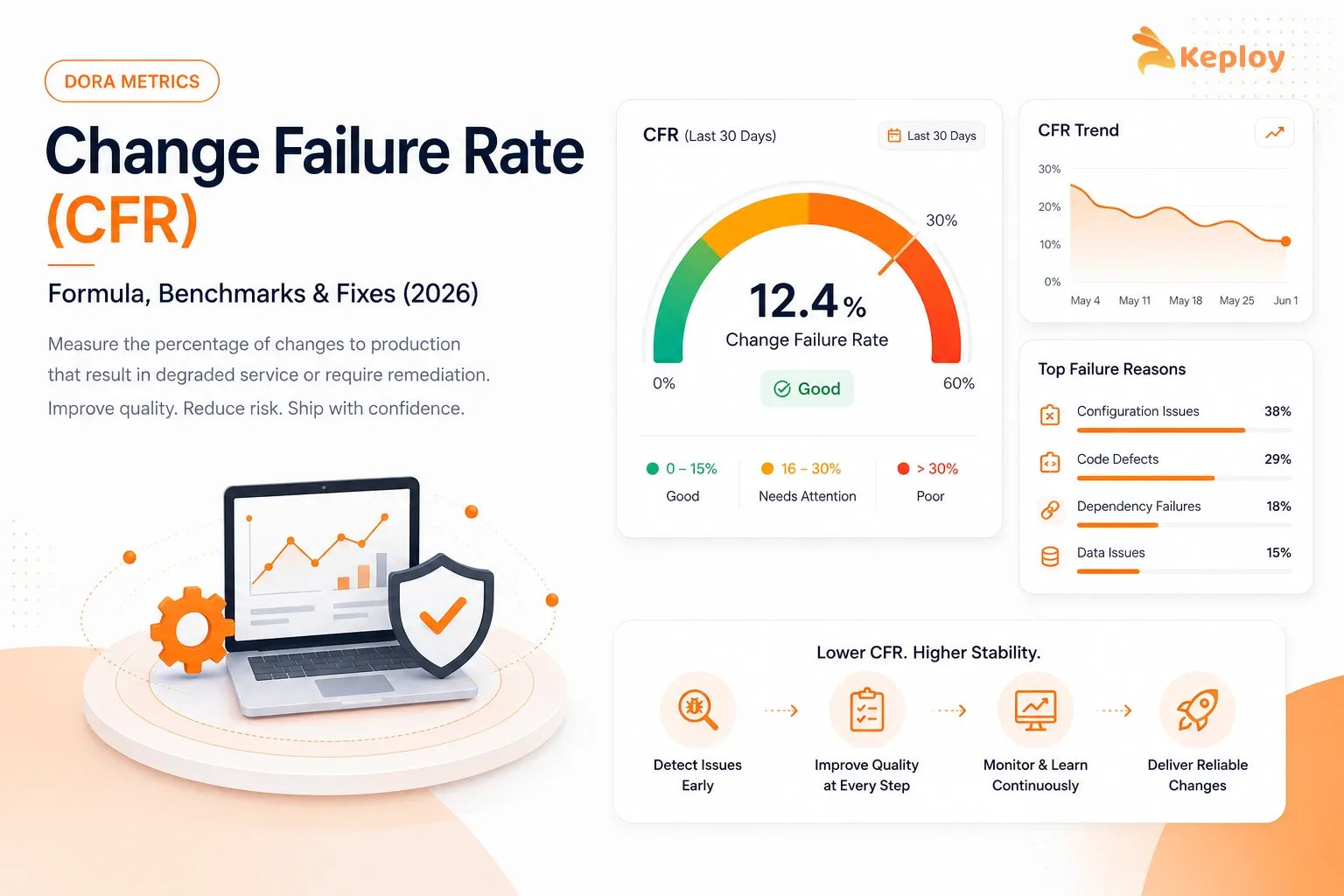
Change Failure Rate (CFR): Formula, Benchmarks & Fixes (2026)
Change failure rate measures the percentage of production deployments that trigger a rollback, hotfix, or emergency patch, making it a stability signal rather than a speed metric. Even elite teams rarely hit a near-zero rate, since most spikes trace back to untested API regressions slipping through CI. Keploy generates regression tests from real traffic, catching…
-
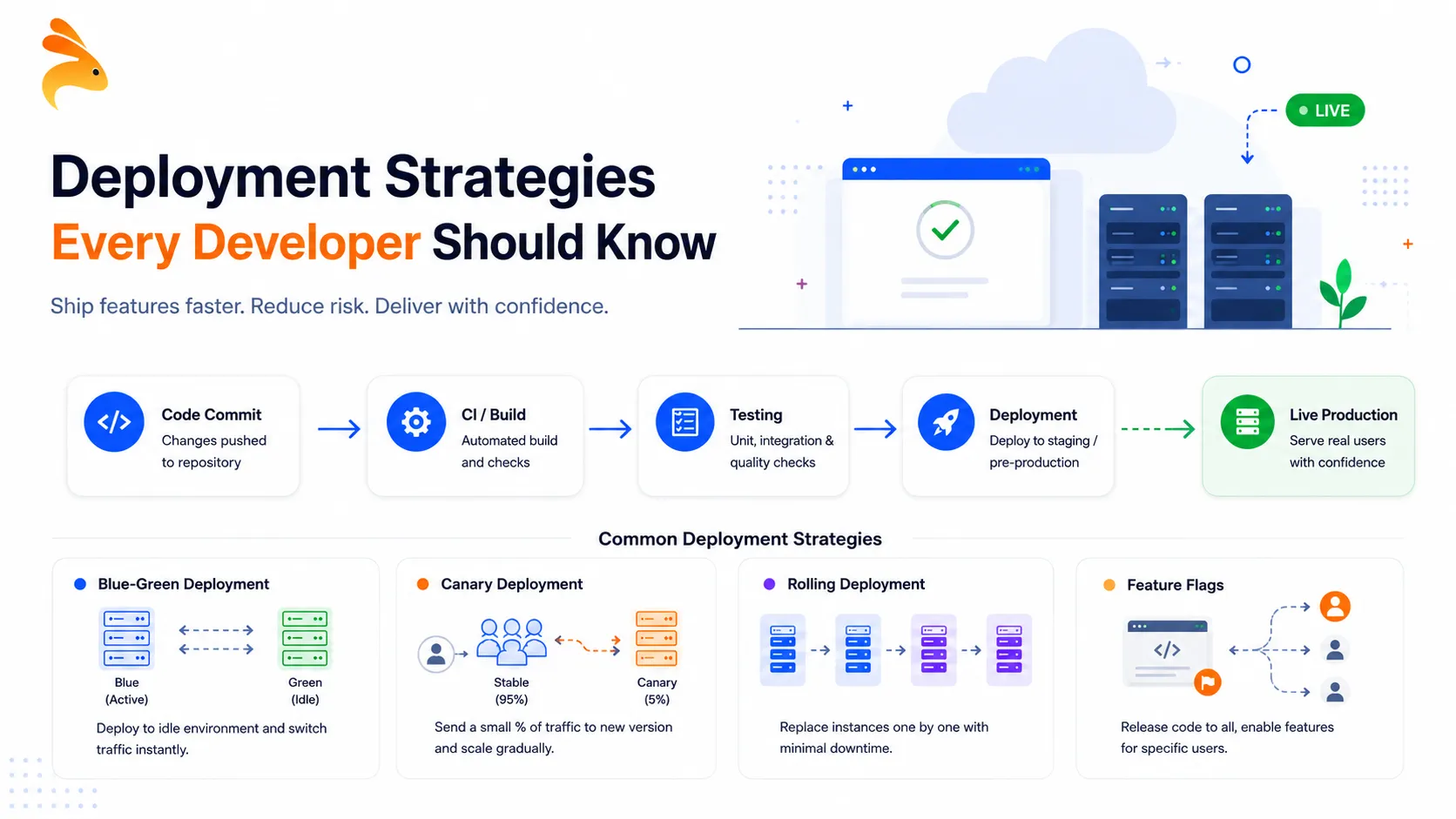
Deployment Strategies Every Developer Should Know
Deployment strategies define how new software versions are released to production while minimizing risk and downtime. Common approaches include blue-green, canary, rolling, and recreate deployments, each balancing speed, safety, and rollback ease differently. The right choice depends on your uptime needs, infrastructure, and tolerance for risk. The first time I watched a deployment take down…
-
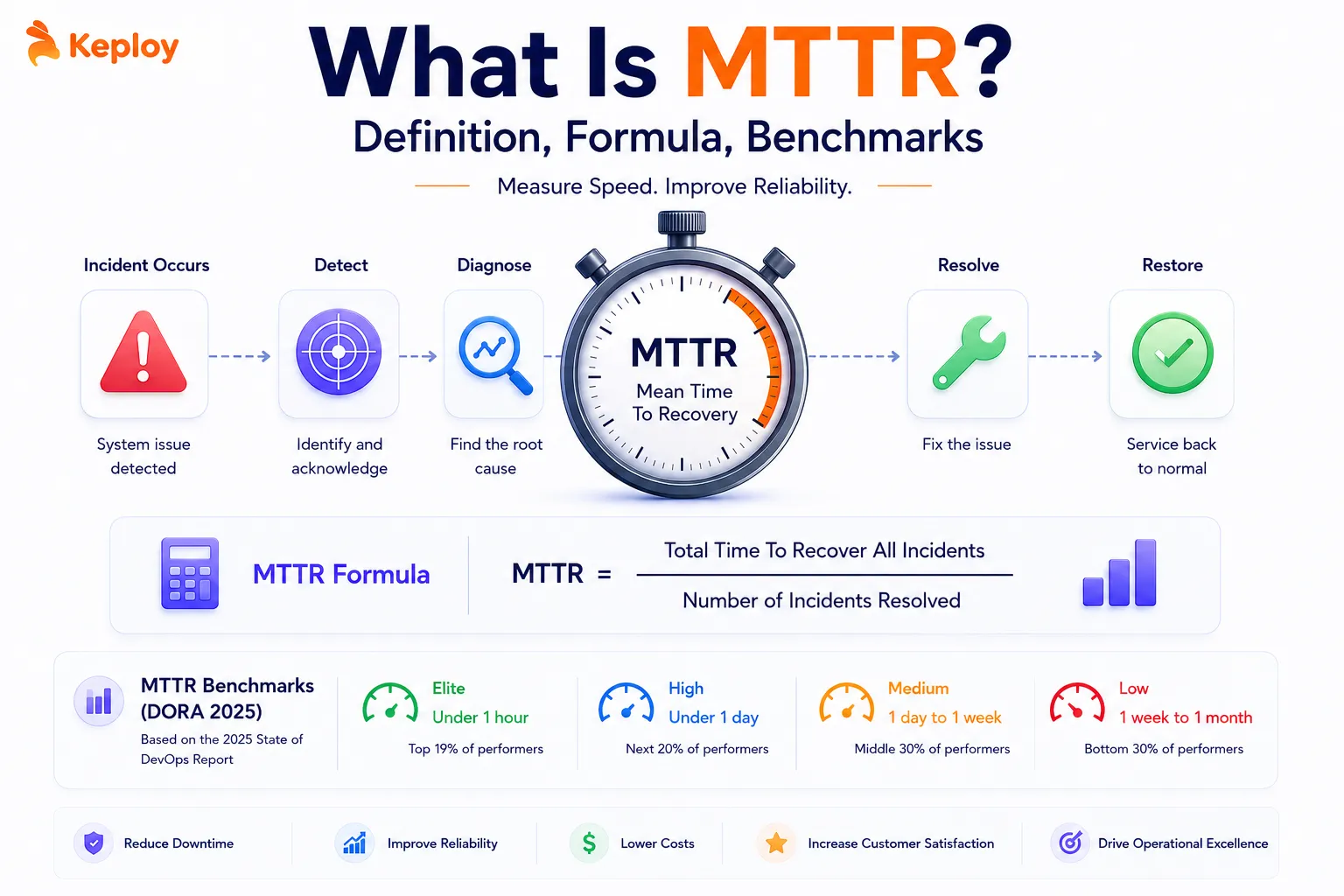
What Is MTTR? Definition, Formula & Benchmarks (2026)
MTTR is the metric that tells you how long your users wait after something breaks. According to Splunk and Cisco’s Hidden Costs of Downtime 2026 report, unplanned downtime now costs organisations an average of $15,000 per minute. Across the Global 2000 companies, the aggregate annual cost has surged to $600 billion, a 50% increase in…
-
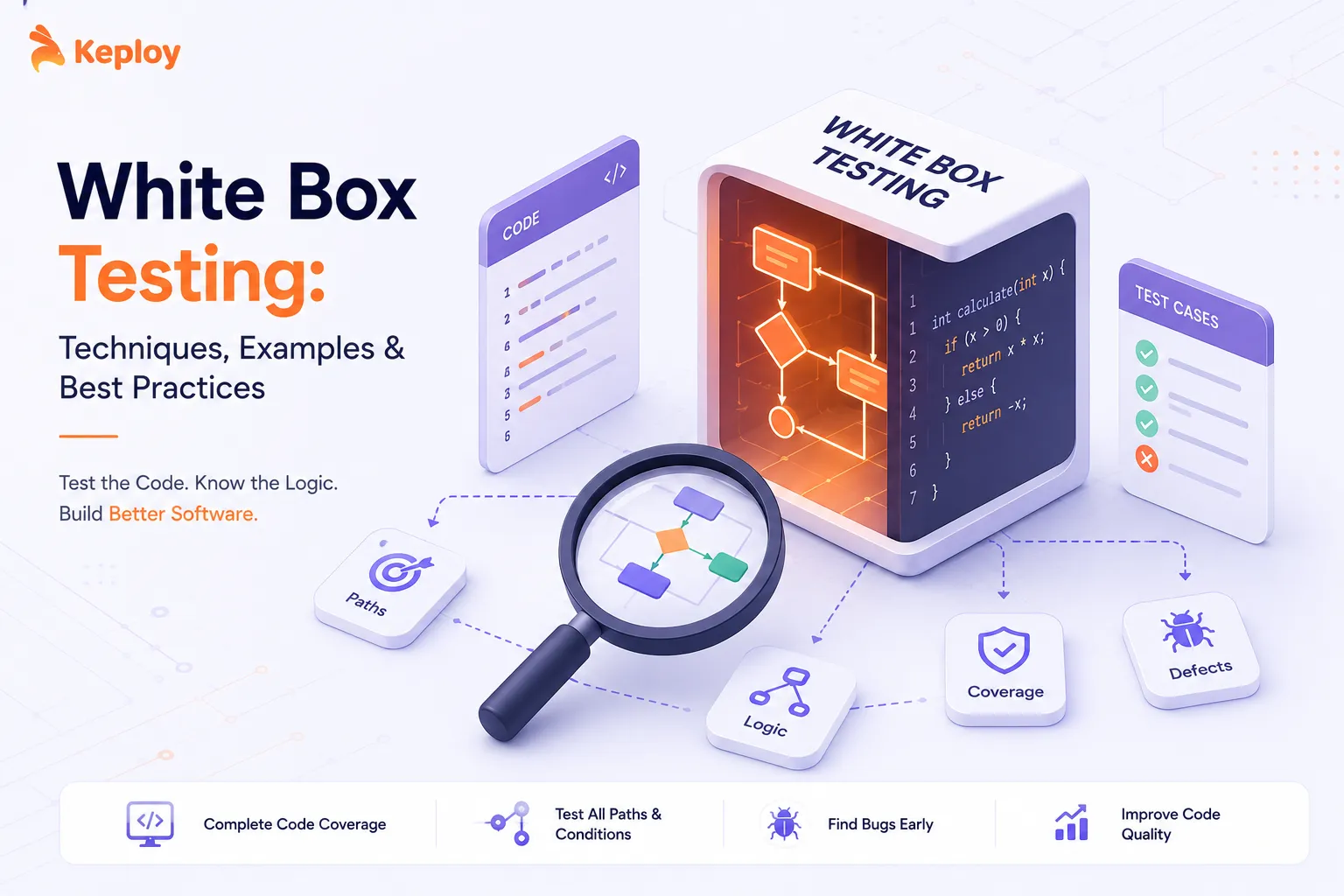
White Box Testing: Techniques, Examples & Best Practices (2026)
White box testing gives testers direct access to source code, designing test cases around internal logic: branches, paths, conditions – rather than what users put in and get back. The core techniques build in depth: statement, branch, path, condition coverage & loop testing. The critical caveat: 90% statement coverage can still miss the branch that…
-
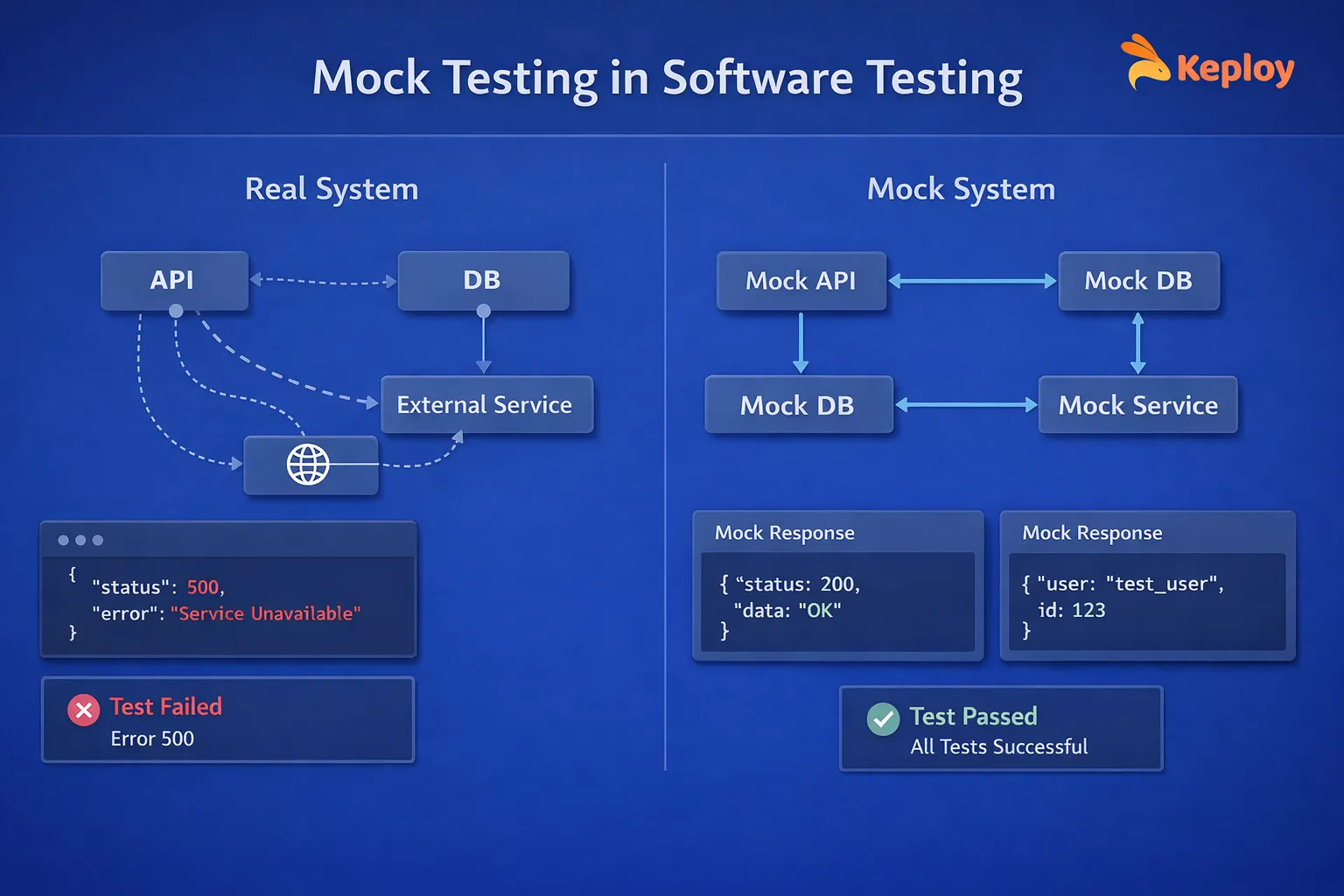
Mock Testing: A Complete Guide for Developers (2026)
Mock testing replaces real dependencies – APIs, databases, third-party services – with simulated objects that return controlled responses. It speeds up test runs, eliminates flakiness from unstable external systems, and makes edge cases like timeouts easy to trigger on demand. The limitation: mocks drift from real behavior over time. Keploy addresses this by capturing real…
-
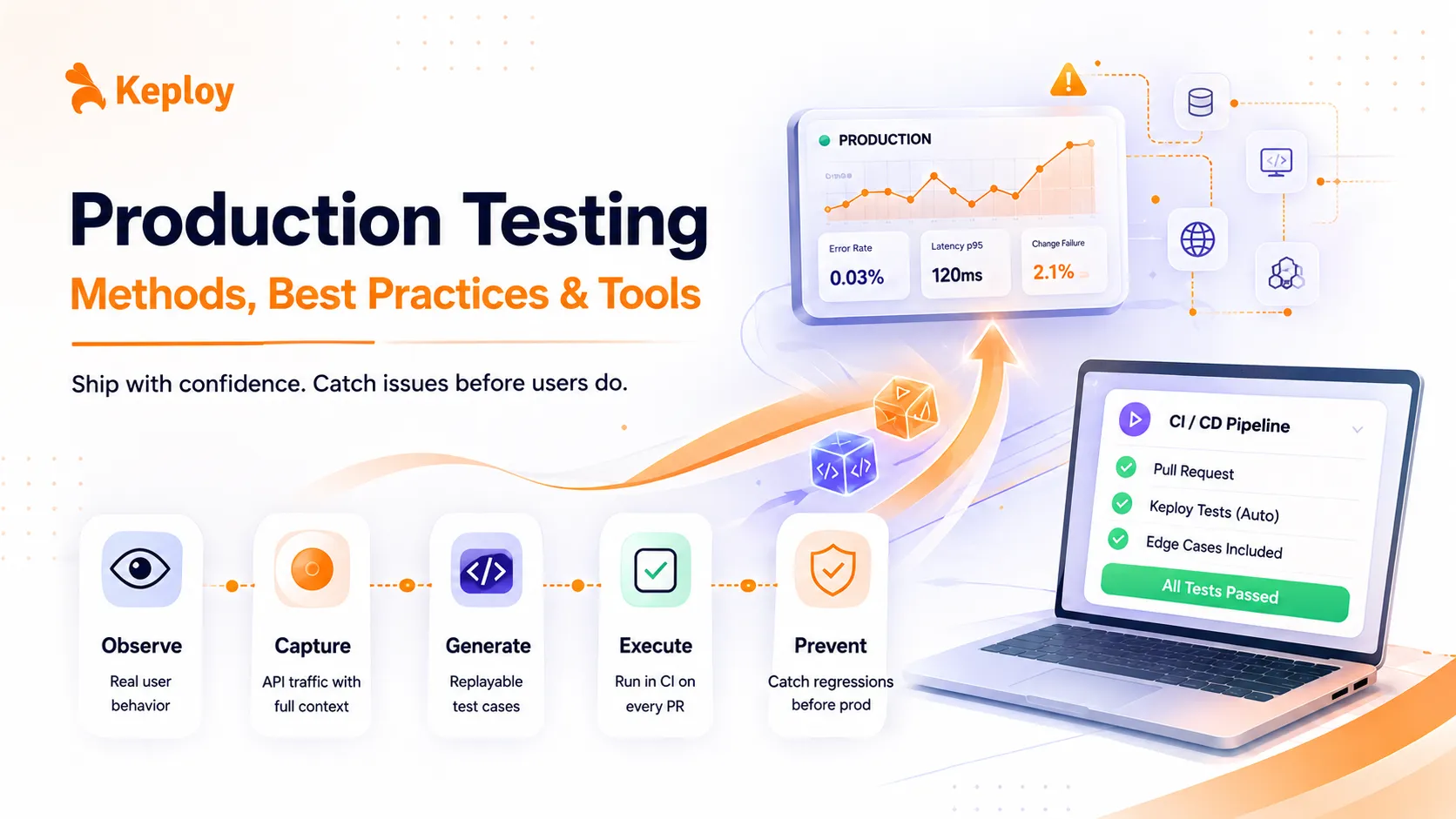
Production Testing: Methods, Best Practices & Tools (2026)
Production testing is the practice of validating software in the live environment using real user traffic – not as a replacement for staging, but as an additional layer that catches what no controlled environment can replicate. Done with guardrails like canary releases, feature flags, and rollback plans, it’s standard practice at Netflix, Google, and Meta.…
-
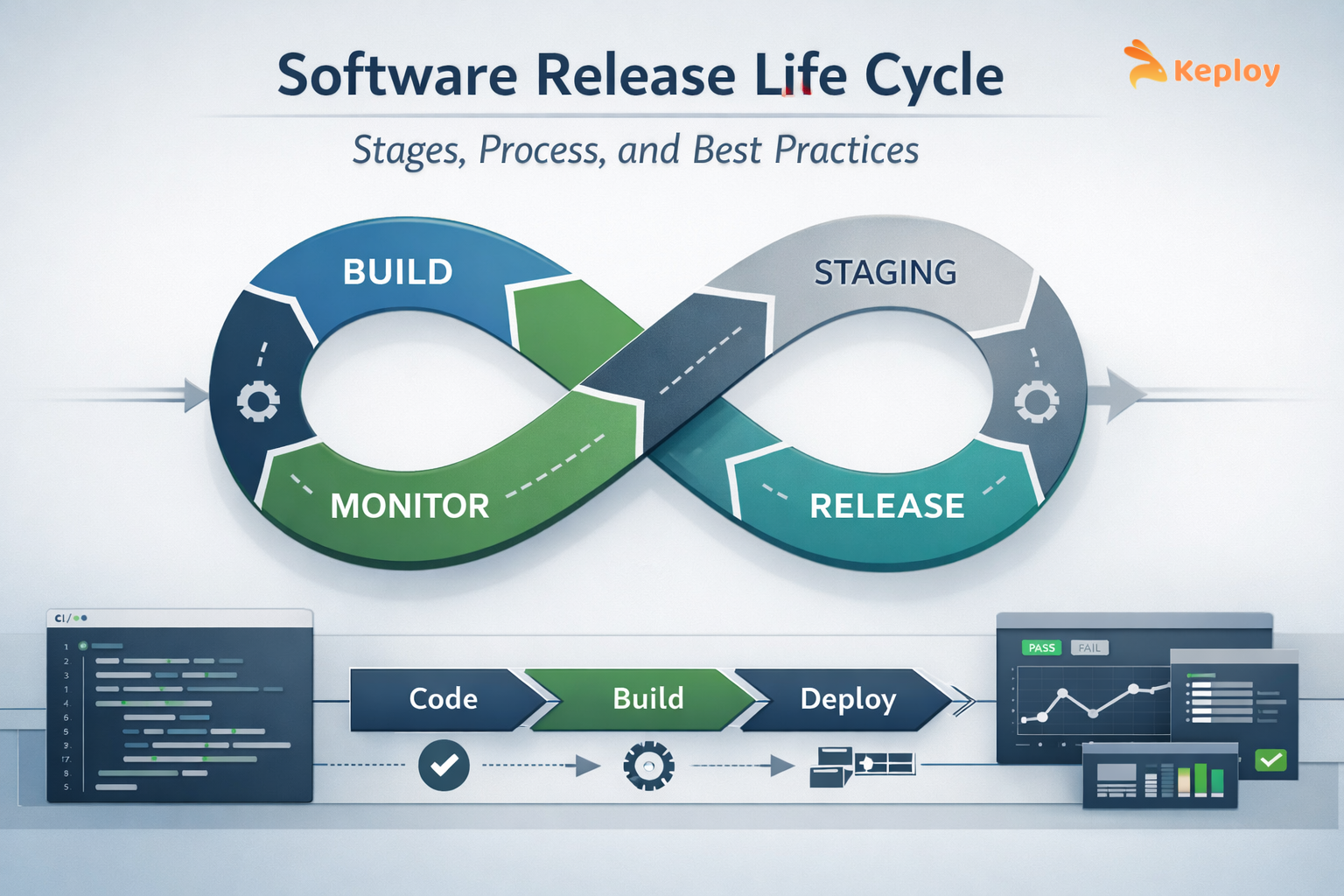
Software Release Life Cycle: Stages, Process, and Best Practices
Software release life cycle is the sequence of stages software moves through from development to production: pre-alpha, alpha, beta, release candidate, and general availability. Unlike the SDLC, the SRLC focuses on how software is validated and delivered safely. One distinction modern teams rely on: deployment and release aren’t the same – code can sit in…