Tag: devops
-
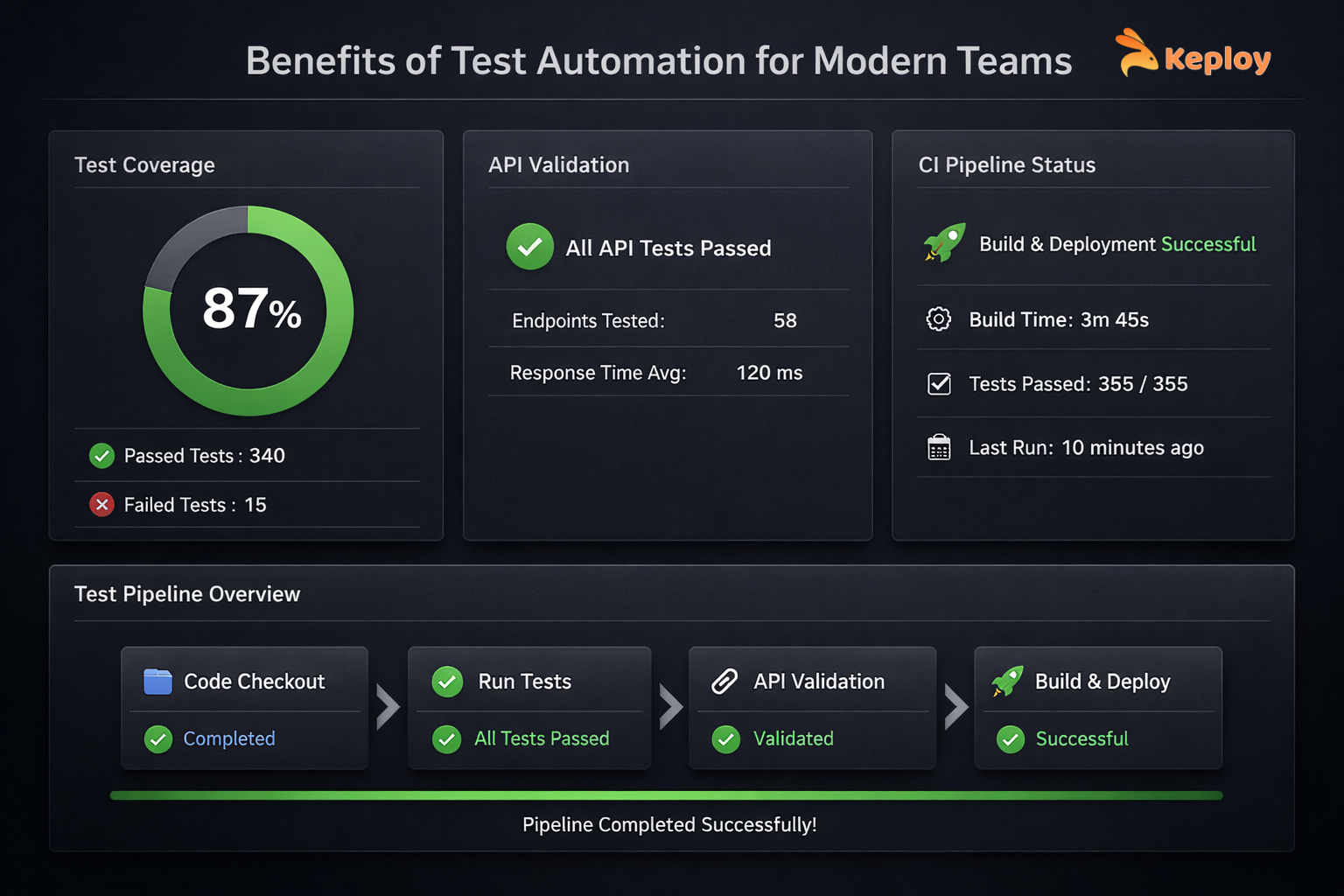
Benefits of Test Automation That Improve Release Confidence
The benefits of test automation become clear when software teams start releasing faster than they can manually test. Many engineering teams today face the same challenge: delivery speed is increasing, but validating every change manually takes too long. Test automation helps solve this by running tests quickly, catching bugs earlier, and reducing repetitive manual work…
-
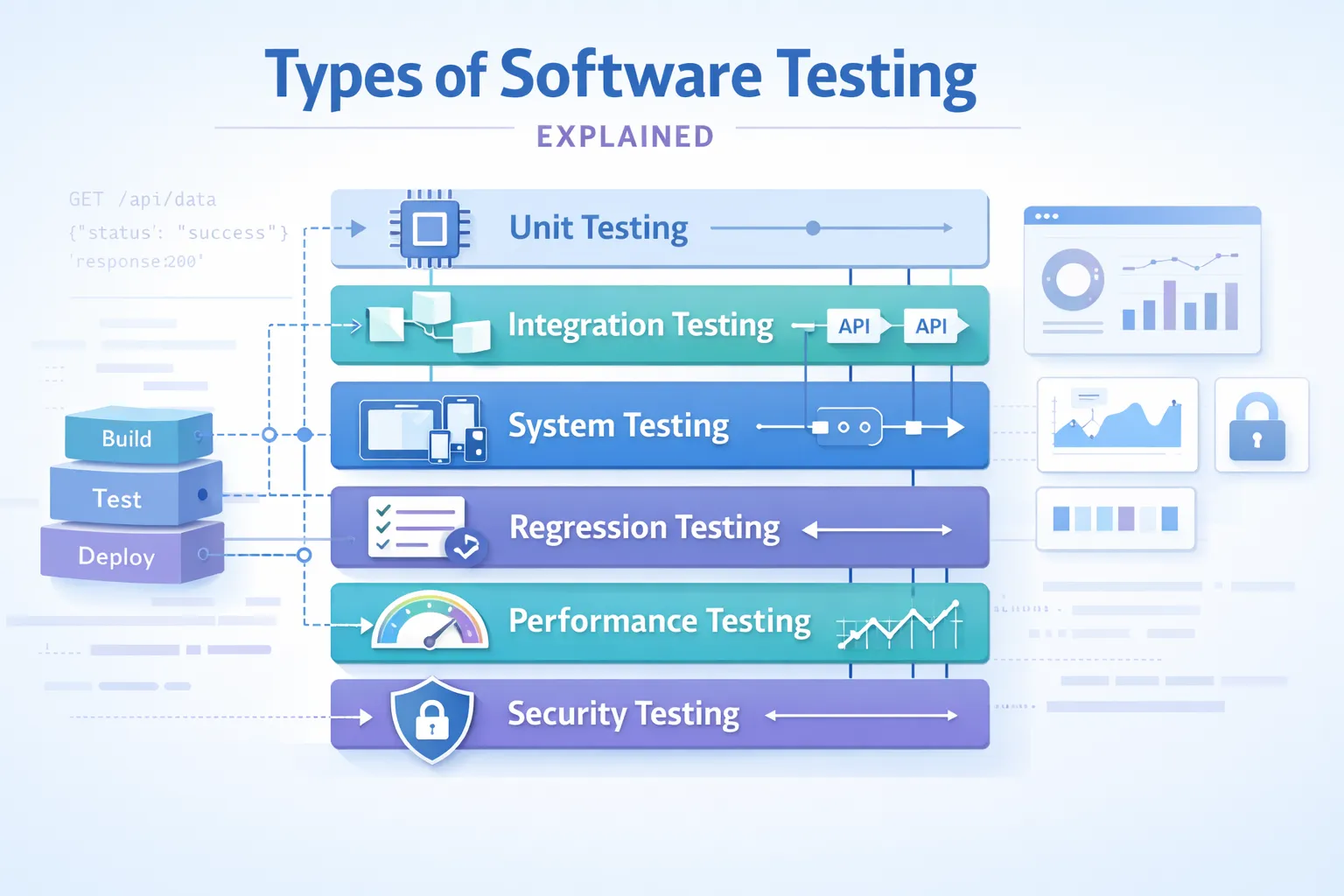
Types of Software Testing: A Comprehensive Guide (2026)
Software testing validates what an application does and how well it does it – from functional correctness and performance under load to security vulnerabilities and cross-environment behavior. Teams organise this work by level, purpose, technique, and execution method. Most combine these based on risk, with API, integration, and regression testing – where Keploy automates coverage…
-
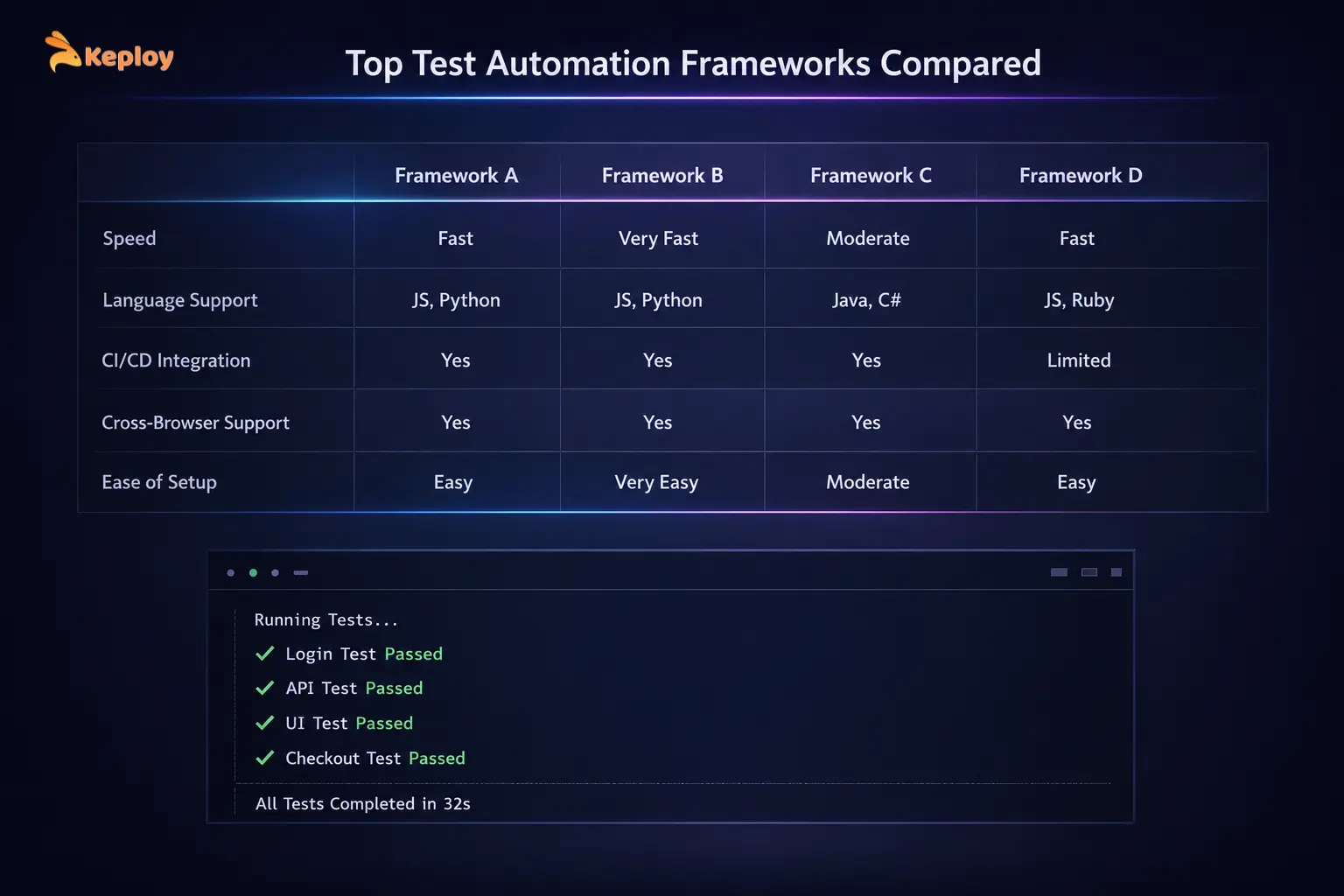
Top 12 Test Automation Frameworks in 2026 Compared
A test automation framework is the structured architecture around your testing tools – coding standards, reusable components, and CI/CD integration that determines whether automation scales or collapses under maintenance. Teams combine frameworks across layers: unit at the code level, API at the service layer, and E2E for critical journeys only. At the API layer, Keploy…
-

State Transition Testing: Diagrams, Tables & Examples
State transition testing is a black-box technique that validates how a system moves between states based on events – not just whether individual actions work, but whether the correct state is reached, invalid transitions are blocked, and the right output returned at each step. It’s most valuable for auth flows, payments, order lifecycles, and subscriptions.…
-

Security Testing Explained: Protecting Modern Applications and APIs
Security testing helps identify weaknesses in software before attackers can exploit them. It protects sensitive data, ensures system stability, and controls user access. With web, mobile, and API-based applications growing rapidly, security threats are increasing. Security testing helps teams detect risks early, prevent breaches, and meet compliance standards. In this guide, you will learn what…
-
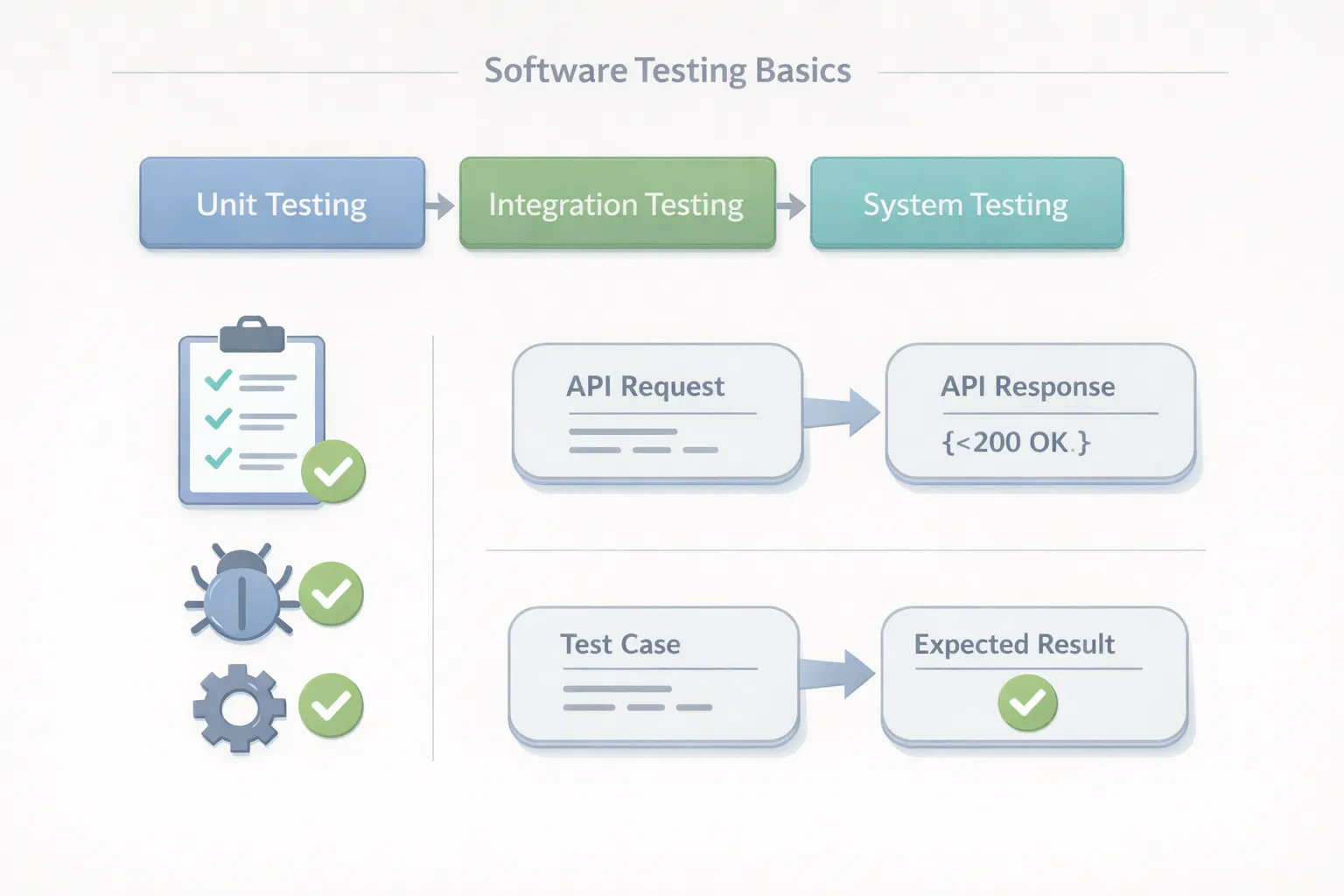
Software Testing Basics Simplified: A Guide For Beginners (2026)
Software testing basics are the shared vocabulary and principles – defect vs failure, verification vs validation, test levels – that turn ad hoc checks into a process teams can trust. Most beginner confusion isn’t about picking test types; it’s these fundamentals staying unclear. The fix: one high-impact flow, a mix of positive, negative, and boundary…
-
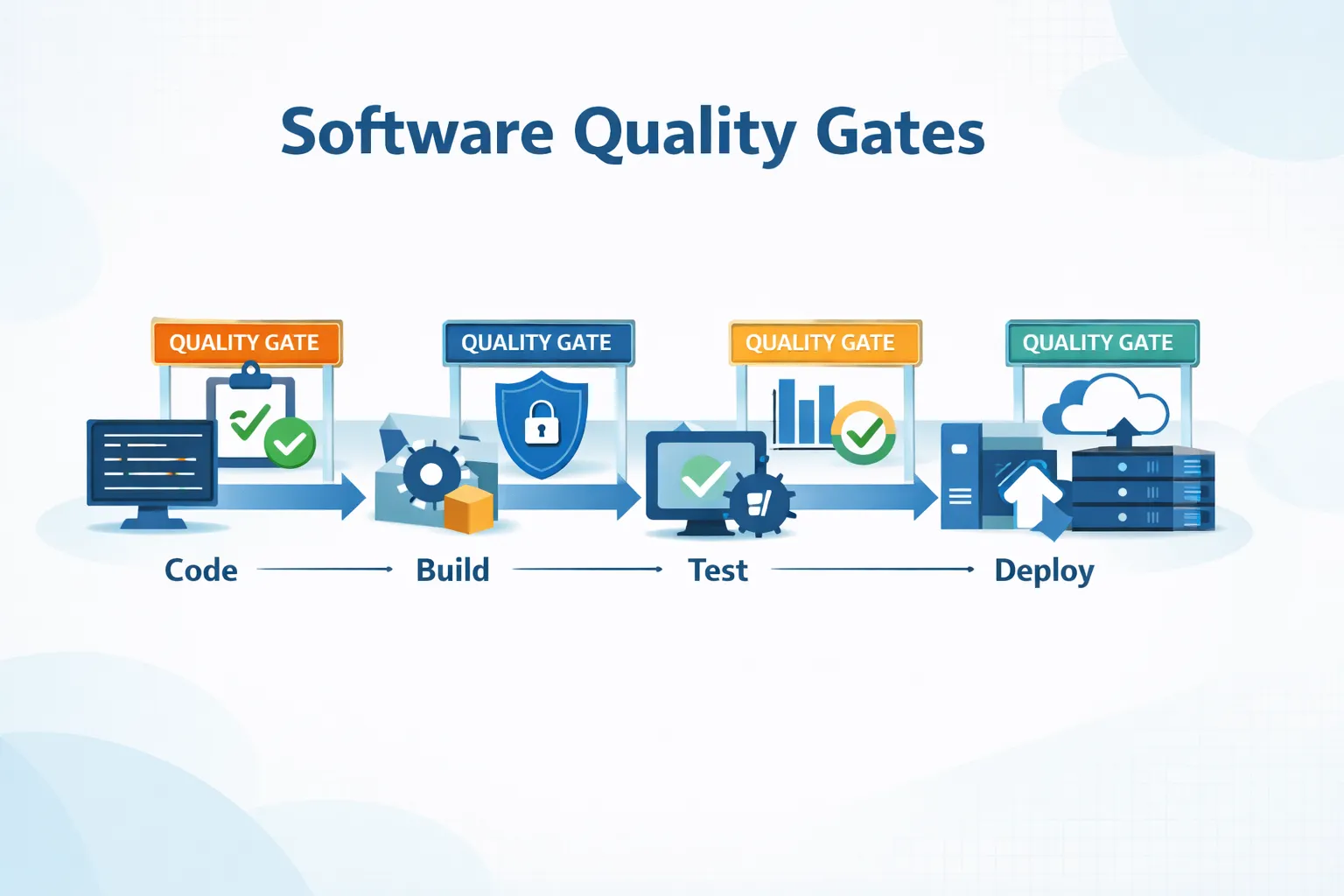
Software Quality Gates: Benefits, Use Cases & Best Practices
Software quality gates are automated pass/fail checkpoints in CI/CD pipelines that block code from progressing unless it meets predefined thresholds – coverage minimums, zero failed regressions, no critical vulnerabilities. They replace subjective debates with objective pipeline signals. Teams increasingly gate on API schema and business use-case coverage – the layer where Keploy’s traffic-based testing adds…
-

What Is Delta Testing? How It Works, Benefits & Examples (2026)
Delta testing validates only the changes between software versions, not the entire application, making it faster than full regression for frequent CI/CD releases. It runs after smoke testing gates the build, focusing specifically on what changed. For API-driven systems, Keploy supports this by recording real traffic from one version and replaying it against the next…
-
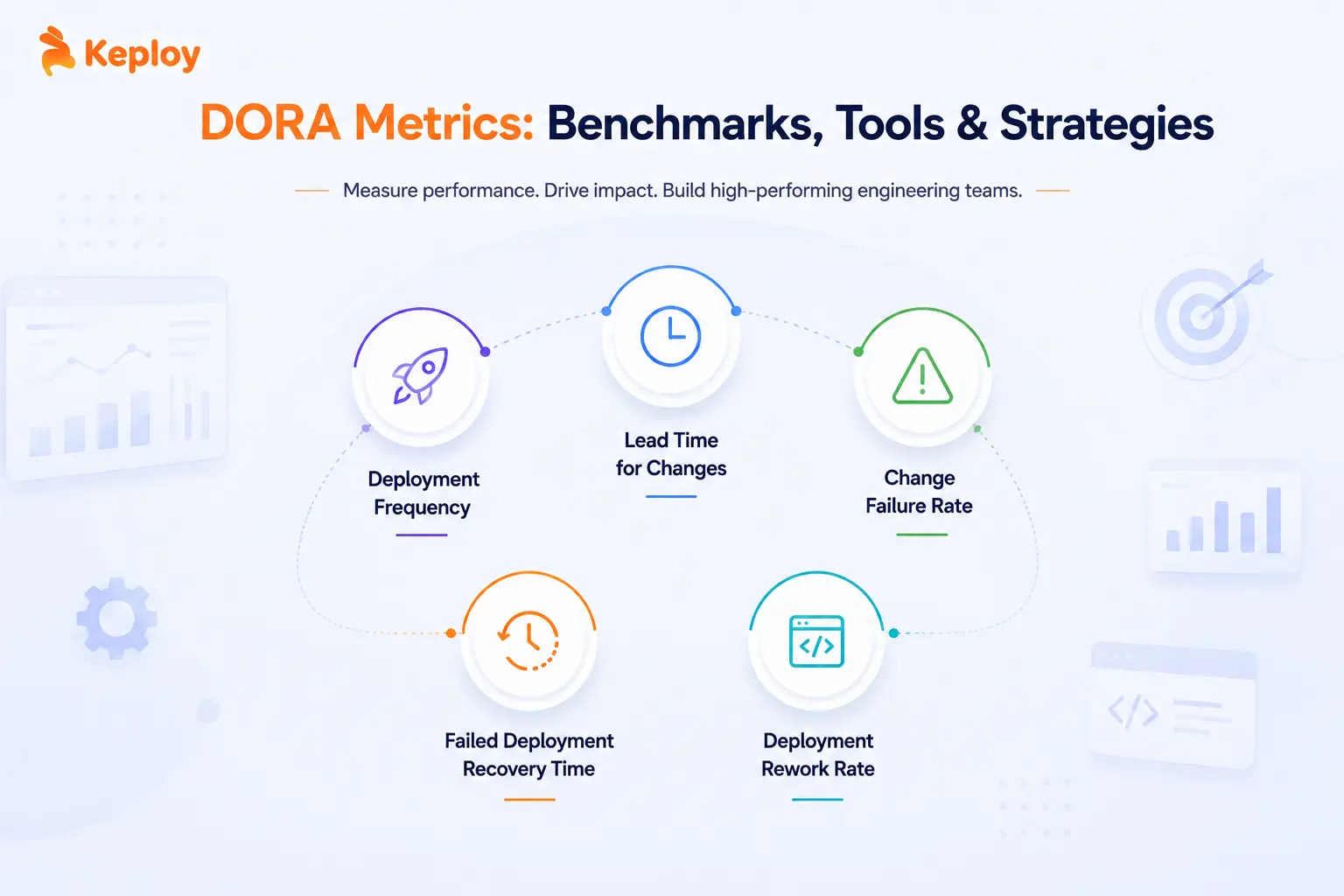
DORA Metrics: Benchmarks, Tools & Strategies to Improve (2026)
DORA metrics are five research-backed measurements used by engineering teams to evaluate software delivery performance across two dimensions: throughput (speed) and stability (reliability). Most teams can track their numbers – the harder part is knowing which metric to fix first and what actually moves it. This guide covers 2026 benchmarks, proven strategies, and where automated…
-
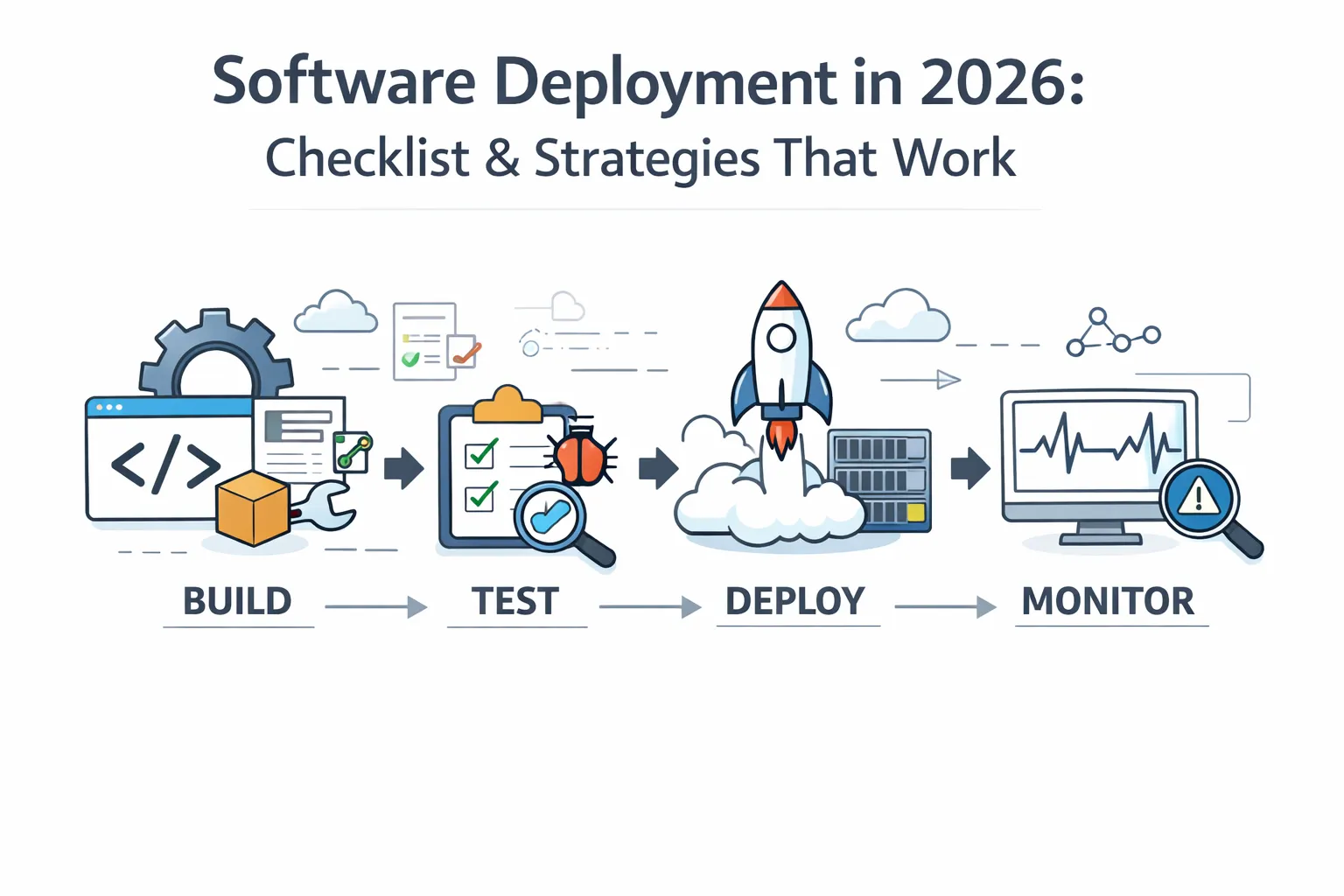
Software Deployment in 2026: Strategies & Best Practices
Most software projects fail not in development – but at software deployment. Even stable, well-tested code can break in production when the deployment process isn’t planned well. In 2026, software deployment is no longer just about pushing code – it’s about reliability, speed, and control. Let’s explore how modern teams deploy smarter, faster, and safer…