Tag: qa-testing
-
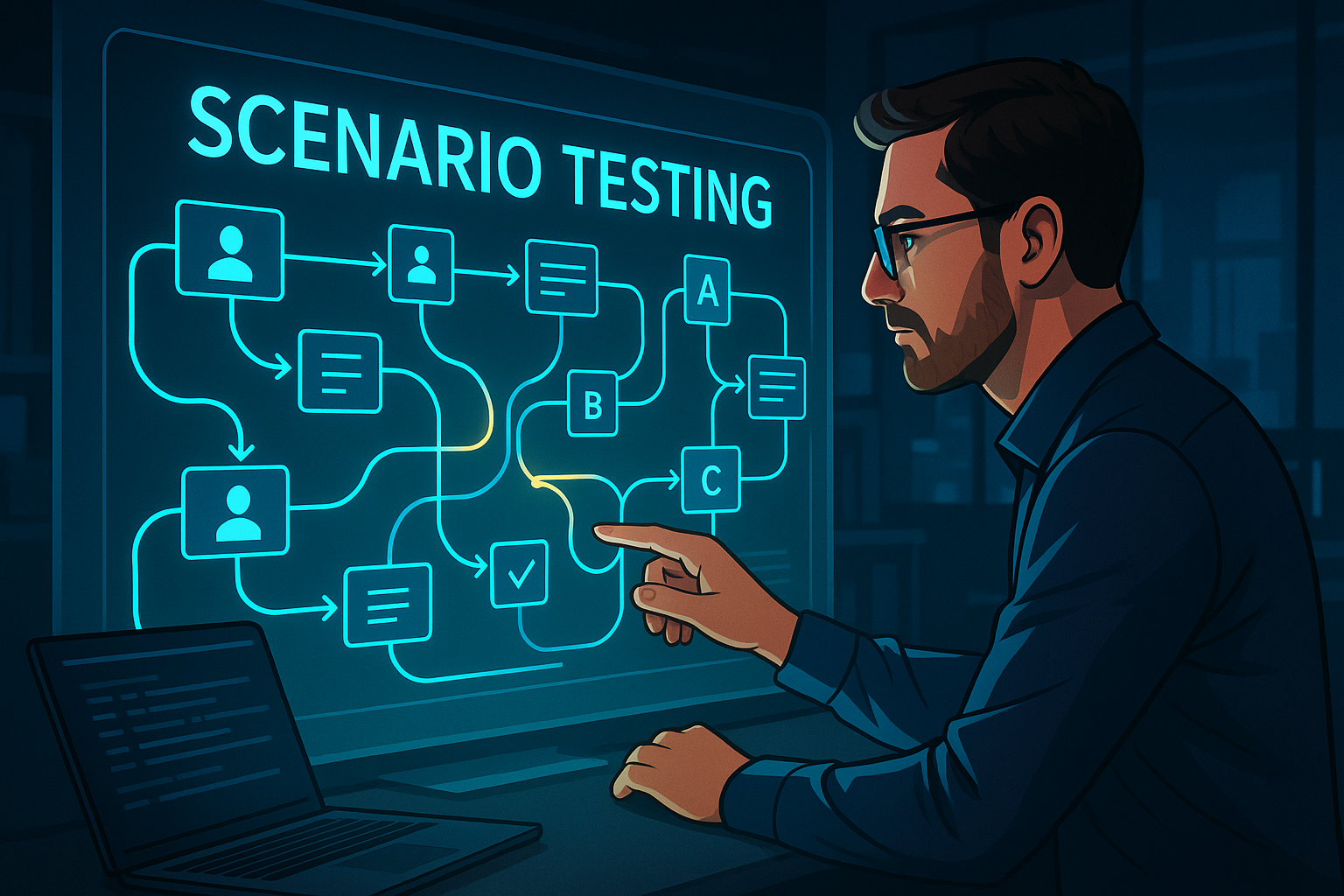
Scenario Testing: A Complete Guide for QA and Software Teams
Scenario testing is a functional testing technique that evaluates software using realistic, end-to-end stories of how users interact with the system. Instead of isolated inputs, each scenario follows a plausible user journey, exposing workflow gaps, integration issues, and usability problems that single-feature tests overlook. In contemporary software engineering, it is not sufficient to simply confirm…
-
What Is a Test Environment? A Complete Guide for Developers
A test environment is a controlled setting that includes software, hardware, network configuration, test data, and testing tools, where applications can be set up and validated before they are delivered to real users. It can be understood as a safe space for developers and QA engineers to do an assessment of how an application performs…
-

How to Use Software Testing Metrics to Drive Better QA Decisions
Why do some QA teams consistently deliver reliable and high-quality software, while others toil to identify bugs and experience unstable releases? The real difference often is related to how easily the team is able to use software testing metrics to make measurable decisions. Often, the testing process turns out to be a routine checklist activity…
-
What is Monkey Testing in Software Testing? Types, Tools & More
Monkey testing feeds random, unscripted inputs into an application to uncover crashes, memory leaks, and unhandled exceptions that structured test cases miss. It runs in three modes: ignorant (fully random), intelligent (randomised within known areas), and smart (plausible user journeys randomised). The hardest part is reproducing a crash once it occurs, which is why logging…
-
Quality Assurance Testing: Everything You Need to Know
Quality assurance testing verifies that software meets requirements, functions reliably, and delivers a good user experience – spanning manual, automated, performance, and security checks. A key distinction worth knowing: QA is broader than testing. Testing finds defects; QA prevents them by improving processes, standards, and pipelines throughout the entire development lifecycle – not just at…
-

Getting Started with Alpha Testing : Definition, Process, and Key Benefits
What’s the difference between a software launch that builds customer confidence and one that becomes a costly disaster? Often, it comes down to how thoroughly the product was tested internally before anyone outside the company ever saw it. he irony is that alpha testing is often the most cost-effective phase for catching serious issues, yet…
-

Software Testing Methodologies: Types, Examples & Best Practices (2026 Guide)
Software testing methodologies are structured frameworks that define when testing starts and how it fits into the development lifecycle: not just what gets tested, but the rhythm it follows. Waterfall tests after development completes; Agile embeds testing within every sprint; V-Model pairs each phase with a corresponding test; XP starts with tests through TDD. Picking…
-
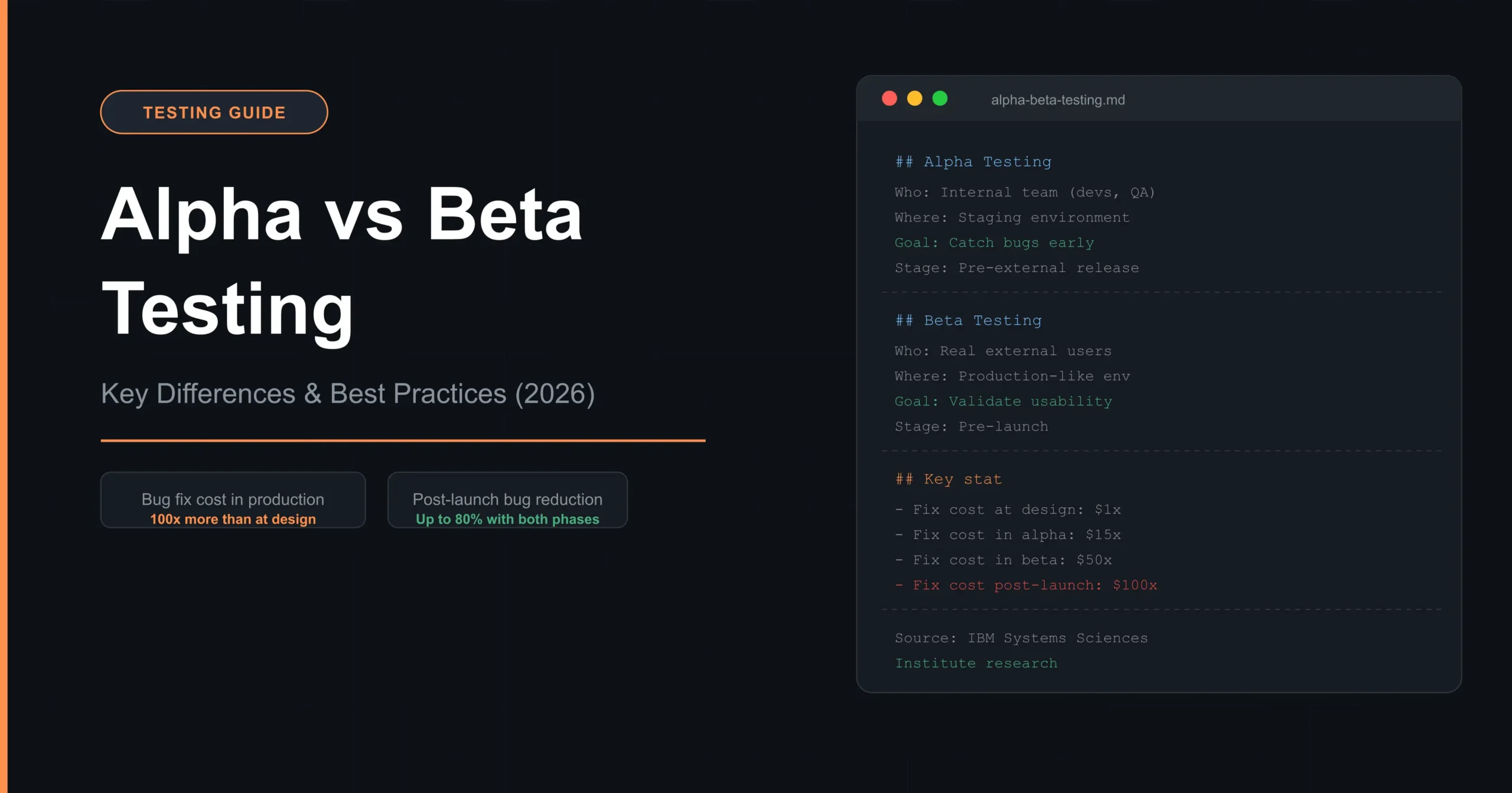
Alpha vs Beta Testing: Key Differences & Best Practices (2026)
According to the IBM Systems Sciences Institute, fixing a bug after release costs 4 to 5 times more than catching it during testing, and up to 100 times more than finding it during design. That is exactly why alpha and beta testing exist. They are not just checkboxes before launch. They are the two phases…
-
The Evolution of AI Testing Frameworks in Software Quality Assurance
As the time goes by, we can see that requirements for software products also change. These requirements are increasing in difficulty and get the development cycle of digital products are getting more complicated than ever. We already know the importance of fast delivery of the software while making sure its reliable. This importance only increases…