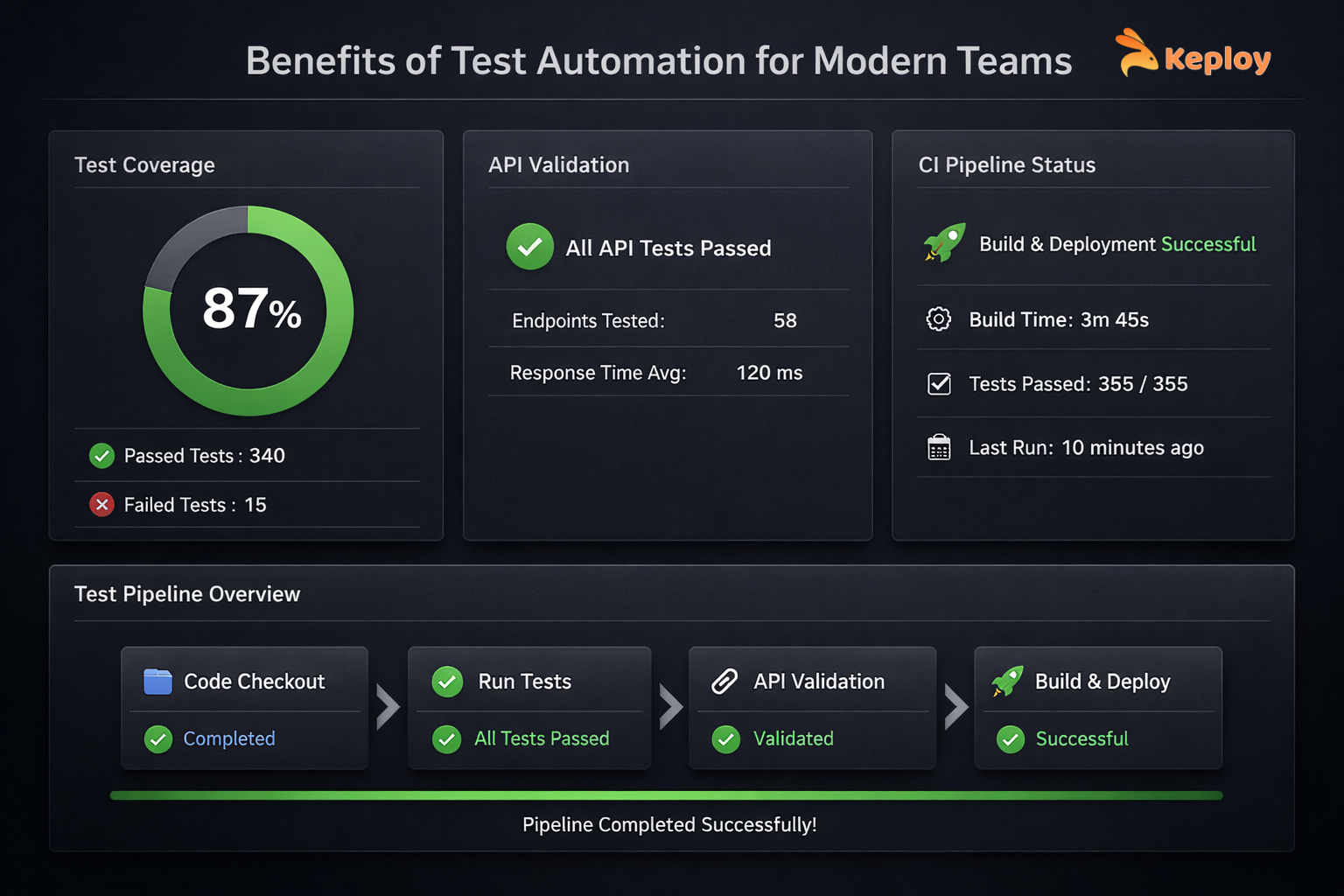
The benefits of test automation become clear when software teams start releasing faster than they can manually test. Many engineering teams today face the same challenge: delivery speed is increasing, but validating every change manually takes too long. Test automation helps solve this by running tests quickly, catching bugs earlier, and reducing repetitive manual work so teams can release software with greater confidence.
What Are the Benefits of Test Automation?
The benefits of using automated software testing tools include reduced time to market, increased defect detection, and fewer repetitive tasks for testing teams.
In turn, this results in greater coverage, faster validation, and more certainty for developers and testers that product releases are stable and reliable. Here is a practical breakdown of the benefits:
Major Benefits
-
Faster test execution: Faster reporting of test results reduces regression testing time from two to three days to less than four hours, and pull request validation time from approximately 90 minutes to approximately 15 minutes.
-
Less manual effort: Automated testing can reduce quality engineers’ time and effort on repetitive testing by 40% to 70%, allowing them to focus on more productive work.
-
Improved accuracy and repeatability: Because the same scripts are used to conduct every automated test, there is little chance of human error and/or flaky results.
-
Higher test coverage: Automated testing can perform hundreds of tests repeatedly, including edge cases, which may not be tested during manual testing.
-
Early bug detection: Automated testing is based on continuous validation, providing early detection of defects/bugs whenever there is a change to the product code.
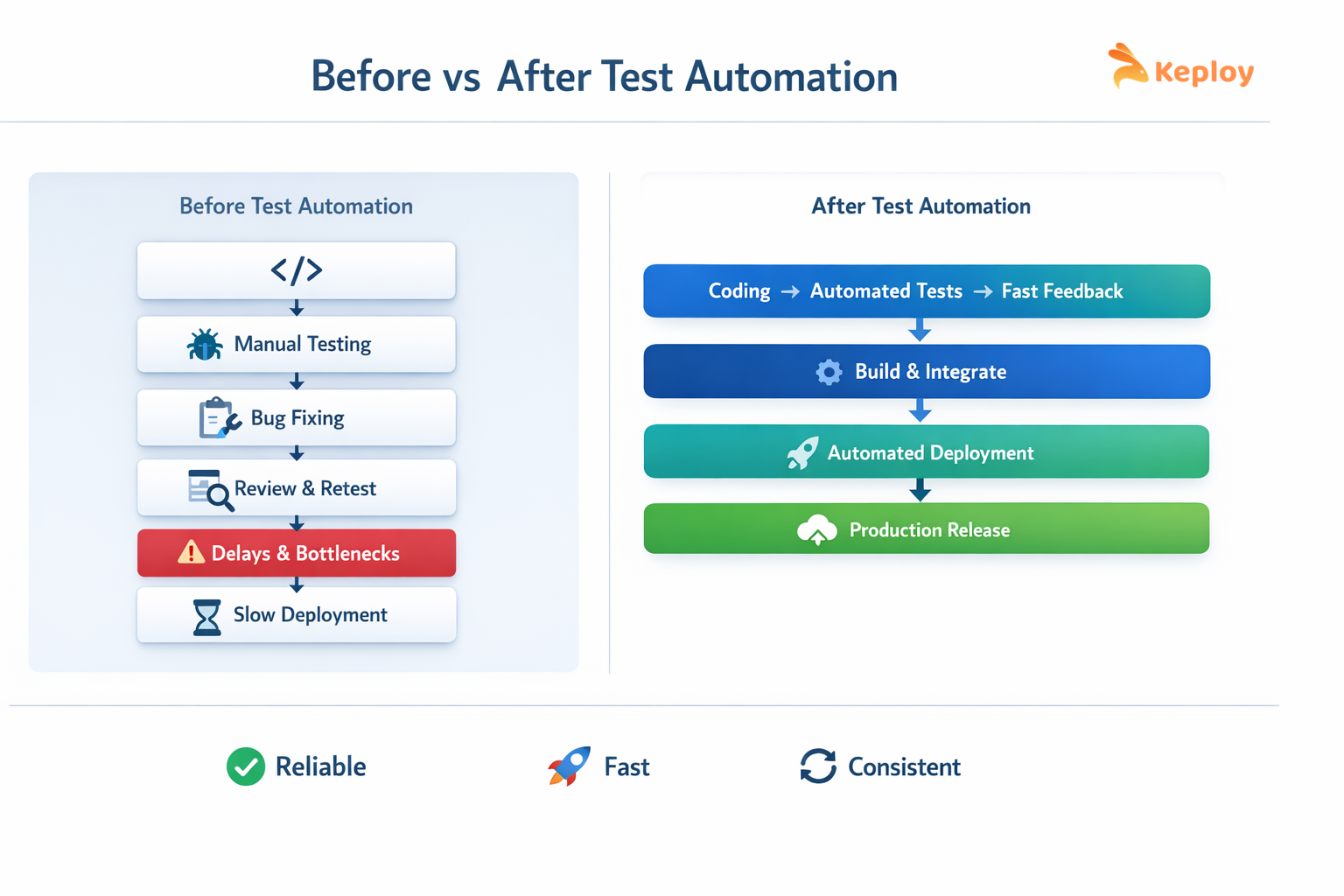
Business Benefits
-
Faster market entry: By using repeatable and reliable validation methods, organizations can shorten their time to market by releasing products more frequently without increasing risk.
-
Lower defect costs: Detecting bugs during the development process is less expensive than resolving post-release bugs.
-
Regression assurance: Automated test suites assure that software changes do not negatively impact product functionality.
-
Improved confidence with each release: Software teams can have peace of mind and confidence regarding the product and expect fewer production issues, which helps protect their brand.
Technical Benefits
-
CI/CD support: Employing automated test and validation processes for each change (e.g., code) in the pipeline provides a more reliable testing process.
-
System resilience and stability: By executing automated tests on a consistent, ongoing basis, organizations can more readily identify integration issues, performance issues, and unintended or unexpected system behavior before the issues impact users.
-
Scalability across environments: Automated testing solutions support distributed systems, microservices, and multiple deployment environments.
-
Reusable test artifacts: Capturing API interactions and mocks can increase test data reuse from approximately 0% to over 80%
-
Better API/schema confidence: Automated validation will assist with early detection of schema drifts and contract breaks as they occur.
Team-Level Benefits
-
Developer productivity: Allows developers to devote their energy toward building features and solving complicated problems by eliminating the time spent doing repetitive validation work.
-
Tester efficiency: Allows testers to concentrate on exploratory testing and high-risk testing versus performing repetitive manual checks.
-
QA lead visibility: Provides QA leads with data to measure their coverage, pass rates, and overall readiness to release, as well as provide consistent quality processes to all distributed teams.
-
Cross-team consistency: Enables all teams to follow the same process, resulting in consistent, predictable quality outputs.
Examples / Use Cases
-
Regression cycle: 2–3 days → <4 hours
Automated testing dramatically reduces the regression cycle and provides quick feedback to your teams, helping eliminate potential bottlenecks in the release pipeline. -
Pull request validation: 90 minutes → 15 minutes
Continuous integration (CI) or automated tests provide developers with quick feedback on any code changes, allowing them to find and fix bugs prior to pushing into production. -
Manual QA effort saved: 40–70%
Less repeated testing allows the QA and engineering teams to focus more on higher-value work, such as exploratory testing or feature improvements. -
Test coverage contribution: 80%+ (as applicable)
Automation provides reliable testing of the core business logic and workflows, increasing confidence in the codebase. -
Business/API schema coverage: 80%+
Automation provides consistent validation of the critical business processes and API contracts, thereby reducing the risk of failures in production. -
Schema drift/contract break detection: immediate
Automation provides immediate detection of any contract or schema changes, preventing integration problems from going unnoticed. -
Bugs found before production: 20%–30% or more
Continuous automated testing finds defects much earlier, reducing post-release failures. This directly moves Change Failure Rate, the DORA metric that measures the percentage of deployments requiring immediate remediation -
Percentage of reusability of test data: 0% → 80%+
Reusable API interactions and mocks will significantly shorten the time needed to set up a regression test and decrease the dependency on fragile staging environments.
The use of automation can be applied by teams from start to finish of the software lifecycle, which includes unit validation, API/integration testing, regression suites, performance/load testing, as well as security/compliance checks.
Having well-designed automation suites that remain reliable as systems grow more complex is essential, along with providing high levels of code coverage, validating important business use cases and APIs, and continuously checking to see if there is schema drift or contract breaks so that teams can consistently and confidently release into all environments.
Advantages of Automated Testing Over Manual Testing
Automated testing has clear advantages over manual testing in specific scenarios. Below is a comparison between manual and automated testing, along with the example impacts for a better understanding:
|
Benefit |
Problem with Manual Testing |
How Automation Helps |
Example Impact |
|
Faster feedback |
Manual regression is slow, and PR checks can take hours |
Detects defects immediately after code changes |
Regression cycle: 2–3 days → <4 hours; PR validation: 90 min → 15 min |
|
Higher accuracy & repeatability |
Manual checks vary by tester and execution |
Executes scripts consistently, reducing human error |
Fewer false positives/negatives, more reliable results |
|
Improved coverage |
Manual testing often skips edge cases due to time constraints |
Runs hundreds of scenarios repeatedly, including edge cases |
Test coverage contribution: 80%+ |
|
Lower manual effort |
Manual verification consumes significant QA time |
Frees testers to focus on exploratory and high-risk testing |
Manual QA effort saved: 40–70% |
|
Regression protection |
Manual re-checks miss regressions or introduce errors |
Automated regression suites prevent breaking existing functionality |
Bugs caught pre-production: +20–30% |
|
Better test data & schema confidence |
Manual mocks are brittle, and environments are inconsistent |
Reuses API interactions, validates schemas, and detects drift |
Test data reusability: 0% → 80%+; schema drift detected immediately |
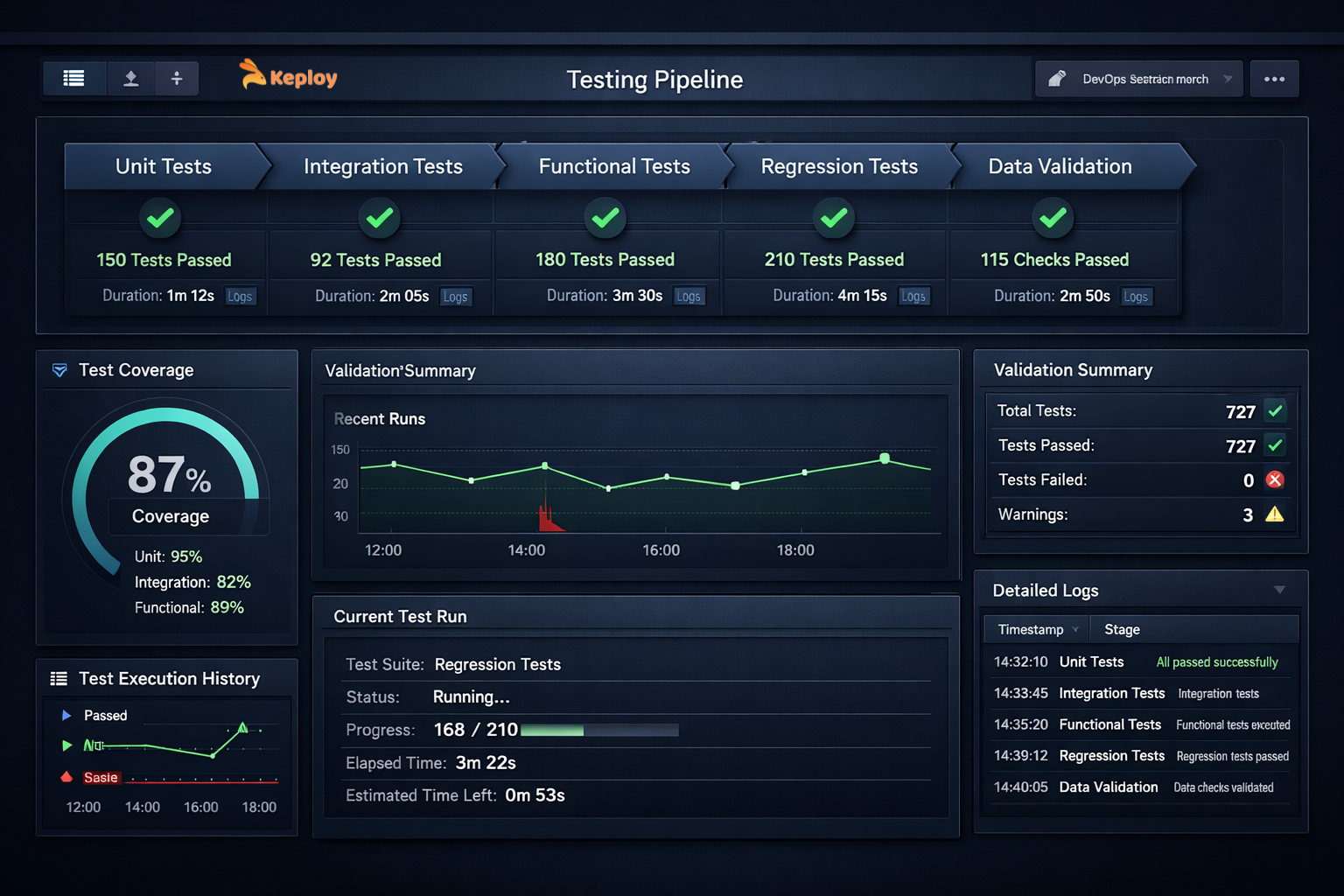
Why Keploy for Reliable Automation?
The definition of automation varies from person to person, and not all automation is good automation. Most teams have adopted test automation, yet still have the following persistent pain points with their test automation:
-
Flaky tests that fail inconsistently
-
False positives that increase the time to develop
-
Heavy maintenance workload for keeping tests updated
-
Environment dependencies that create fragile pipeline builds
-
Low trust in test results
These problems undermine the confidence that automation is supposed to create within teams. Quality automation is stable, reliable, and maintainable. It will minimize manual effort without creating any additional risk or costly overhead.
This is where Keploy excels. By intercepting all actual API traffic and replaying it back against the application when testing, Keploy has the ability to:
-
Reduce the number of brittle mocks and failures due to environmental issues
-
Reuse test data across environments, increasing the breadth of testing
-
Reduce maintenance overhead through the automation of realistic workflows
-
Provide API-level confidence that all releases will behave as expected
](https://wp.keploy.io/wp-content/uploads/2026/03/Test-Automation-Benefits-with-Keploy-1.png)
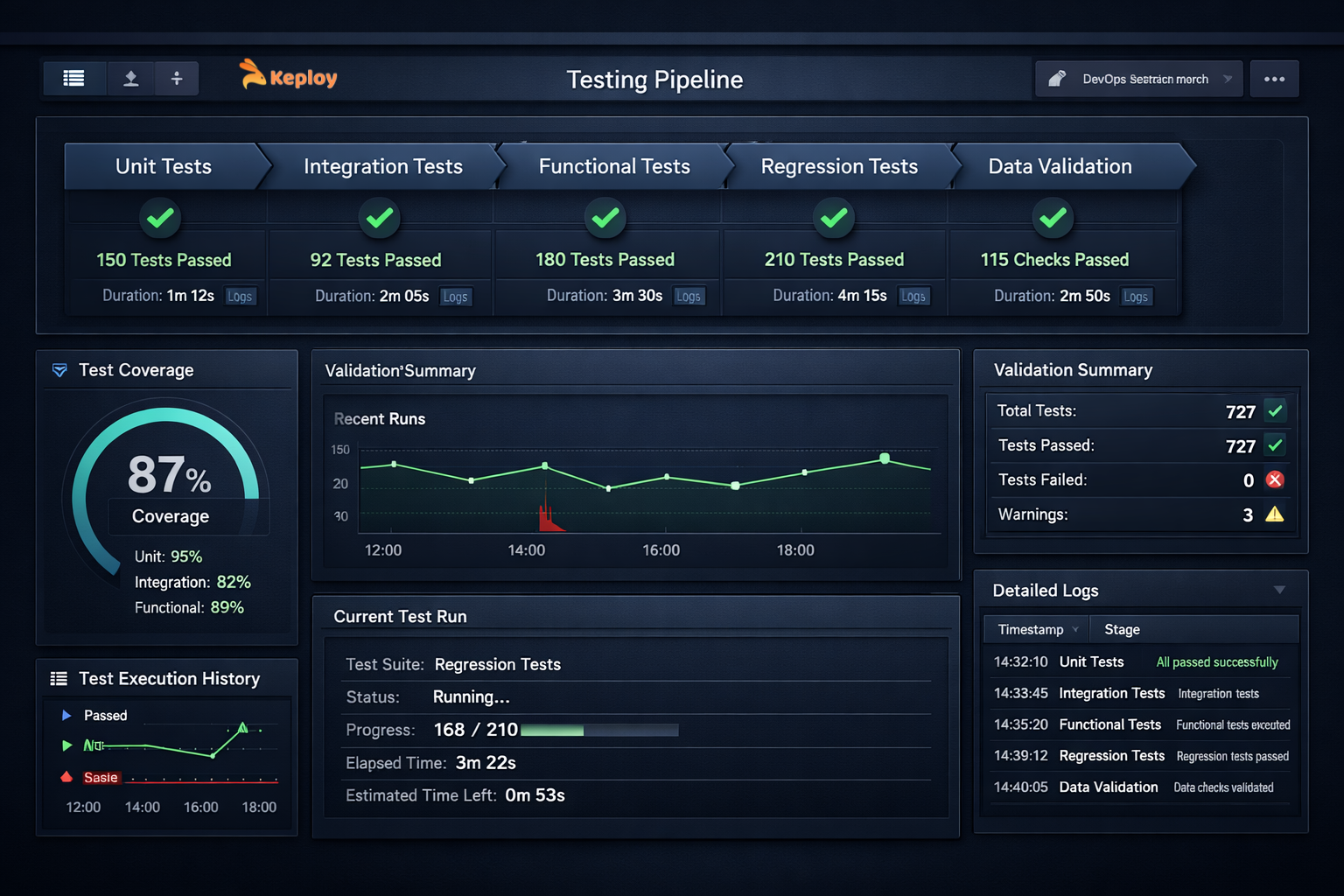
Modern-day development teams that trust their automation pipeline are able to catch regressions sooner, release products faster, and spend time innovating rather than fighting poor test results. Companies like SmartBear and Sauce Labs have built platforms to help developers with some of their automation pipeline challenges. However, Keploy has focused on real-world workflow validation to help developers create stable and reliable automation pipelines.
Conclusion
To sum up, the major advantage of automated testing is not simply accuracy and speed; it is the trust and confidence. To be able to work quickly, development teams need to have confidence that every change made is validated as expected and to trust in their automation for this confidence. Automation provides that confidence through earlier detection of regression errors, reduced incidence of flaky tests, and confirmed operation of both existing and new functionality as expected. The investment made into reliable testing automation by an organization can strengthen engineering workflows and provide better overall experiences for end-users.
Following test automation best practices from the start ensures your automation suite remains stable, maintainable, and trustworthy as your codebase scales.
A mature automated testing program can both increase the growth rate of test coverage and also enable testing pipelines that teams can rely upon, creating sustainable and reasonable development release cycles.
FAQs
1. What is the ROI of test automation?
Returns vary by team but consistent patterns emerge: regression cycles drop from 2-3 days to under 4 hours, PR validation from 90 minutes to 15 minutes, and manual QA effort reduces by 40-70%. Teams typically catch 20-30% more bugs before production and reach 80%+ test data reusability. The cumulative result is faster releases with fewer production incidents.
2. Why do modern teams rely on test automation instead of manual testing alone?
Due to the fast cadence of new releases, manual testing cannot keep up with the velocity of an organization’s releases. Automated testing offers a quick and consistent way to verify the quality of the software being delivered in each release.
3. How do the benefits of automation testing support Agile development?
Automated testing allows for continuous testing during each sprint, resulting in faster delivery of each release, faster detection of issues, and smoother integration of code with less chance of delivery surprises at release time.
4. How does test automation improve software quality over time?
Automated tests can execute reliably every release, which means that they are able to find regression issues early and also help ensure that new changes made to the code do not add hidden defects to the code item.

Leave a Reply